Back to home
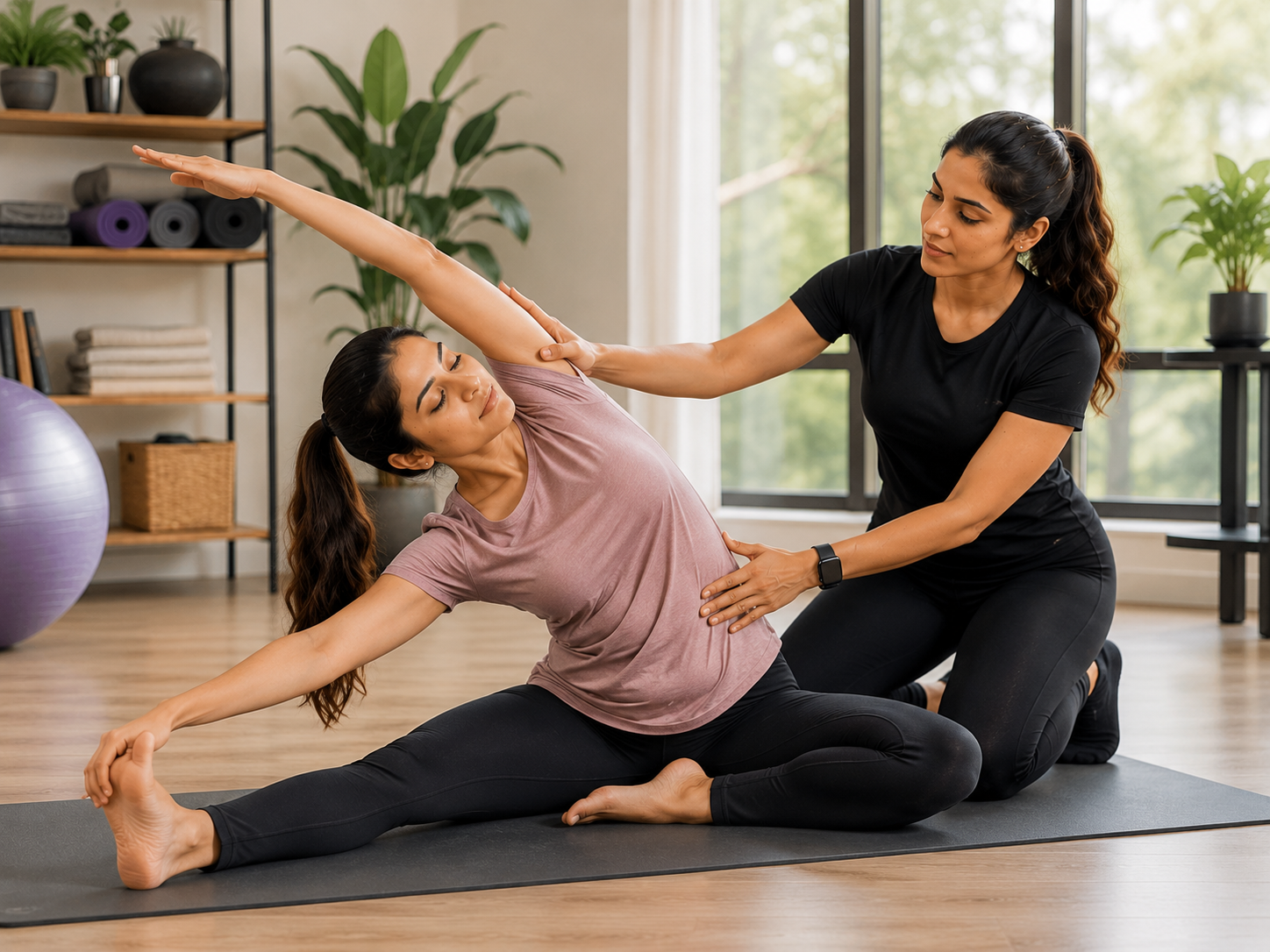
Flexibility Training for Women, Actually Explained
What stretching really does, static vs dynamic explained simply, and how flexibility fits into a real training program.
What stretching really does, static vs dynamic explained simply, and how flexibility fits into a real training program.
Flexibility training means deliberately working to improve how far your muscles and joints can move through their full range, using stretching and controlled movement rather than hoping it happens on its own. Amna Saleem is an ACE Certified Personal Trainer who builds flexibility work into real coaching programs for women in Lahore and online in 18 or more countries, not as an afterthought tacked onto the end of a workout, but as a genuine part of how a program is structured.
A lot of confusion around flexibility comes down to this one distinction not being explained clearly. Static stretching means holding a stretch in one position, typically for twenty to thirty seconds, and it is best done after training or on its own, when muscles are already warm. Dynamic stretching means moving through a range of motion with control, like leg swings or arm circles, and it is best done before training as part of a warm up, since it prepares the muscles for activity without the temporary strength reduction that static stretching right before a workout can cause. Using the wrong type at the wrong time is one of the most common mistakes people make, static stretching cold muscles before a heavy lift, or skipping dynamic movement before training entirely.
On average, women do tend to have greater natural flexibility than men, largely linked to hormonal differences, estrogen supports more elastic connective tissue, while higher testosterone levels in men are associated with denser muscle that requires more force to stretch. This means many women are starting from a genuine physical advantage when it comes to range of motion. But more flexibility is not automatically better. Joints need stability alongside mobility, and being very flexible without the surrounding muscle strength to control that range of motion can actually increase injury risk rather than reduce it. This is why flexibility training paired with strength work matters more than flexibility training alone, covered in more depth in strength training for women.
"Very professional female fitness trainer, worked really good for me."
— Mirza Minahil, Google Review
Flexibility is not fixed, it shifts with hormones and life stage in ways most generic stretching content never mentions. During pregnancy, the hormone relaxin increases joint laxity throughout the body to help prepare for childbirth, which means joints can feel more mobile but are also more vulnerable to overstretching injury during this time and for some months postpartum while relaxin levels settle back down. This is part of why postpartum training needs a careful, specific approach rather than a generic flexibility routine, covered in postnatal fitness and safe exercises after pregnancy and postpartum personal training. Flexibility can also shift subtly across the menstrual cycle for some women, and after menopause, connective tissue naturally becomes less elastic, which is one more reason consistent flexibility work matters more, not less, as women get older.
Better flexibility shows up in ordinary moments more than dramatic ones, bending down comfortably, reaching a top shelf without strain, sitting cross legged without discomfort, or moving through daily prayer positions like sujood and rukū with more ease in the hips, knees, and ankles. These are not small things, they are the actual, lived reason flexibility training matters to most women far more than touching their toes for its own sake.
Flexibility work should not exist on its own, separate from everything else. It fits naturally into a program as dynamic movement before training, static stretching after, and dedicated mobility focused sessions once or twice a week for areas that need extra attention, like tight hips from sitting most of the day. Women recovering from injury or managing chronic tightness often need this built in more deliberately, which is part of what is covered in posture correction and rehabilitation exercises, back pain relief exercises for women at home, and knee pain recovery exercises for women.
For women building a full routine from scratch, this fits naturally into a beginner workout plan at home, and for women specifically focused on the strength side of this pairing, core strength training and weight training for women, myths and real answers cover how that half of the equation comes together.
Amna is an ACE Certified Personal Trainer who also holds a Pre and Postnatal Coaching Certification, a Girls Gone Strong Women's Coaching Specialist credential, a Diploma in Nutrition and Diet Planning, a Diploma in Physical Fitness and Exercise Science, a Functional Training and Conditioning Certification, and a Postpartum Fitness and Recovery Certification. Flexibility work is built into every program rather than treated as an optional extra, whether training happens in person in Lahore, covered further in home personal training for women in Lahore, or online from anywhere in the world.
Every program begins with a free first session, so there is no cost or risk in testing the coaching style before committing. Group coaching starts at $79 a month for three live sessions weekly, moving to $129 a month for five sessions with a custom nutrition plan included. Fully private one on one coaching is $299 a month, covering three to five private sessions weekly, a personalized meal plan, and daily WhatsApp support. Billing is monthly with no long term contract.
Static stretching means holding a stretch in one position, usually twenty to thirty seconds, and works best after training. Dynamic stretching means moving through a range of motion with control, like leg swings, and works best as a warm up before training.
Hormonal differences play a significant role. Estrogen supports more elastic connective tissue, while higher testosterone in men is linked to denser muscle that requires more force to stretch, which generally gives women greater natural range of motion.
Yes. Flexibility without enough surrounding muscle strength to control that range of motion can increase injury risk rather than reduce it, which is why flexibility training paired with strength work is safer than flexibility training alone.
The hormone relaxin increases joint laxity during pregnancy to help prepare the body for childbirth, which can make joints feel more mobile but also more vulnerable to overstretching injury during pregnancy and for some months postpartum.
Not immediately at full intensity. Relaxin levels remain elevated for some time postpartum, so flexibility work should be approached carefully alongside core and pelvic floor recovery rather than pushed aggressively in the early months.
Dynamic stretching before every workout, static stretching after every workout, and one to two dedicated mobility sessions a week for particularly tight areas works well for most women.
Static stretching right before a heavy strength session can temporarily reduce power output, which is why dynamic stretching is generally better suited as a pre workout warm up, saving static stretching for after training instead.
Flexibility refers to how far a muscle can passively stretch, while mobility refers to how well a joint can actively move through its range using strength, not just passive stretch. Good mobility requires flexibility, but flexibility alone does not guarantee good mobility.
Yes, connective tissue naturally becomes less elastic over time, particularly after menopause, which makes consistent flexibility training more valuable with age rather than less necessary.
Yes, particularly for tightness in the hips and hamstrings that contributes to lower back strain, though flexibility work should be paired with core strengthening for the most lasting relief rather than relied on alone.
Many women notice a difference within two to four weeks of consistent stretching, with more significant range of motion improvements building over two to three months of regular practice.
Yes. Both static and dynamic stretching require no equipment at all and can be done anywhere with enough space to move comfortably, making it one of the easiest parts of a training program to build consistently.
A mild pulling sensation is normal, but sharp or stabbing pain means you are stretching too far and should ease off immediately. Joints should always stay slightly bent rather than locked straight during a stretch to avoid strain.
No. For most women, flexibility training matters more for everyday comfort, bending, reaching, sitting comfortably, and moving through daily activities and prayer with ease, than for any athletic performance goal.
Yes, and this is generally the most effective approach. Dynamic stretching before, strength training as the main session, and static stretching after covers both in one workout rather than requiring separate sessions.
Message Amna directly on WhatsApp to book a free discovery call, or explore the full Fit Vibe Trainer program overview first. Verified client reviews are available on Fit Vibe Trainer's Google Business Profile. Clients in specific Lahore neighborhoods can also see coaching in Garden Town and coaching in Township.