Back to home
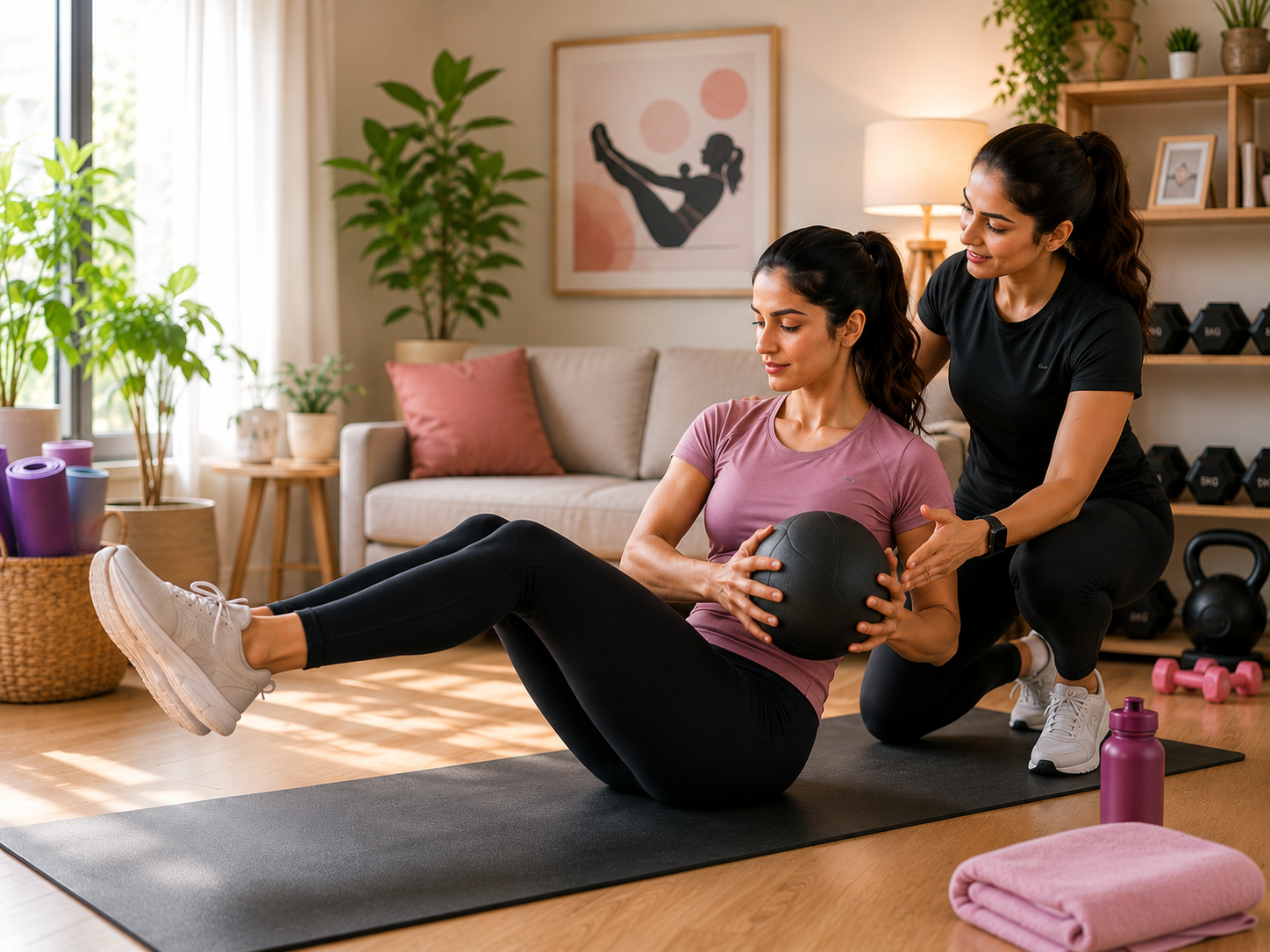
Core Strength Training Is Not Just About Abs
What your core actually does, why it matters for posture and pelvic floor health, and how to train it properly.
What your core actually does, why it matters for posture and pelvic floor health, and how to train it properly.
Core strength training builds the muscles that stabilize your spine and pelvis, not just the visible abdominal muscles most people picture when they hear the word core. Amna Saleem is an ACE Certified Personal Trainer coaching core focused training for women in Lahore and online in 18 or more countries, with particular experience in the postpartum and pelvic floor side of core work that most generic exercise lists skip over entirely.
Your core is a group of muscles wrapping around your midsection, front, back, and sides, working together to stabilize your spine and pelvis during everything from lifting groceries to standing up from a chair. The visible six pack muscle, the rectus abdominis, is only one small part of this system. Deeper muscles like the transverse abdominis, the obliques, the muscles along your spine, and the pelvic floor all play a role, and most of them do their job without ever creating a visible six pack, which is exactly why a strong core and a visible six pack are not the same thing at all.
Pregnancy and childbirth can weaken and disrupt the connection between the abdominal wall and pelvic floor, and this connection does not automatically repair itself once the baby arrives. Diastasis recti, a separation of the abdominal muscles, needs a specific assessment and progression before general core exercises like crunches resume, since jumping straight into standard ab work can worsen the separation. This is one of the most overlooked parts of core training in generic advice, and it is exactly where Amna's Postpartum Fitness and Recovery Certification comes in, covered in more depth in postnatal fitness and safe exercises after pregnancy.
This needs to be said plainly because it gets repeated so rarely. Doing hundreds of crunches will not specifically burn fat from your stomach, fat loss happens across the whole body based on genetics and hormones, not based on which muscle you are training that day. A strong core absolutely improves how your stomach looks once body fat comes down, but the core work itself is not what removes the fat sitting over it. That part comes from overall training and nutrition consistency, covered in fat loss for women.
Most people think of core training as movements like crunches or sit ups, exercises that create movement through the spine. Just as important, and often skipped entirely, is training your core to resist movement, holding a plank so your hips do not sag, carrying a heavy bag on one side without leaning, or resisting rotation during a twisting exercise. This kind of stability training builds real functional strength, the kind that actually protects your back when you are lifting a child, carrying groceries, or twisting to grab something off a shelf, which matters far more day to day than how visible your abs are.
"I was diagnosed with scoliosis and was told exercise could help but I was scared to train without proper guidance."
— Muna Hassan, Google Review
A weak core is one of the most common contributors to lower back pain and poor posture, especially for women who spend a lot of the day sitting. Strengthening the deep stabilizing muscles around the spine, rather than just the visible abs, tends to make a real difference for both. The specific approach used for clients dealing with back pain is covered in back pain relief exercises for women at home, and posture focused clients follow a similar progression outlined in posture correction and rehabilitation exercises.
Two to four short, focused sessions a week is enough for most women, and core work is generally more effective folded into a full body training routine than treated as a separate daily habit. Overtraining the core with long sessions every single day tends to produce diminishing returns compared to shorter, well structured sessions with proper recovery in between. For women building a full routine from scratch, a beginner workout plan at home shows how core work fits naturally into a broader weekly structure rather than existing on its own.
Amna is an ACE Certified Personal Trainer who also holds a Postpartum Fitness and Recovery Certification covering diastasis recti management and pelvic floor strengthening, a Pre and Postnatal Coaching Certification, a Girls Gone Strong Women's Coaching Specialist credential, a Diploma in Nutrition and Diet Planning, a Diploma in Physical Fitness and Exercise Science, and a Functional Training and Conditioning Certification. Core training is coached live, whether in person in Lahore or online, so form can be corrected as you go rather than guessed at from a video. For women training at home, home personal training for women in Lahore covers how in person sessions typically work.
Every program begins with a free first session, so there is no cost or risk in testing the coaching style before committing. Group coaching starts at $79 a month for three live sessions weekly, moving to $129 a month for five sessions with a custom nutrition plan included. Fully private one on one coaching is $299 a month, covering three to five private sessions weekly, a personalized meal plan, and daily WhatsApp support. Billing is monthly with no long term contract.
The core includes the visible rectus abdominis, the deeper transverse abdominis, the obliques along the sides, the muscles supporting the spine, and the pelvic floor, all working together to stabilize the spine and pelvis.
Not on their own. Core exercises strengthen the muscles underneath, but fat loss happens across the whole body rather than in one targeted spot, so visible definition also depends on overall body fat, which comes from nutrition and full body training.
The core and pelvic floor work together as a connected system, and pregnancy and childbirth can disrupt that connection. Diastasis recti should be assessed before general core exercises resume, since some movements done too early can worsen the separation.
Two to four short, focused sessions a week is enough for most women, generally folded into a full body training routine rather than trained as a separate daily habit.
Yes. A weak core is one of the most common contributors to lower back pain, and strengthening the deep stabilizing muscles around the spine, rather than just the visible abs, tends to make a real difference for pain and posture over time.
Both have a place, but planks and similar stability exercises train the core to resist movement, which builds more functional, day to day strength than crunches alone, which mainly train the outermost abdominal muscle through repeated movement.
Yes, with the right approach. Core training after pregnancy should start with breathing and pelvic floor activation, assess for diastasis recti, and progress gradually, rather than jumping straight into general ab exercises.
Yes. A stronger, more stable core supports better posture, particularly for women who spend a lot of the day sitting, since core weakness often shows up as slouching and lower back strain over time.
Yes. Most core exercises require no equipment at all, and effective sessions can be built entirely around bodyweight movements like planks, dead bugs, and bird dogs, done consistently a few times a week.
Training should be assessed and specifically progressed to rebuild connective tissue tension, avoiding movements like crunches or full sit ups that can worsen the separation until it has sufficiently healed under proper guidance.
Message Amna directly on WhatsApp to book a free discovery call, or explore the full Fit Vibe Trainer program overview first. Verified client reviews are available on Fit Vibe Trainer's Google Business Profile.