Back to home
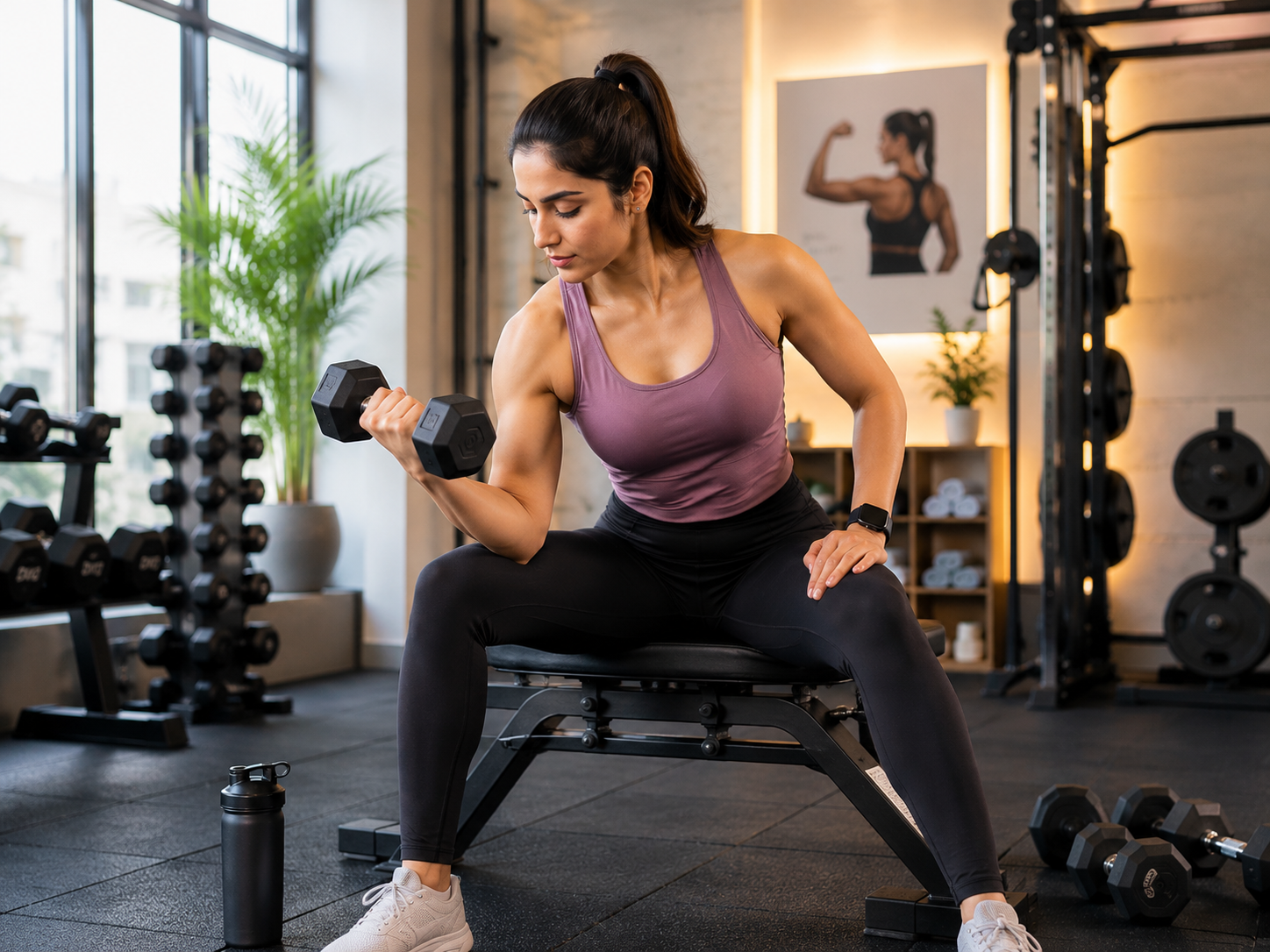
Muscle Building for Women, No Supplements Required
What actually builds muscle for women, and why real food and consistent training beat a shopping cart of powders.
What actually builds muscle for women, and why real food and consistent training beat a shopping cart of powders.
Muscle building for women happens through the same basic process it does for anyone, progressive resistance training combined with enough protein and recovery, just at a naturally slower pace than men due to lower baseline testosterone. Amna Saleem is an ACE Certified Personal Trainer coaching this process for women in Lahore and online in 18 or more countries. This page will not try to sell you a protein powder or a creatine bundle to get there, because training and food, not supplements, are what actually build the muscle.
This is usually the first question that matters most, and the honest answer is that women build muscle more slowly than men, generally at roughly half the rate or less, largely due to the difference in testosterone levels between the sexes. That does not mean progress is small or not worth pursuing, it means expectations should be set around steady, visible improvement over months rather than dramatic change in a matter of weeks. A beginner following a consistent program can expect meaningful strength gains within the first month, with visible changes in muscle shape and definition typically becoming noticeable somewhere between two and four months in, and continued progress from there as long as training keeps challenging the muscle appropriately.
Strength tends to improve before appearance does, which is a genuinely useful thing to know so early progress does not feel invisible. In the first two to three weeks, most of the improvement is neurological, your nervous system getting better at recruiting muscle fibers, which is why lifts start feeling easier even before visible muscle growth has caught up. Actual muscle tissue growth, called hypertrophy, generally becomes visible starting around eight to twelve weeks of consistent training, and continues building steadily from there with continued progressive overload.
Progressive overload simply means gradually increasing the challenge placed on a muscle over time, whether through more weight, more reps, more sets, or better control through the movement. Without this, a muscle has no reason to keep adapting, and progress stalls even with consistent gym attendance. This does not mean adding weight every single session, it means tracking your training and making sure the challenge is trending upward over weeks, which is exactly the kind of detail that gets missed when following a static downloaded workout plan instead of a coached program that actually adjusts based on how you are progressing.
Protein needs for muscle building generally fall in the range of about 1.6 to 2.2 grams per kilogram of body weight daily, spread across meals throughout the day rather than consumed all at once. This does not require protein powder or specialized products, real food sources like chicken, eggs, dal, paneer, fish, and yogurt cover this comfortably for most women when meals are planned with intention. The guide on building a sustainable diet plan covers how to structure this around a typical Pakistani diet without needing to overhaul your entire way of eating.
"She helps me in exercises of disc slip, sciatica and helps me in my muscle building. My body pains are much better now. Really hard working and lovely person."
— Aisha Mushtaq, Google Review
This is possible, particularly for beginners or anyone returning to training after time away, through a process called body recomposition, where strength training and adequate protein support muscle growth while a modest calorie approach supports gradual fat loss. It tends to be slower than focusing on one goal at a time, but for most women starting out, it is a realistic and genuinely rewarding way to train, since visible changes in shape happen even while the scale moves only gradually. The deeper breakdown of how fat loss and muscle building interact is covered in fat loss for women and body toning for women, which both build on the same underlying principles from a slightly different angle.
No, and this concern comes up in nearly every first consultation, so it is worth answering clearly rather than glossing over. Building visibly large, bulky muscle requires a sustained calorie surplus and years of dedicated, high volume training, conditions that a typical muscle building program for general strength and shape does not create. What most women experience instead is a leaner, more defined physique, since muscle occupies less space than fat for the same weight. The full myth breakdown, including the physiology behind why this fear is so persistent but largely unfounded, is covered in strength training for women and weight training for women, myths and real answers.
Muscle mass naturally begins declining from around age 30, a process called sarcopenia, which accelerates further after menopause alongside bone density loss. This makes muscle building arguably more important, not less, as women get older, even though the process requires a bit more patience and consistency at this stage. The same core principles apply, just with more attention paid to joint friendly movement and recovery, similar to the approach used in progressive strength training for older adults.
A gym membership is not required to build real muscle, particularly in the beginning stages. Bodyweight training, resistance bands, and a pair of adjustable dumbbells can support genuine progressive overload for months before a full gym setup becomes necessary. The guide on building a beginner workout plan at home walks through exactly how to start, and home personal training for women in Lahore covers how in home coached sessions work for clients who want live guidance without traveling to a studio.
Amna is an ACE Certified Personal Trainer who also holds a Diploma in Nutrition and Diet Planning, a Diploma in Physical Fitness and Exercise Science, a Functional Training and Conditioning Certification, a Pre and Postnatal Coaching Certification, and a Postpartum Fitness and Recovery Certification. Programs are coached live, with progressive adjustments made as you actually get stronger, rather than a static plan handed out once. For a full framework on evaluating any coach before committing, how to choose the right female fitness coach and what to look for in the best female personal trainer cover exactly what to check.
Every program begins with a free first session, so there is no cost or risk in testing the coaching style before committing. Group coaching starts at $79 a month for three live sessions weekly, moving to $129 a month for five sessions with a custom nutrition plan included. Fully private one on one coaching is $299 a month, covering three to five private sessions weekly, a personalized meal plan, and daily WhatsApp support. Billing is monthly with no long term contract.
Women build muscle more slowly than men, roughly half the rate or less, largely due to lower testosterone levels. Steady, meaningful progress is realistic over months of consistent training, though dramatic change in a few weeks is not.
Strength improvements often show up within two to three weeks, largely from neurological adaptation, while visible muscle growth generally becomes noticeable around eight to twelve weeks of consistent training.
Generally around 1.6 to 2.2 grams per kilogram of body weight daily, spread across meals. This is achievable through real food like chicken, eggs, dal, paneer, and yogurt without needing protein powder or supplements.
No. Visible bulk requires a sustained calorie surplus and years of dedicated high volume training. A typical muscle building program for general strength and shape produces a leaner, more defined look, not bulk.
Yes. It requires a bit more patience and attention to recovery, but the same core principles apply, and building muscle at this stage is especially valuable for protecting bone density and long term strength.
The core training principles are the same, progressive overload, adequate protein, and recovery, though women benefit from accounting for hormonal cycles and generally build muscle at a slower rate than men.
Yes, particularly for beginners, through a process called body recomposition. It is generally slower than focusing on one goal exclusively, but it is a realistic approach for most women starting out.
Progressive overload means gradually increasing the challenge placed on a muscle over time through more weight, reps, or sets. Without it, a muscle has no reason to keep adapting, which is why progress often stalls on a static, unchanging routine.
No. Consistent resistance training and enough protein from real food are what actually build muscle. Supplements can be a minor convenience for some people but are not required for real results.
Yes. Bodyweight training, resistance bands, and a pair of adjustable dumbbells can support real progressive overload for months before a full gym setup becomes necessary.
Message Amna directly on WhatsApp to book a free discovery call, or explore the full Fit Vibe Trainer program overview first. Verified client reviews are available on Fit Vibe Trainer's Google Business Profile.