New title tag: Safe Strength Training for Elderly Parents in Pakistan | Fit Vibe Trainer
New meta description: A senior focused strength training program for elderly parents in Pakistan, built around fall prevention, bone density, and muscle preservation, with remote updates for children living abroad.
Safe Strength Training for Elderly Parents in PakistanShort answer first. Strength training for an elderly parent should never look like a younger adult's gym routine scaled down, it needs to be built from the ground up around fall prevention, bone density, and preserving the muscle that naturally declines with age, using bodyweight and light resistance rather than heavy loads. Fit Vibe Trainer runs exactly this kind of program for elderly clients in Lahore, with children living abroad kept in the loop every step of the way.
Most families focus on keeping an aging parent active in general, walking around the house, occasional errands, and assume that is enough. It usually is not. Muscle loss after a certain age moves faster than general activity can offset, and by the time it becomes visible, a parent's independence is already at risk. This piece looks specifically at why resistance work matters more than general movement, what a genuinely safe program looks like, and how to set it up when you are managing it from another country.
The Real Reason Muscle Loss Speeds Up With Age
The medical term for this is sarcopenia, the gradual, accelerating loss of muscle mass that comes with age, and it picks up pace considerably once someone becomes less physically active.
- Muscle decline speeds up noticeably past the age of sixty without any resistance work
- Lower muscle mass directly undermines balance, which is the leading factor behind falls
- Simple daily movements, standing from a chair, climbing a few stairs, become genuinely harder
- Bone density tends to drop alongside muscle mass, raising fracture risk if a fall does happen
None of this is cosmetic. It is the difference between a parent who stays independent in their own home and one who starts needing help with basic daily tasks.
Why Walking Alone Does Not Solve This
Keeping a parent generally active matters, but walking does not put enough load on muscle or bone to meaningfully slow the decline described above. Resistance training does something walking cannot, it signals the body to actively preserve and rebuild muscle tissue, while placing the kind of load on bone that helps protect density over time. This is exactly why geriatric specialists now treat strength work as a core part of healthy aging, sitting alongside cardio rather than replacing it.
What a Genuinely Senior Safe Program Looks Like
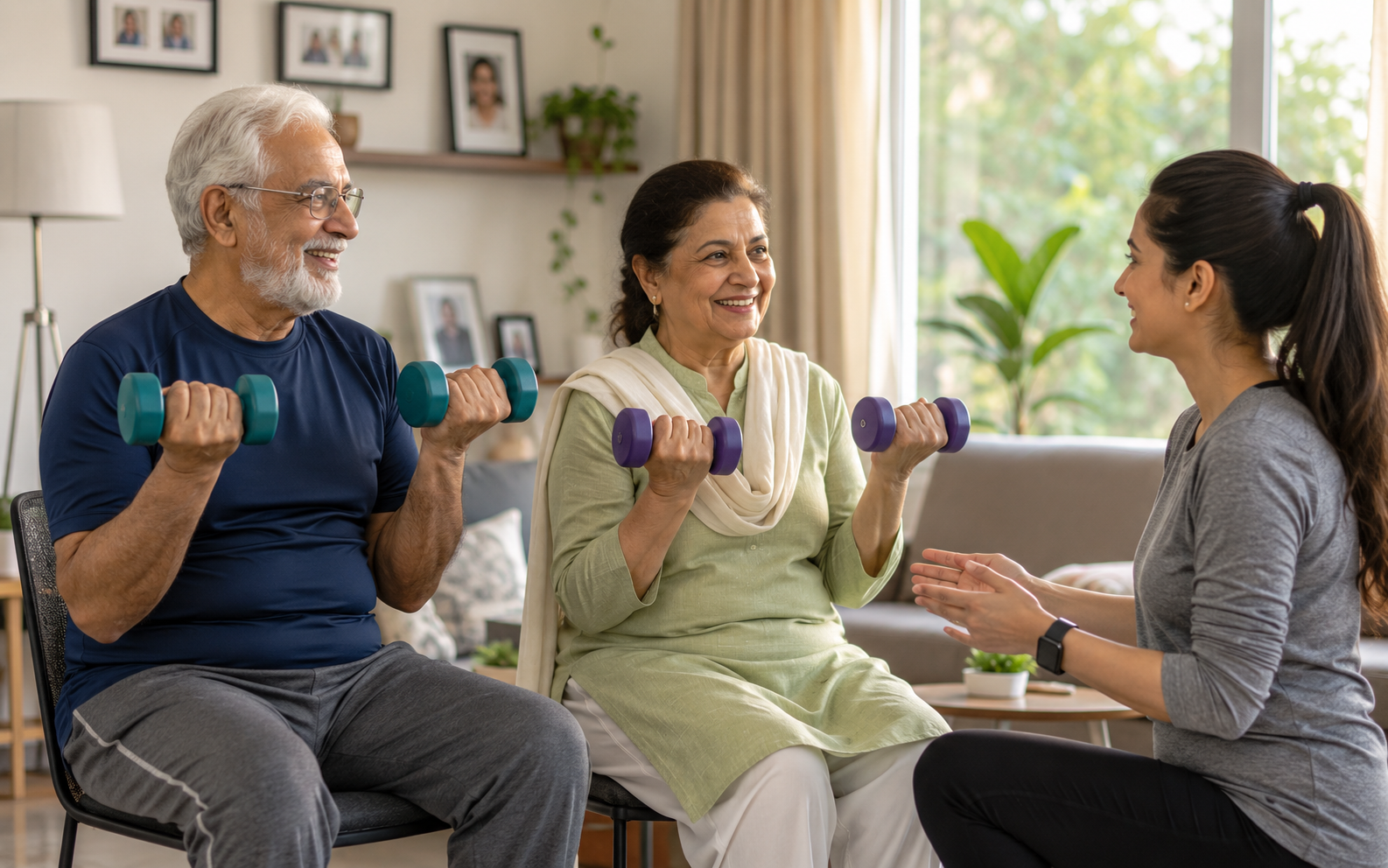
A program built for an eighty year old should look nothing like one built for a thirty year old, and the difference is not just intensity, it is the entire structure.
- Starting with sit to stand movements and seated leg work to establish a safe baseline
- Introducing light resistance bands once basic movement patterns feel stable and controlled
- Weaving in balance specific exercises throughout, not as an afterthought at the end
- Adding light dumbbells only once form, comfort, and joint tolerance are clearly established
Progression here should be slow by design. Older adults simply have less margin for error with joint stress than younger clients do, so a trainer should never rush this timeline to show faster results.
How to Talk to a Parent Who Is Resistant to the Idea
Plenty of elderly parents assume strength training is something for younger, athletic people, and push back on the idea entirely. The framing matters more than the pitch.
- Standing up from a low chair or the floor without needing a hand
- Better balance, which meaningfully cuts the risk of a serious fall
- Carrying groceries or managing stairs without help
- Less joint stiffness through consistent, gentle movement rather than none at all
Talking about independence rather than fitness tends to land far better with an older parent than talking about strength or appearance ever does.
Medical Conditions That Change the Plan
Several conditions common among older adults require real adjustments to a strength program, and a trainer should be asking about these before the first session, not after.
- Osteoporosis, which rules out certain spinal loading movements entirely
- Arthritis, which usually benefits from steady, gentle resistance rather than avoidance
- Heart conditions, which call for closer monitoring of exertion during sessions
- Recent surgery, especially joint replacement, which needs medical clearance first
Where any of these apply, the trainer should be coordinating directly with the parent's doctor, not working around them.
Arranging This From Abroad Without Losing Oversight
Setting up a strength program for a parent while living overseas is more manageable than most families expect, provided the trainer is genuinely set up for remote communication.
- An initial call that includes you, even briefly, alongside your parent
- A home assessment covering current mobility, balance, and any health conditions
- A clearly agreed, gradual progression plan with defined safety limits
- A simple update system, short videos or brief written notes after sessions
Being part of that first call, even for ten minutes, tells you far more about how the program will actually run than hearing about it secondhand from your parent afterward. For a broader look at coordinating any kind of fitness or rehab support for a parent remotely, this guide on arranging fitness and rehab training for aging parents in Pakistan covers the wider process beyond strength work specifically.
Staying Genuinely Involved, Not Just Paying From a Distance
Distance does not have to mean losing visibility into how your parent is actually doing.
- Join the first consultation call directly, whatever the time difference
- Ask for short videos of specific exercises every few weeks
- Book a brief monthly call with the trainer to review real progress
- Ask your parent how sessions feel, not only how their strength looks on paper
Common Mistakes Families Make
A few well intentioned decisions tend to undercut how safe or effective a senior strength program actually is.
- Assuming any general trainer has real experience with older clients
- Pushing for quicker progress than is genuinely safe for an aging body
- Skipping medical clearance when a known condition is already present
- Leaning entirely on walking or cardio while skipping resistance work altogether
Getting Started
Setting this up starts with one honest conversation about your parent's current mobility, health history, and any medical guidance already in place. You can message Amna directly on WhatsApp to arrange a free discovery call and start building a genuinely safe strength program for your parent in Lahore, wherever in the world you happen to be. You can also see verified client experiences on Fit Vibe Female Personal Trainer Lahore's Google Business Profile, or browse related support on the Fitness Services page.
Frequently Asked Questions
Is strength training actually safe for elderly parents
Yes, when it is introduced gradually with proper form and adjusted for any existing health conditions, strength training is considered safe and genuinely beneficial for older adults, including those in their seventies and beyond.
What is the single biggest benefit for an aging parent
Preserving muscle mass and improving balance stand out above everything else, since both directly reduce fall risk and support independence in everyday tasks.
Does my parent need equipment at home to start
No. Most senior focused programs begin with bodyweight movements and light resistance bands, with dumbbells added only later, once form and confidence are established.
How do I set this up for my parent while I am living abroad
A trainer experienced with overseas families will typically run an initial video consultation with you included, then send regular progress updates so you stay involved despite the distance.
Should my parent's doctor be involved before starting
Yes, particularly if a specific condition, recent surgery, or ongoing treatment is present. The trainer should coordinate directly with the doctor so the program supports rather than interferes with existing medical care.
Final Thoughts
Strength training is one of the most effective, evidence backed ways to protect an aging parent's independence and reduce their risk of a serious fall, and coordinating it from overseas is genuinely manageable with the right trainer and a clear communication system in place. Progress here should always be slow and steady rather than rushed. A single honest consultation call is usually enough to know whether your parent is in genuinely capable hands.
Ready to put this into action?
Train 1-on-1 or in a group with Amna — your first discovery call is completely free. Female-only, fully online, results you can see.
Book My Free Call on WhatsApp →