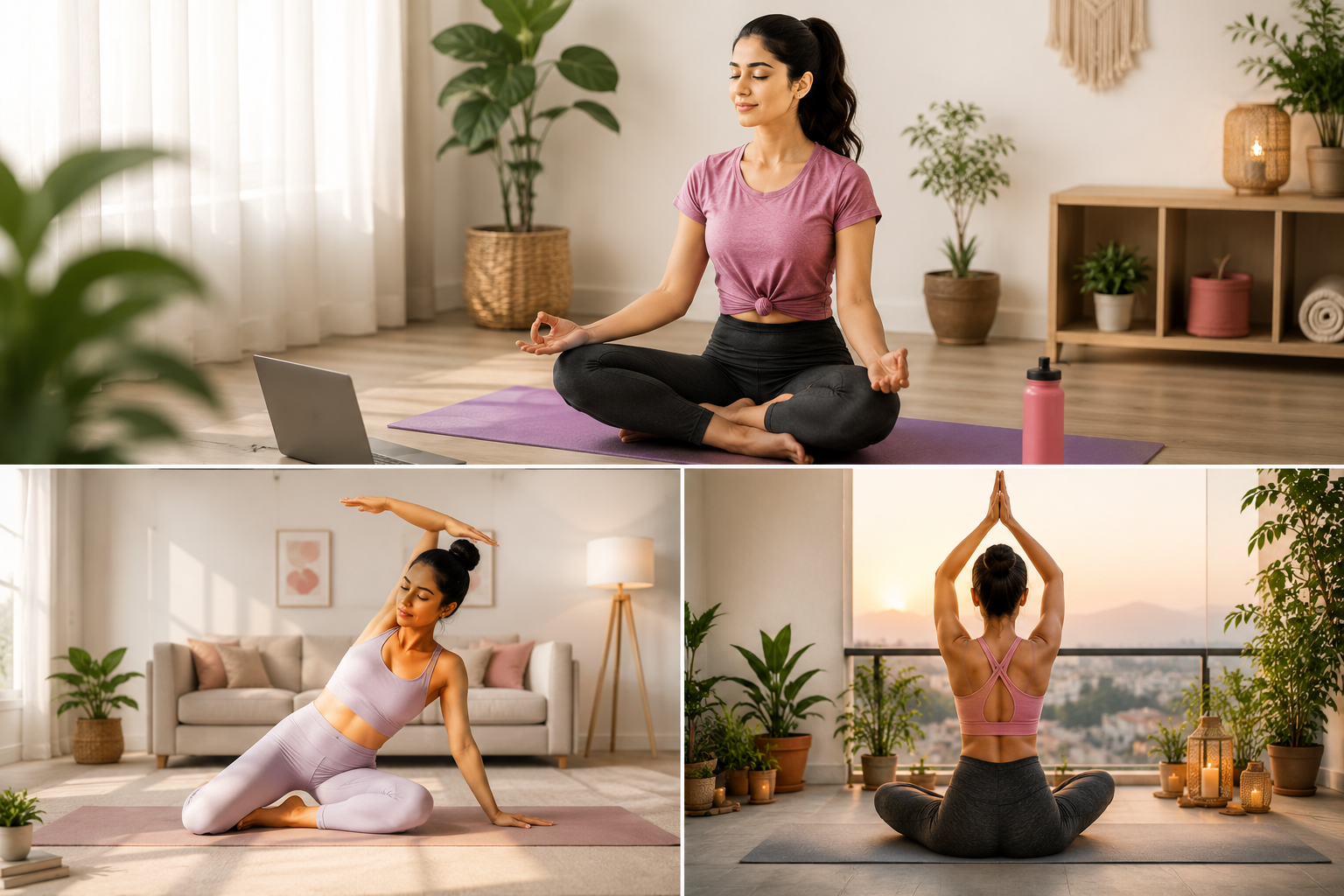
Yoga for home means practicing simple stretching, breathing, and balance poses in your own space, using nothing more than a mat and about twenty minutes, and it is genuinely one of the easiest ways for a beginner in Pakistan to start moving without stepping into a gym. If you have been putting it off because you pictured leggings, a studio full of strangers, and poses you have never heard of, this guide is written for exactly that hesitation.
Most yoga guides online are written for a completely different context, a spare room with hardwood floors, workout clothes bought specifically for the occasion, nobody else home to walk in on you. Real life in Lahore, Karachi, or Islamabad looks different, a shared living room, a shalwar kameez or comfortable home clothes, family members around, and maybe forty five minutes free between chores and everything else the day demands. This guide is built around that reality instead of ignoring it.
Why Yoga at Home Actually Works for Beginners
You do not need flexibility to start yoga, flexibility is what shows up after you start, not a requirement before you begin. Practicing at home removes the two biggest reasons women hesitate, feeling watched and feeling unprepared.
- No one watching you fumble through a pose for the first time
- You can practice in whatever clothes are already comfortable
- No commute, no class schedule to work around
- You progress at your own pace instead of keeping up with a room
What You Actually Need to Get Started
The equipment list for home yoga is short, and most of it you probably already own.
- A yoga mat, or even a folded blanket or thick towel if you do not have one yet
- A quiet corner with enough space to stretch your arms out fully in every direction
- Comfortable clothes that let you move, modest home wear works perfectly fine
- A phone or tablet if you plan to follow along with a video
That is genuinely the full list. Blocks and straps help later on, but they are not necessary to begin.
Setting Up a Space That Actually Works in a Pakistani Home
Most homes in Pakistan do not have a spare room sitting empty for yoga, and that is completely fine. A cleared corner of a bedroom or a living room works just as well once the television is off and the room is quiet for a few minutes.
- Choose a time when the room is naturally quieter, early morning or after the household settles for the night
- Practice near a wall if you are working on balance poses, it gives you something to lean on
- Keep the space simple, you do not need a dedicated yoga room to build a real practice
Timing matters more in Pakistan's climate than most international guides account for. Summer afternoons in Lahore are simply too hot for a focused practice indoors without good ventilation, early morning or after sunset tends to work far better for both comfort and energy levels.
A Simple Beginner Routine to Start With
Here is a genuinely manageable starting sequence, roughly fifteen to twenty minutes, that does not require any prior experience.
- Start seated, spend two minutes simply breathing slowly and settling your attention
- Move into cat cow stretches on your hands and knees, ten slow rounds to warm up the spine
- Hold a child's pose for one minute, resting your hips back toward your heels
- Move through a few rounds of standing forward folds, bending knees as much as needed
- Finish with a few minutes lying flat on your back, letting your body fully rest
This sequence alone, done consistently three or four times a week, builds real flexibility and a noticeably calmer mind within a few weeks.
Common Mistakes Beginners Make
A few patterns show up constantly with anyone starting yoga at home for the first time.
- Trying to copy advanced poses seen online instead of starting with basics
- Holding your breath during a stretch instead of breathing through it
- Comparing your flexibility to someone else's instead of your own progress
- Skipping the practice entirely on busy days instead of doing even five minutes
How Yoga Fits Alongside Strength Training
Yoga is genuinely valuable on its own for flexibility, stress relief, and gentle movement, but it is worth being clear about what it does and does not do. It is not a substitute for strength training if fat loss, muscle tone, or significant body composition change is your actual goal. This complete guide to strength training for women explains why resistance work plays a different role than stretching based movement.
Many women use yoga as a recovery day activity alongside a structured strength program, rather than as the entire plan. If you are building a full weekly routine and want a beginner friendly starting point that includes both, this beginner workout plan for women at home shows how movement and rest can be balanced across a week.
Yoga for Posture and Back Discomfort
A lot of women come to yoga specifically because of stiffness from long hours sitting, whether at a desk or simply through daily routine. Gentle yoga stretches can genuinely help here, though persistent pain deserves a closer look. This guide on posture correction and rehabilitation exercises for women and this one on back pain relief exercises for women at home both pair well with a gentle yoga practice if discomfort is part of what brought you here.
Quick Summary
- Yoga for home needs only a mat, a quiet corner, and about twenty minutes to start
- Early morning or evening practice works better than hot Lahore afternoons
- A simple five step beginner sequence builds real progress within weeks
- Yoga complements strength training well, it does not replace it for fat loss or toning goals
Frequently Asked Questions
Do I need to be flexible before starting yoga at home
No, flexibility develops through consistent practice, it is not a requirement to begin. Every pose can be modified to match your current ability.
How many days a week should a beginner practice
Three to four sessions a week is a realistic starting point, and even five to ten minutes on busier days is better than skipping entirely.
Can yoga alone help me lose weight
Gentle yoga supports flexibility, stress reduction, and mobility, but it is not typically enough on its own for significant fat loss. Pairing it with strength training produces more noticeable body composition change.
What is the best time of day to practice yoga at home in Pakistan
Early morning or evening tends to work best, especially during hot months, since midday heat can make a focused practice uncomfortable in most homes.
Do I need special clothes for yoga at home
No, any comfortable clothing that allows a full range of movement works fine, including modest home wear. Special activewear is not required to practice effectively.
Is yoga safe during the postpartum period
Gentle yoga can be appropriate after postpartum recovery has progressed, but timing and pose selection should be guided by your doctor's clearance and, ideally, a trainer familiar with postpartum recovery.
If you want a full weekly plan that blends recovery focused movement with actual strength training, rather than choosing one or the other, you can explore the complete range of programs at Fit Vibe Trainer.
Ready to put this into action?
Train 1-on-1 or in a group with Amna — your first discovery call is completely free. Female-only, fully online, results you can see.
Book My Free Call on WhatsApp →