Back to home
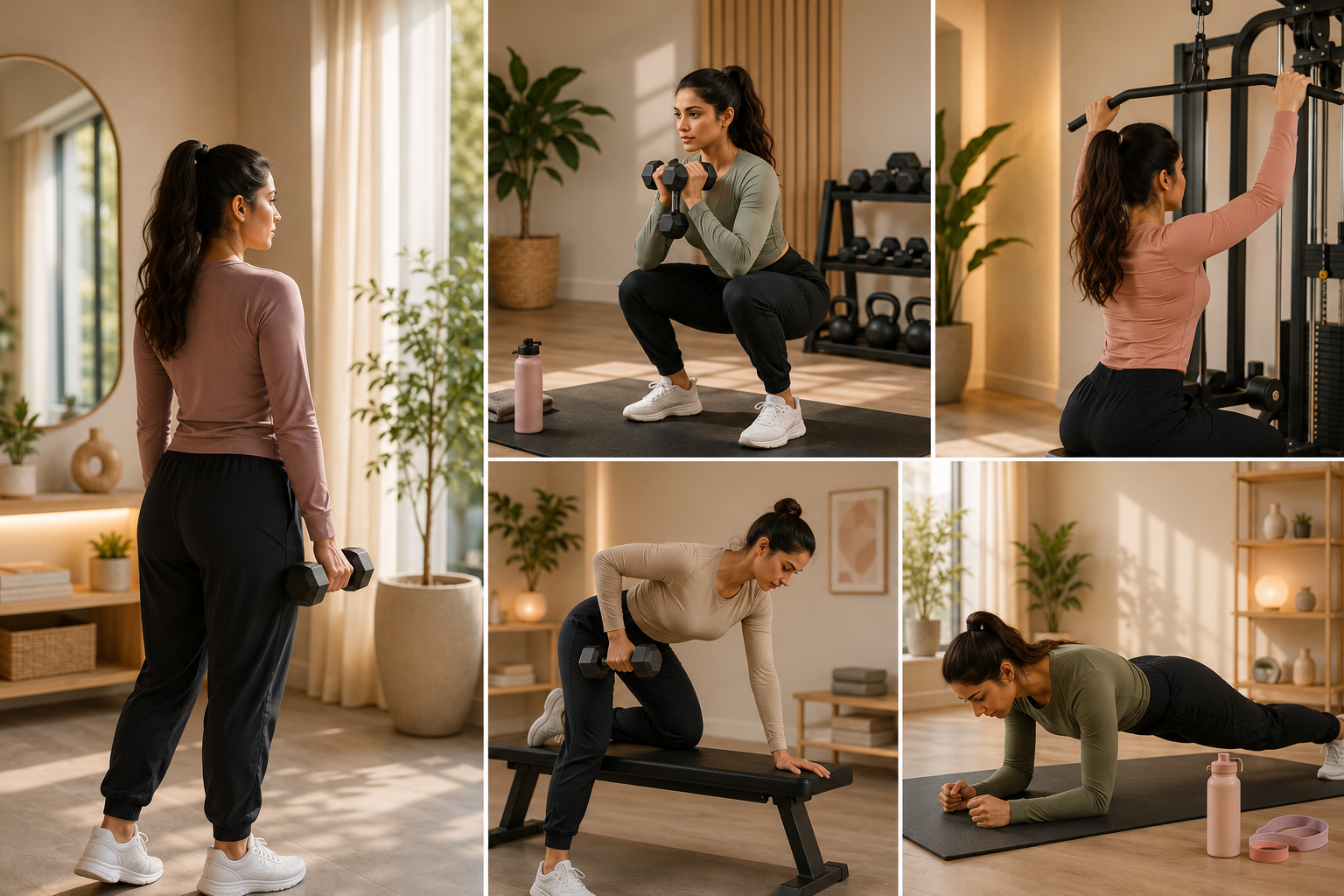
Strength Training for Women, From Someone Who Actually Coaches It
The bulk myth, cycle aware training, and postpartum considerations most generic guides skip entirely.
The bulk myth, cycle aware training, and postpartum considerations most generic guides skip entirely.
Strength training for women builds lean muscle, raises resting metabolism, improves bone density, and supports mental health, without causing the bulky look many women still worry about. Amna Saleem is a certified fitness coach who has built strength programs for women in Lahore and online in 18 or more countries, including clients navigating postpartum recovery, PCOS, and hormonal cycles that most generic strength guides never mention.
Most articles on this topic are written by editors or general fitness writers rather than someone actually coaching women day to day. This page comes from real coaching experience, covering what actually changes based on hormones, life stage, and recovery needs, not just a generic rep and set scheme.
Muscle mass naturally begins declining around age 30, and that decline accelerates further after menopause, taking bone density down with it and raising the risk of osteoporosis later in life. Strength training is one of the most effective ways to slow both processes. Beyond the physical benefits, building strength also improves mood and reduces anxiety symptoms, supports better sleep, and builds the kind of functional strength that makes everyday tasks, carrying groceries, lifting a child, climbing stairs, noticeably easier.
Women do not produce enough testosterone to build bulky muscle the way male bodybuilders do, and building visible size requires a very specific and deliberate combination of training volume, caloric surplus, and often years of dedicated effort. What strength training actually produces for most women is leaner muscle tone, a faster resting metabolism, and noticeably improved body composition, not added bulk. This myth remains one of the biggest reasons women avoid the weights section of a gym entirely, and it is simply not supported by how female physiology responds to training.
One factor almost never covered in generic strength guides is how the menstrual cycle affects training capacity and recovery. During the follicular phase, rising estrogen tends to support higher intensity training and faster recovery, making it a good window for pushing heavier loads. Around ovulation, elevated estradiol and testosterone often make women feel strongest and most capable of intensive training. In the luteal phase, energy and recovery capacity can dip, and scaling intensity back slightly rather than forcing the same output tends to prevent burnout and injury. During menstruation itself, gentler movement and avoiding maximal effort lifts is generally more comfortable and appropriate. None of this means skipping training around your cycle, it means adjusting intensity intelligently rather than ignoring what your body is signaling.
What works shifts with age and life stage. In your 20s and early 30s, the priority is mastering fundamental movements, squats, hinges, presses, and rows, while progressively increasing load, since the body recovers quickly and builds strength efficiently during this window. Through your 30s and 40s, life gets busier and hormonal shifts can subtly affect recovery, which is where structured, time efficient programming matters more than training harder for longer. After 40 and especially post menopause, building and maintaining muscle requires more deliberate effort, since the body responds more slowly, but the payoff in bone density and long term function makes it worth prioritizing rather than avoiding. Women managing joint pain or working with a slower, gentler starting point often benefit from the same progressive approach used in strength training for older adults.
This is the area most strength training content skips completely, and it matters enormously. Returning to strength training after pregnancy requires medical clearance first, then a careful, gradual rebuild that prioritizes core and pelvic floor function before adding load or intensity. Diastasis recti, the separation of the abdominal muscles common after pregnancy, needs to be assessed and addressed with specific exercises before general core training resumes, since the wrong movements too early can worsen it. The full approach used with postpartum clients is covered in postnatal fitness and safe exercises after pregnancy, built around exactly this kind of careful progression.
"She helps me in exercises of disc slip, sciatica and helps me in my muscle building. My body pains are much better now. Really hard working and lovely person."
— Aisha Mushtaq, Google Review
Research generally supports training each muscle group around twice a week, with at least 48 hours between sessions targeting the same muscles, spread across three to five total sessions weekly depending on schedule and recovery capacity. A common mistake is not training with enough intensity, many women stop sets with far more reps left in the tank than needed to actually signal muscle growth, which slows progress even with consistent gym attendance.
Women starting with no equipment at all can begin with the same structure using bodyweight resistance, covered step by step in the guide on building a beginner workout plan at home. As strength improves, adding light dumbbells or resistance bands allows continued progress without needing a full gym setup.
Muscle growth and fat loss both depend heavily on adequate protein intake alongside consistent training, and a nutrition plan that ignores this tends to leave results on the table regardless of how well the workouts are structured. Programs built around sustainable nutrition for weight loss and fat loss for women specifically are designed to support strength training rather than work against it, since restrictive dieting alongside heavy training usually backfires by sacrificing the muscle the training is meant to build.
Amna is an ACE Certified Personal Trainer who also holds a Pre and Postnatal Coaching Certification, a Girls Gone Strong Women's Coaching Specialist credential, a Diploma in Nutrition and Diet Planning, a Diploma in Physical Fitness and Exercise Science, a Functional Training and Conditioning Certification, and a Postpartum Fitness and Recovery Certification covering diastasis recti management and pelvic floor strengthening. Every program is built around real coaching experience with women managing exactly the factors covered on this page, not general fitness writing. For women managing chronic joint pain who want a gentler entry point into strength work, knee pain recovery exercises for women shows how training is adapted around existing injuries. To see the full framework for evaluating a coach before committing, how to choose the right female fitness coach and what to look for in the best female personal trainer cover exactly what to check.
Every program begins with a free first session, so there is no cost or risk in testing the coaching style before committing. Group coaching starts at $79 a month for three live sessions weekly, moving to $129 a month for five sessions with a custom nutrition plan included. Fully private one on one coaching is $299 a month, covering three to five private sessions weekly, a personalized meal plan, and daily WhatsApp support. Billing is monthly with no long term contract, and payment is accepted in USD, GBP, AED, CAD, or EUR.
No. Women do not produce enough testosterone to build bulky muscle the way male bodybuilders do. Strength training typically produces leaner muscle tone, a faster metabolism, and improved body composition, with visible bulk requiring a very specific and deliberate training and nutrition approach most programs are not built around.
Most research supports training each muscle group about twice a week, spread across three to five total sessions depending on schedule and recovery. Beginners can start with two to three sessions weekly and build up from there.
It can help. Higher intensity training often feels more manageable during the follicular phase and around ovulation, while scaling back slightly during the luteal phase and menstruation tends to support better recovery and consistency over time.
Only after medical clearance, and even then training should begin gradually with a focus on core and pelvic floor function before adding load. Diastasis recti should be assessed first, since the wrong exercises too early can worsen the separation.
Yes. Strength training helps counter the muscle and bone density loss that accelerates after menopause, and it also supports metabolism and mood during a stage when both can shift noticeably.
The core principles of strength training are largely the same across genders, but women benefit from accounting for hormonal cycles, generally faster recovery between sessions, and life stage factors like pregnancy or menopause that male training advice does not address.
A good beginner plan focuses on compound movements, squats, hinges, presses, and rows, done two to three times a week with bodyweight or light resistance, prioritizing correct form before increasing load.
Yes. Building lean muscle raises resting metabolism, meaning the body burns more calories even outside of workouts, which makes strength training a key part of sustainable fat loss rather than an optional addition to cardio.
Strength training can support insulin sensitivity and body composition in women managing PCOS, though a slower, more patient training pace is generally recommended to avoid adding unnecessary stress to the body.
With Fit Vibe Trainer, group coaching starts at $79 a month and private one on one coaching is $299 a month, with every plan including a free first session before any payment is required.
Message Amna directly on WhatsApp to book a free discovery call, or explore the full Fit Vibe Trainer program overview first. Verified client reviews are available on Fit Vibe Trainer's Google Business Profile.