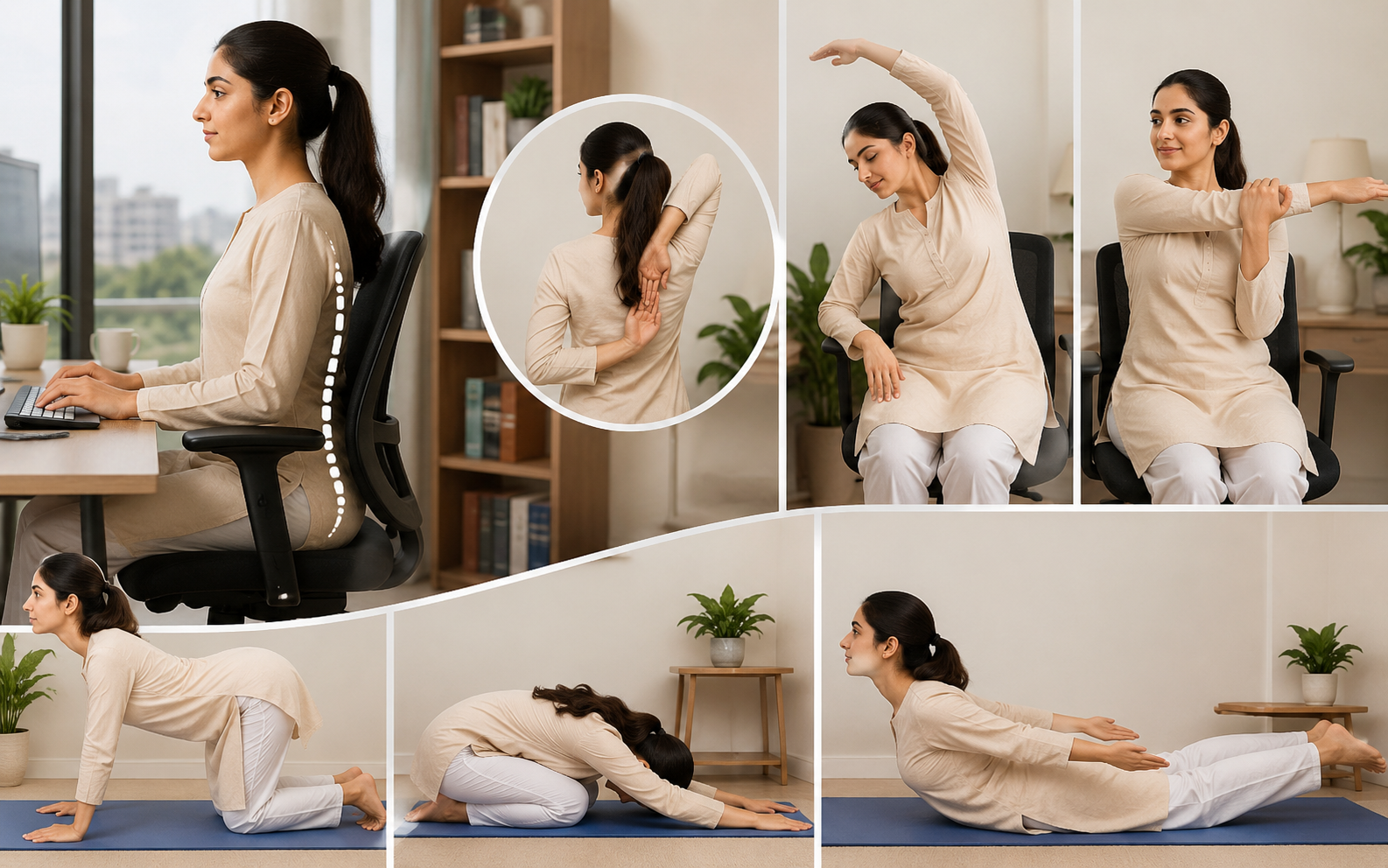
Posture correction exercises for desk job women in Pakistan work best when they target the chest, upper back, hips, and core together, rather than focusing on one area alone, since long hours of sitting affect the whole body at once. A short daily routine of chest openers, upper back activation, and hip flexor stretches, guided by a trainer familiar with posture correction and rehabilitation exercises, can noticeably reduce the rounded shoulders, neck strain, and lower back tightness that come from desk work.
If you spend eight or more hours a day at a laptop, whether at an office in Lahore or working remotely from home, your body has likely adapted to that position in ways you have not noticed yet. Rounded shoulders, a forward head, and a stiff lower back are not signs of weakness. They are simply what happens when the same muscles hold the same position for years without any counter movement.
Why Desk Jobs Quietly Damage Posture Over Time
Understanding why this happens makes the correction process far more logical than just memorizing a list of stretches.
Sitting for extended periods shortens the hip flexors and chest muscles while the upper back and glutes gradually weaken from disuse. Over months, the body settles into this new normal, and what started as temporary slouching becomes a structural pattern that feels normal even when it is not. This is why posture correction is never just about sitting up straight for five minutes. It requires actively strengthening the muscles that have gone quiet and stretching the ones that have tightened.
Common Signs Your Posture Needs Attention
Many women brush off early posture signs as ordinary tiredness, when they are actually early warnings worth addressing.
- Neck and shoulder tension that builds through the afternoon and eases only after lying down
- A visible forward head position when looking at yourself from the side in photos
- Lower back stiffness when standing up after long sitting sessions
- Rounded shoulders that seem to curve inward even when consciously trying to stand straight
Catching these signs early means the correction process is usually faster, since the muscle imbalances have not had years to fully set in.
The Core Posture Correction Exercises That Actually Work
A good posture routine does not need to be long or complicated. It needs to be consistent and cover the right muscle groups.
- Doorway chest stretch, holding thirty seconds per side to open tight chest muscles from hours of forward reaching
- Wall angels, performed slowly to activate the mid back muscles that support upright shoulders
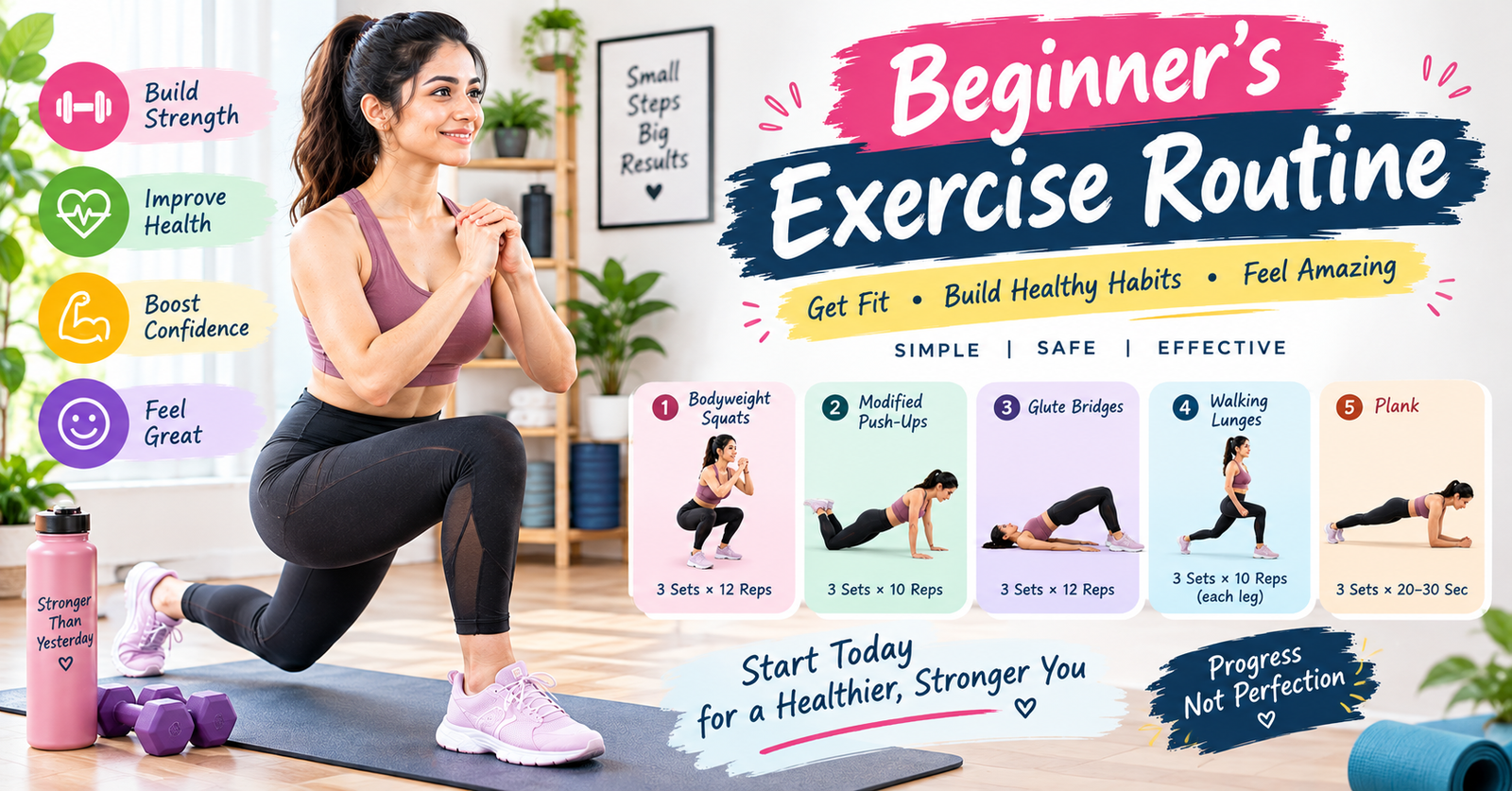
- Glute bridges, done in sets of twelve to reawaken the glutes and support the lower back
- Seated hip flexor stretch, especially useful for women who cannot always get up between meetings
- Chin tucks, a small movement that directly counters the forward head position from screen work
Doing this sequence three to four times a week, alongside occasional standing breaks during the workday, tends to produce visible improvement within a few weeks rather than months.
How This Connects to Back Pain and Long Term Health
Posture and back pain are so closely linked that addressing one usually improves the other. Poor sitting posture places uneven pressure on the spine, and over time this pressure often shows up as the kind of chronic tightness covered in depth in this guide on back pain relief for women at home. Ignoring posture for years does not just affect appearance. It can contribute to tension headaches, reduced lung capacity from a compressed chest, and a higher chance of injury during ordinary daily movements like lifting or bending.
Step by Step Guidance for Building a Desk Job Routine
Building a sustainable routine works better when it fits naturally into a workday rather than requiring a separate hour set aside for it.
- Set a reminder every ninety minutes to stand, stretch, and reset your sitting position
- Keep your screen at eye level to reduce the pull toward a forward head posture
- Do a short two minute stretch sequence during lunch rather than saving all movement for evening
- Pair posture work with general strength sessions, since stronger overall muscles hold good posture more easily, which is part of why a structured strength training program for women often improves posture as a side effect
Common Mistakes Women Make With Posture Correction
Even motivated women often approach posture work in ways that slow their own progress.
- Only stretching the tight areas while ignoring the weak muscles that need strengthening
- Trying to consciously hold a perfect posture all day, which is exhausting and rarely sustainable
- Expecting results after a few days rather than committing to a few consistent weeks
- Using a generic posture corrector brace as a permanent fix instead of a temporary reminder tool
Real correction comes from rebuilding strength and mobility, not from external props alone. A brace can remind the body of an upright position, but it cannot do the muscular work required for lasting change.
Benefits and Realistic Expectations to Keep in Mind
Consistent posture work offers real, measurable benefits, though it helps to be honest about the timeline involved.
- Reduced neck and shoulder tension typically within two to three weeks of consistent practice
- Improved breathing capacity as the chest opens and the upper back strengthens
- Better confidence and presence, since upright posture visibly changes how someone carries themselves
- Long standing structural changes from years of poor posture may take several months to fully reverse, and severe cases benefit from professional guidance rather than self directed effort alone
For women researching local wellness options, directories such as ZK Local can be a useful starting point when looking for nearby ergonomic or physiotherapy support to complement a posture routine.
Booking Support for a Personalized Posture Plan
Self guided stretches help, but a personalized assessment catches imbalances that generic advice tends to miss, since every woman's posture pattern develops differently based on her specific work setup and daily habits. Booking a free discovery call with Fit Vibe Trainer allows Amna Saleem to review your specific posture concerns, whether you train in person around Lahore or online from anywhere in Pakistan through home personal training sessions built around your schedule.
Frequently Asked Questions
How long does it take to fix bad posture from a desk job?
Most women notice reduced tension within two to three weeks of consistent daily stretching and strengthening, though fully correcting years of desk posture can take two to three months of steady practice.
Can posture correction exercises be done at a desk during work hours?
Yes, several exercises such as chin tucks, seated hip flexor stretches, and shoulder blade squeezes can be done directly at a desk without needing extra space or equipment.
Do posture correction braces actually work for desk job women?
A posture brace can serve as a helpful reminder to sit upright, but it does not strengthen the muscles needed for lasting change, so it works best alongside an active exercise routine rather than as a standalone fix.
Is posture correction linked to back pain relief?
Yes, poor posture is one of the most common contributors to chronic back tightness, and improving posture alongside targeted core and glute strengthening often reduces back pain significantly.
What is the fastest way to notice posture improvement as a desk worker?
Combining short movement breaks every ninety minutes with a daily five minute stretch and strengthening sequence tends to produce the fastest noticeable improvement, often within the first two weeks.
Ready to put this into action?
Train 1-on-1 or in a group with Amna — your first discovery call is completely free. Female-only, fully online, results you can see.
Book My Free Call on WhatsApp →