If you want the short answer first, here it is. A workable winter fitness routine for Pakistani women in Canada combines indoor strength training three to four times a week, short bursts of indoor cardio, mobility work to counter joint stiffness from the cold, and a nutrition plan adjusted for lower sunlight and slower digestion in winter months. The goal is not to fight the cold, it is to build a routine that works because of what winter actually does to the body, not despite it.
Why Winter Changes the Whole Fitness Equation
Moving from Lahore, Karachi, or Islamabad into a Canadian winter is a bigger shift than most women expect. The drop in daylight, the dry indoor heating, and the sheer discomfort of stepping outside all quietly chip away at motivation, and that is before joint stiffness and slower circulation even enter the picture.
- Shorter daylight hours reduce natural vitamin D and can lower energy for workouts.
- Cold, dry air tightens muscles and makes joints feel stiffer, especially in the knees and lower back.
- Indoor heating dries out skin and airways, which can make cardio feel harder than it should.
- Reduced outdoor walking, common in Pakistan even without formal exercise, disappears almost entirely.
Building a Routine That Fits the Season, Not Against It
A routine copied from a summer plan or from a gym back home usually fails within a few weeks of Canadian winter. The fix is not more willpower, it is a different structure built around what is realistically achievable indoors, in short daylight windows, on days when stepping outside is genuinely unpleasant.
A dependable weekly structure looks like this for most beginners and intermediates managing home, work, or family responsibilities alongside training:
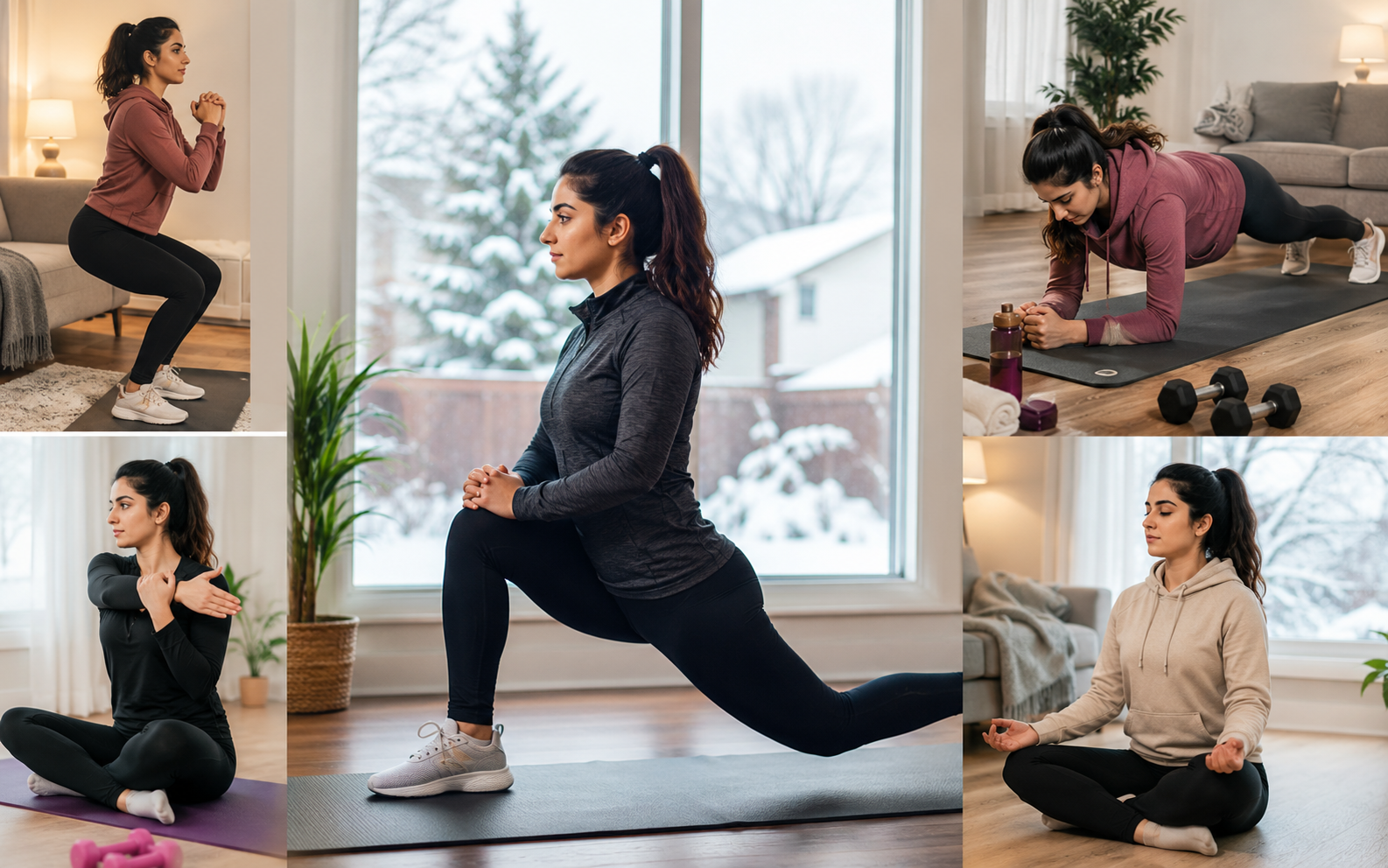
- Two to three strength sessions using bodyweight, resistance bands, or light dumbbells
- One or two short indoor cardio sessions, fifteen to twenty five minutes each
- One dedicated mobility and stretching session focused on hips, shoulders, and lower back
- One full rest day with light walking indoors if possible
Indoor Strength Training That Actually Delivers Results
Strength training matters more in winter than people assume, since muscle activity helps regulate body temperature and supports joint stability when the cold makes everything feel tighter. A well built strength session does not need a gym, a squat rack, or an hour of free time.
What matters more than equipment is order and consistency. A simple full body circuit repeated three times a week, progressing gradually in reps or resistance, will outperform an inconsistent five day split every time. This is a pattern seen repeatedly in coaching Pakistani women both in Dubai and in colder climates, the body responds to structure and progression far more than intensity alone.
Cardio Without Stepping Into the Cold
Outdoor walks and jogs, a normal part of daily movement back home, often stop completely once temperatures drop below freezing. Replacing that lost movement indoors is one of the most overlooked parts of a Canadian winter routine.
- Stair climbing inside an apartment building for ten to fifteen minutes
- Low impact step routines or dance based cardio using a phone or laptop
- Skipping rope in a hallway or living room, in short two to three minute intervals
- Treadmill walking at an incline if one is available at home or at a nearby gym
Mobility Work Is Not Optional in Winter
Joint stiffness increases noticeably in cold weather, and women who skip mobility work in favor of only strength or cardio often notice more discomfort in the knees, hips, and lower back by mid winter. A short daily mobility routine, even ten minutes, prevents most of this.
Gentle rotational stretches for the shoulders and hips, combined with slow controlled breathing, warm the body from the inside before any strength or cardio session begins. This is especially relevant for women managing existing joint or shoulder concerns, a topic covered in more depth in this guide on frozen shoulder recovery exercises, since the same gentle mobility principles apply directly to cold weather stiffness.
Nutrition Adjustments for the Colder Months
Appetite and digestion shift in winter, often leading to heavier comfort eating and lower water intake since thirst cues weaken in cold weather. Neither of these is a failure of discipline, they are physiological responses that a good routine plans around rather than fights.
- Keep protein consistent across meals to preserve muscle and manage appetite
- Increase warm fluids like herbal tea or soup broth to maintain hydration
- Include vitamin D rich foods or a supplement, given reduced sunlight exposure
- Avoid drastically cutting carbohydrates, since the body uses more energy to stay warm
Common Mistakes Pakistani Women Make in Canadian Winters
Most of the frustration around winter fitness comes from a handful of repeated mistakes rather than a lack of effort. Recognizing these early saves months of stalled progress.
- Pausing all activity until spring, which leads to a harder restart later
- Skipping warm ups entirely, which increases injury risk in cold, stiff muscles
- Relying only on outdoor walking for fitness, then abandoning movement once it snows
- Ignoring low mood linked to reduced sunlight instead of adjusting the routine to support it
These patterns are strikingly similar to what shows up in other climate related coaching, including plans built for heat rather than cold, such as this home workout plan for women in Saudi Arabia, where the underlying lesson is the same, the routine has to match the environment, not fight it.
Managing Existing Health Conditions Through Winter
Many Pakistani women managing thyroid conditions or hormonal imbalances notice symptoms shift with the seasons, often worsening slightly in colder months due to slower metabolism and reduced activity. A routine that accounts for this rather than ignoring it tends to hold up far better over a full winter.
For women already managing a diagnosed thyroid condition, this detailed breakdown on a thyroid and weight gain fitness plan outlines how to structure training and eating around medical guidance, which becomes even more relevant once winter slows digestion and energy further.
Staying Consistent With Real Support
Consistency, not intensity, is what separates women who maintain their fitness through a Canadian winter from those who restart every spring. Structured check ins, whether from a coach, a friend, or a simple tracking habit, make the biggest difference during the darkest, coldest months.
Online coaching removes the biggest winter barrier entirely, since sessions happen from home regardless of how cold it is outside. Live video sessions, form correction, and weekly check ins keep the routine on track even during a week of minus twenty temperatures, which is often when motivation drops the fastest.
Finding Local Support and Trusted Directories
Many women searching for a female personal trainer or wellness professional prefer to first confirm credibility through an independent local directory before booking a call. Fit Vibe Trainer's profile, run by certified trainer Amna Saleem, is listed on ZK Local, a directory that helps women in different cities find verified wellness and fitness professionals with genuine reviews. Checking a directory listing alongside a trainer's own website is a simple way to confirm legitimacy before committing to a program.
Frequently Asked Questions
How many days a week should I train during a Canadian winter
Three to four sessions a week, mixing strength, short cardio bursts, and mobility work, is realistic for most women and easier to sustain than a daily commitment when daylight and energy are both reduced.
Can I stay fit without going outside at all in winter
Yes. Bodyweight strength training, resistance bands, indoor stair climbing, and short cardio circuits at home can maintain and even improve fitness levels without any outdoor activity, as long as sessions are consistent.
Why do my joints feel stiffer in winter even without an injury
Cold air reduces blood flow to the extremities and tightens surrounding muscles, which makes joints feel stiffer even without any underlying injury. A proper warm up and daily mobility work usually resolves most of this discomfort.
Does winter affect weight loss progress for women managing thyroid issues
It can. Slower metabolism, reduced daylight, and lower activity levels in winter often slow progress for women with thyroid related weight concerns, which is why nutrition and training adjustments matter more during these months than in summer.
Is online personal training effective for winter fitness in Canada
Yes, and for many women it works better than in person training during winter, since sessions happen entirely from home with no commute or exposure to the cold, while still providing live coaching, form correction, and accountability.
Ready to put this into action?
Train 1-on-1 or in a group with Amna — your first discovery call is completely free. Female-only, fully online, results you can see.
Book My Free Call on WhatsApp →