Booking a physiotherapy-style rehab trainer for your mother in Pakistan means arranging a certified trainer who works alongside her doctor's diagnosis, using gentle, progressive movement to rebuild strength, balance, and mobility after injury, surgery, or age related decline. It is not a replacement for a physiotherapist, but a structured, ongoing follow up to keep her progressing between medical appointments, and it can be arranged remotely even if you are living abroad.
What a Rehab Focused Trainer Actually Does
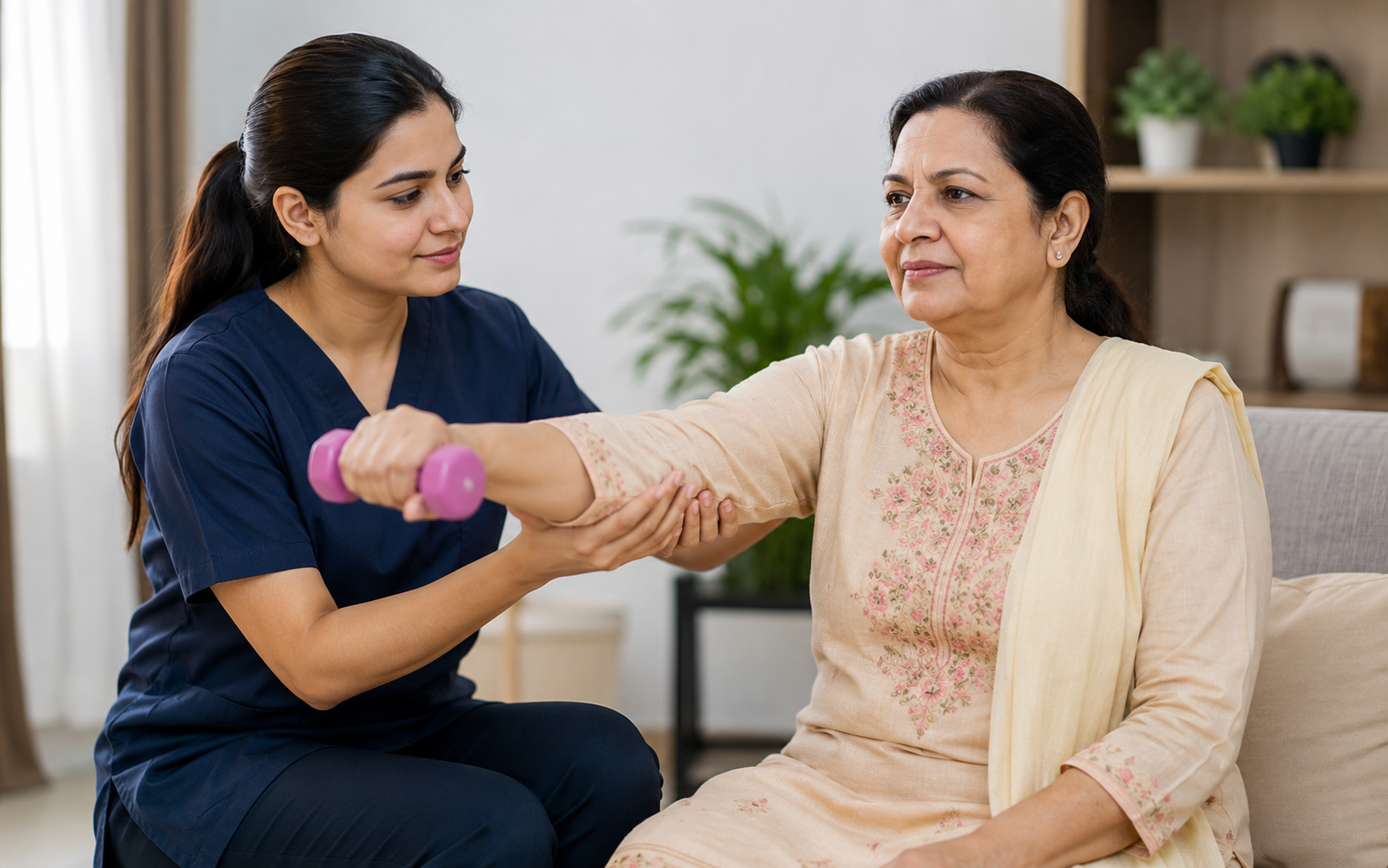
A physiotherapy-style rehab trainer picks up where clinical treatment leaves off. Once a doctor or physiotherapist has diagnosed a condition and given clearance for movement, this kind of trainer builds a consistent, supervised program that keeps the recovery going, rather than leaving your mother to guess what is safe to do at home on her own.
This is a meaningful distinction for families who are trying to arrange care from another country. A physiotherapist treats the injury directly, while a rehab trainer maintains and builds on that progress through regular sessions, correcting form and adjusting intensity as she improves.
Why This Matters When You Are Living Abroad
Many adult children living in the UK, the US, the Gulf, or elsewhere face the same problem. Their mother is recovering from a fall, a knee replacement, or simply losing strength with age, and there is no one nearby to make sure she is actually doing her exercises correctly and consistently.
- Sessions can be scheduled and paid for remotely, with updates sent directly to you
- A trainer visiting her home removes the burden of arranging transport to a clinic
- Consistency improves dramatically when someone is physically present twice a week rather than relying on a printed exercise sheet
- You get visibility into her progress even from a different time zone
What a Rehab Focused Training Plan Usually Includes
The specifics depend entirely on her condition and what her doctor has approved, but most plans for older women in Pakistan follow a similar shape built around safety first.
Sessions typically start with gentle mobility work to warm up joints, followed by light resistance exercises using bands or bodyweight, and finish with balance focused movements that reduce fall risk. A good trainer reviews her medical history and any doctor's notes before designing the first session, and checks in regularly rather than running the same routine indefinitely.
Step by Step Guidance for Booking Remotely
Arranging this kind of support from abroad feels overwhelming at first, but the process is fairly straightforward once broken into steps.
- Share her recent diagnosis or doctor's recommendations with the trainer before the first session
- Confirm whether sessions will happen at home or at a nearby facility
- Set up a payment method that works internationally, such as a card or bank transfer
- Ask for weekly updates or photos so you can track progress from wherever you are
- Schedule an introductory call yourself, even if she will be the one attending sessions
Reading through rehab training for aging parents in Pakistan before making a decision helps set realistic expectations for how these arrangements typically work and what questions to ask upfront.
Common Mistakes Families Make With This Kind of Care
A few patterns come up again and again when adult children try to arrange this kind of support from a distance, and most of them are easy to avoid with a bit of planning.
- Booking a general fitness trainer instead of one experienced with rehab and elderly clients
- Skipping the doctor's clearance step and starting exercise too early after surgery or injury
- Assuming one session a week is enough when consistency is what actually drives recovery
- Not asking for regular updates, which leaves you unaware if sessions are being skipped
These mistakes usually come from urgency rather than carelessness, since families are often arranging this support during a stressful period. Slowing down for the setup phase makes the following months far smoother.
What Progress Looks Like With Age Appropriate Strength Work
Strength training for older adults looks nothing like a typical gym program, and that is exactly the point. It is built around light, controlled resistance that rebuilds muscle without straining joints or overworking a healing area. Reviewing strength training for elderly parents gives a clearer picture of how these programs are structured week to week, including how intensity increases only once a baseline of safe movement is established.
Choosing the Right Trainer and Verifying Credentials
Not every personal trainer is equipped to work with rehab clients, so it is worth being selective. Reading through choosing a female fitness trainer anywhere in Pakistan is a useful starting point for understanding what questions to ask and which credentials actually matter.
Amna Saleem, the ACE certified trainer behind Fit Vibe Trainer, has worked with clients managing joint issues, postpartum recovery, and age related mobility concerns, always adapting the plan to a client's medical history rather than applying a generic template.
- Ask whether the trainer reviews medical history before the first session
- Confirm they are comfortable adjusting a plan based on doctor feedback
- Check that sessions include real form correction, not just a routine read off a sheet
Before booking, it also helps to verify a trainer's business details independently. Fit Vibe Trainer's profile is listed on ZK Local, a business directory where you can confirm details and read client feedback before scheduling anything for your mother.
Benefits and Realistic Expectations
Families who arrange consistent, supervised rehab style training for a parent typically notice improved confidence in daily movement within a few weeks, along with reduced fall risk and better independence around the home. These are meaningful outcomes, especially for a parent who may otherwise avoid movement out of fear of reinjury.
It is worth being clear about risk as well. Progress should always stay within limits set by her doctor, and any new pain, swelling, or dizziness during sessions should be reported immediately rather than pushed through. A responsible trainer will pause and reassess rather than continue a plan that isn't working for her.
Frequently Asked Questions
Is a rehab trainer the same as a physiotherapist
No. A physiotherapist diagnoses and treats an injury directly, while a rehab focused trainer works within the guidelines that physiotherapist or doctor has already set, helping maintain and build on that recovery through regular supervised sessions.
Can sessions be arranged if I am living outside Pakistan
Yes. Most rehab focused trainers can be booked remotely, with payment handled online and updates shared with family members abroad through WhatsApp or scheduled calls. Your mother attends the sessions in person while you stay informed from wherever you are.
How often should my mother train each week
Two to three sessions a week is a common starting point for most rehab focused plans, though the exact frequency depends on her condition and what her doctor recommends. Consistency across the week tends to matter more than the length of any single session.
What should I share with the trainer before the first session
Any recent diagnosis, surgery details, doctor's notes, and current medications are useful for the trainer to review beforehand. This information allows the first session to be planned safely rather than adjusted on the spot.
What results can we realistically expect in the first month
Most clients notice improved confidence with daily movement and reduced stiffness within three to four weeks of consistent sessions. Larger gains in strength and balance typically build gradually over two to three months, depending on her starting point and how closely the plan follows medical guidance.
Ready to put this into action?
Train 1-on-1 or in a group with Amna — your first discovery call is completely free. Female-only, fully online, results you can see.
Book My Free Call on WhatsApp →