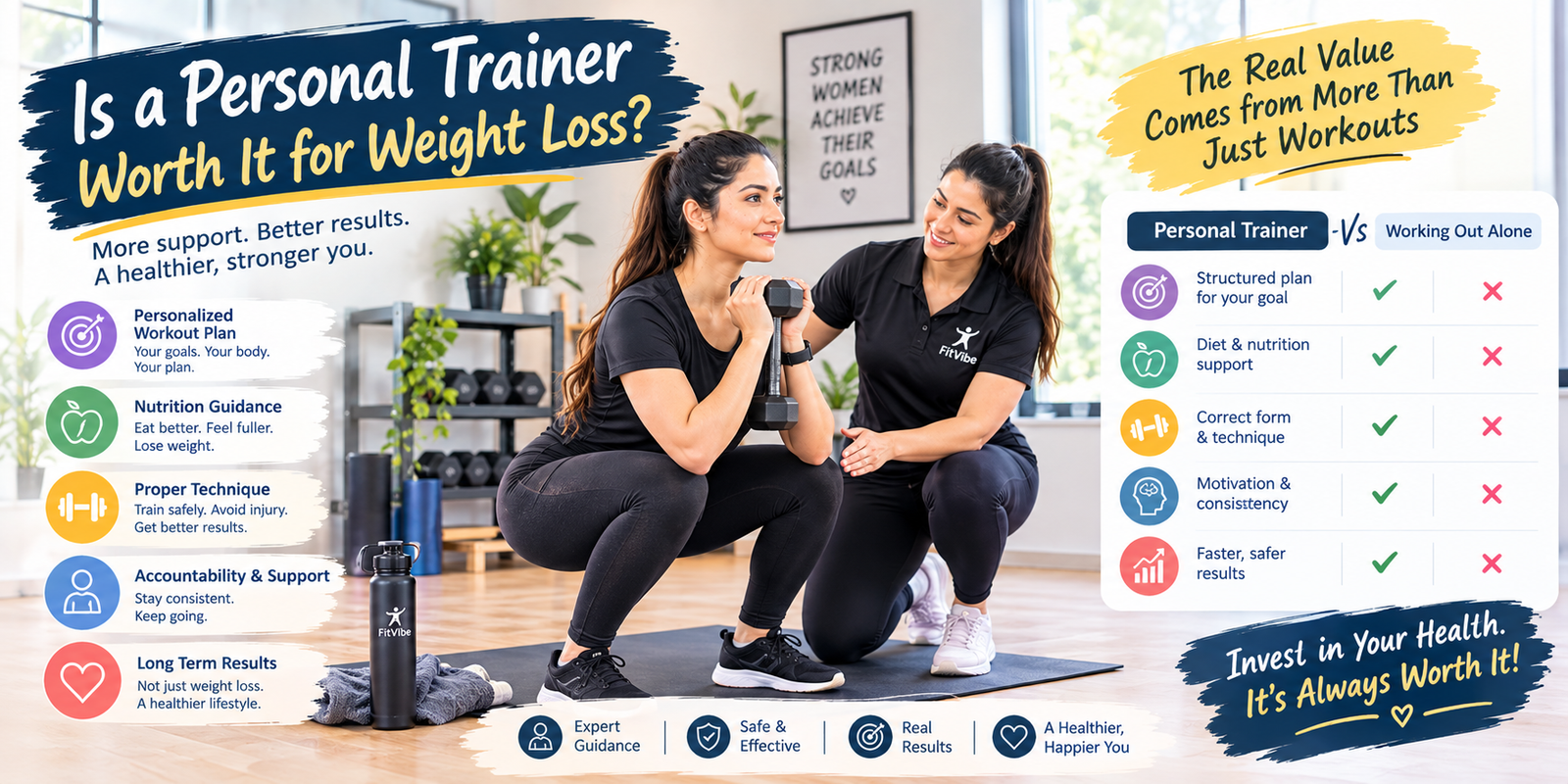
If you want the honest answer first, here it is. Losing 5kg in a month is possible for some women, particularly those starting with more weight to lose, but it sits at the upper edge of what is considered a safe and sustainable pace, and it requires a consistent calorie deficit, regular strength training, and daily movement rather than any shortcut or extreme restriction. Fit Vibe Trainer works with women in Lahore to build realistic plans around this exact goal, adjusting the approach based on starting weight, activity level, and how the body actually responds.
Most content promising rapid weight loss skips the part where results depend heavily on your starting point, and it rarely explains what happens after the month ends if the approach was not sustainable to begin with. This guide gives you a genuinely useful breakdown of what a natural, one month weight loss plan looks like, what is realistic for your specific situation, and how to avoid the common mistakes that cause weight to come right back.
Is Losing 5kg in a Month Actually Realistic
The honest answer depends heavily on your starting weight, since the same rate of loss looks very different on different bodies.
A few factors determine how realistic this goal is for you specifically.
- Women with more weight to lose typically see faster initial results, including more water weight loss
- Women closer to a healthy weight range usually lose more slowly and should aim lower
- Consistency across all four weeks matters more than any single dramatic week
- A generally recommended safe pace is around half a kilogram to one kilogram per week
If five kilograms feels aggressive for your starting point, aiming for three to four kilograms with a more moderate approach is often more sustainable and still delivers a meaningful, visible change within a month.
Understanding the Calorie Deficit Behind Weight Loss
Before building a plan, it helps to understand the basic principle that drives all fat loss, regardless of which diet or workout style is used.
Weight loss happens when your body consistently uses more energy than it takes in through food, known as a calorie deficit. A moderate, sustainable deficit supports fat loss while protecting energy levels, muscle mass, and hormonal balance, whereas an extremely aggressive deficit tends to backfire through fatigue, muscle loss, and rebound weight gain once normal eating resumes. This is why a structured, moderate approach usually outperforms extreme restriction over a full month.
Building a Realistic Daily Food Structure
A common mistake is assuming rapid weight loss requires eliminating entire food groups or skipping meals throughout the day.
A sustainable one month structure instead focuses on smart adjustments within your normal eating pattern.
- Keep familiar meals like daal, sabzi, and roti, adjusting portion sizes rather than removing them
- Prioritize protein at each meal to support muscle retention and manage hunger
- Reduce fried and heavily oiled preparations in favor of grilled or roasted versions
- Increase vegetable intake to add volume and fiber without significant added calories
- Stay consistently hydrated, since thirst is often mistaken for hunger
For a deeper breakdown of exactly how this looks with real Lahore based meals, the best diet plan for weight loss in Lahore walks through calorie awareness and practical food swaps in detail.
A Simple Workout Structure for the Month
Exercise supports faster, more sustainable fat loss while also protecting your metabolism during a calorie deficit, which matters more the more aggressive your goal is.
A workable structure for one focused month looks like this.
- Three to four strength based sessions using bodyweight or resistance bands
- Two to three brisk walks or light cardio sessions each week
- Daily movement outside of workouts, such as a short walk after meals
- At least one full rest day each week for recovery
Strength training in particular helps preserve muscle mass during a calorie deficit, which keeps your metabolism higher and produces a leaner, more toned result rather than just a lower number on the scale. A closer look at why this matters is covered in this guide on strength training for women.
Common Mistakes That Undermine Fast Weight Loss Goals
Ambitious goals like losing five kilograms in a month often fail not because the target is impossible, but because of a handful of repeated mistakes.
- Cutting calories too aggressively, which increases fatigue and often leads to bingeing
- Skipping strength training entirely and relying only on cardio
- Expecting the scale to drop steadily every single day rather than in a natural, uneven pattern
- Returning to old eating habits immediately after the month ends
- Ignoring sleep and stress, both of which significantly affect weight loss results
Avoiding these mistakes is often the real difference between a month of progress that sticks and one that gets undone within weeks.
Why Water Weight Explains Early Rapid Drops
Many women see a fast drop in the first week of a new plan and assume that pace will continue steadily, which sets up unrealistic expectations for the rest of the month.
A significant portion of early weight loss, especially in the first week, comes from reduced water retention rather than fat loss itself. Cutting back on refined carbohydrates and excess sodium causes the body to release stored water quickly, which shows up as a fast initial drop on the scale. Understanding this helps prevent discouragement when the pace naturally slows down in weeks two through four as the loss becomes primarily fat rather than water.
How PCOS or Hormonal Factors Can Change the Timeline
Not every woman's body responds to a calorie deficit at the same rate, and hormonal factors play a significant role in this variation.
Women managing PCOS often experience slower fat loss due to insulin resistance, even with a well structured plan. This does not mean progress is impossible, but it usually means adjusting expectations toward a more moderate monthly target and prioritizing protein, fiber, and consistent strength training rather than chasing an aggressive number that may not reflect what is realistic for your specific hormonal profile.
Tracking Progress Beyond the Scale
Relying on the scale alone during a focused month can be misleading, since daily weight fluctuates based on water, hormones, and digestion.
A more complete way to track a month of progress includes the following.
- Body measurements around the waist, hips, and arms taken weekly
- Progress photos taken in consistent lighting every one to two weeks
- How clothing fits compared to the start of the month
- Energy levels, sleep quality, and workout performance, which often improve before major scale changes
This broader view usually reflects real progress more accurately than a single number checked every morning.
Keeping the Weight Off After the Month Ends
The biggest risk with any fast paced weight loss goal is regaining the weight quickly once the intense focus of the month ends.
- Transition gradually back to slightly higher calorie intake rather than an abrupt jump
- Keep the strength training habit going well beyond the initial month
- Continue the same balanced meal structure rather than returning to old habits overnight
- Set a new, more moderate long term goal to maintain momentum after the first month
A plan built for long term maintenance from the start tends to hold results far better than one designed purely around a single aggressive month.
Getting a Personalized Plan for Your Body
A generic one month plan found online rarely accounts for your specific starting weight, activity level, or any underlying hormonal factors that affect the pace of results.
A trainer can assess your specific situation and build a realistic monthly target, whether that ends up being three, four, or five kilograms, based on what your body can sustainably achieve. You can book a free discovery call to discuss your starting point and build a natural, structured plan suited to your goals.
Frequently Asked Questions
Is it safe to lose 5kg in one month
It can be achievable for some women, particularly those starting with more weight to lose, but it sits at the upper edge of a generally recommended safe pace, so a moderate three to four kilogram target is often more sustainable for many women.
What is the fastest natural way to lose weight
A consistent calorie deficit combined with regular strength training, daily movement, and adequate protein intake is the most reliable natural approach, since extreme restriction tends to backfire through fatigue and rebound weight gain.
Why did I lose weight quickly in the first week but slower after
The first week often includes a significant drop in water weight rather than fat, which explains the faster initial pace before the rate naturally slows as the loss becomes primarily fat in the following weeks.
Can I still eat roti and rice while trying to lose weight quickly
Yes. Weight loss depends on total calorie balance rather than eliminating specific foods, so roti and rice can remain part of the plan with adjusted portions and balanced meal composition.
How can I avoid gaining the weight back after the month ends
Transitioning gradually back to a slightly higher calorie intake, maintaining strength training, and keeping the same balanced meal structure rather than reverting to old habits are the most effective ways to protect results long term.
Final Thoughts
Losing weight naturally in a month works best when the target is matched honestly to your starting point rather than chasing a number that may not fit your body. A consistent calorie deficit, regular strength training, and realistic expectations around water weight and hormonal factors are what actually produce lasting results. Working with guided support makes it far easier to set a target that is both ambitious and sustainable at the same time.
Ready to put this into action?
Train 1-on-1 or in a group with Amna — your first discovery call is completely free. Female-only, fully online, results you can see.
Book My Free Call on WhatsApp →