If you want the short answer first, here it is. A female personal trainer works best for women who want personalized guidance, privacy, and faster progress toward a specific goal, while a regular gym works well for women who are already confident with equipment and mainly need access to a space to train independently. Fit Vibe Trainer offers a middle path for women in Lahore who want expert guidance without giving up the flexibility of training on their own schedule.
This is one of the most common questions women ask when starting a fitness journey, and the honest answer depends on your goals, budget, and comfort level rather than one option being universally better. This guide breaks down the real differences between the two, where each one shines, and how to decide which fits your specific situation.
Why This Comparison Matters More for Women
Women often weigh this decision differently than men do, largely because comfort and safety concerns play a bigger role in whether a gym environment actually gets used consistently.
A few factors make this comparison especially relevant for women in Lahore specifically.
- Many gym floors remain male dominated, which can feel intimidating for beginners
- Women often juggle work and household responsibilities that limit fixed gym hours
- Body image concerns can make training in front of strangers uncomfortable
- Specific goals like postpartum recovery or PCOS management need tailored guidance
None of this means gyms are the wrong choice. It simply explains why so many women end up considering a personal trainer as either a replacement or a complement to gym membership.
What a Female Personal Trainer Actually Offers
A personal trainer brings more to the table than just workout supervision, and understanding the full scope helps clarify whether the investment makes sense for you.
The core value of working with a trainer usually comes down to the following.
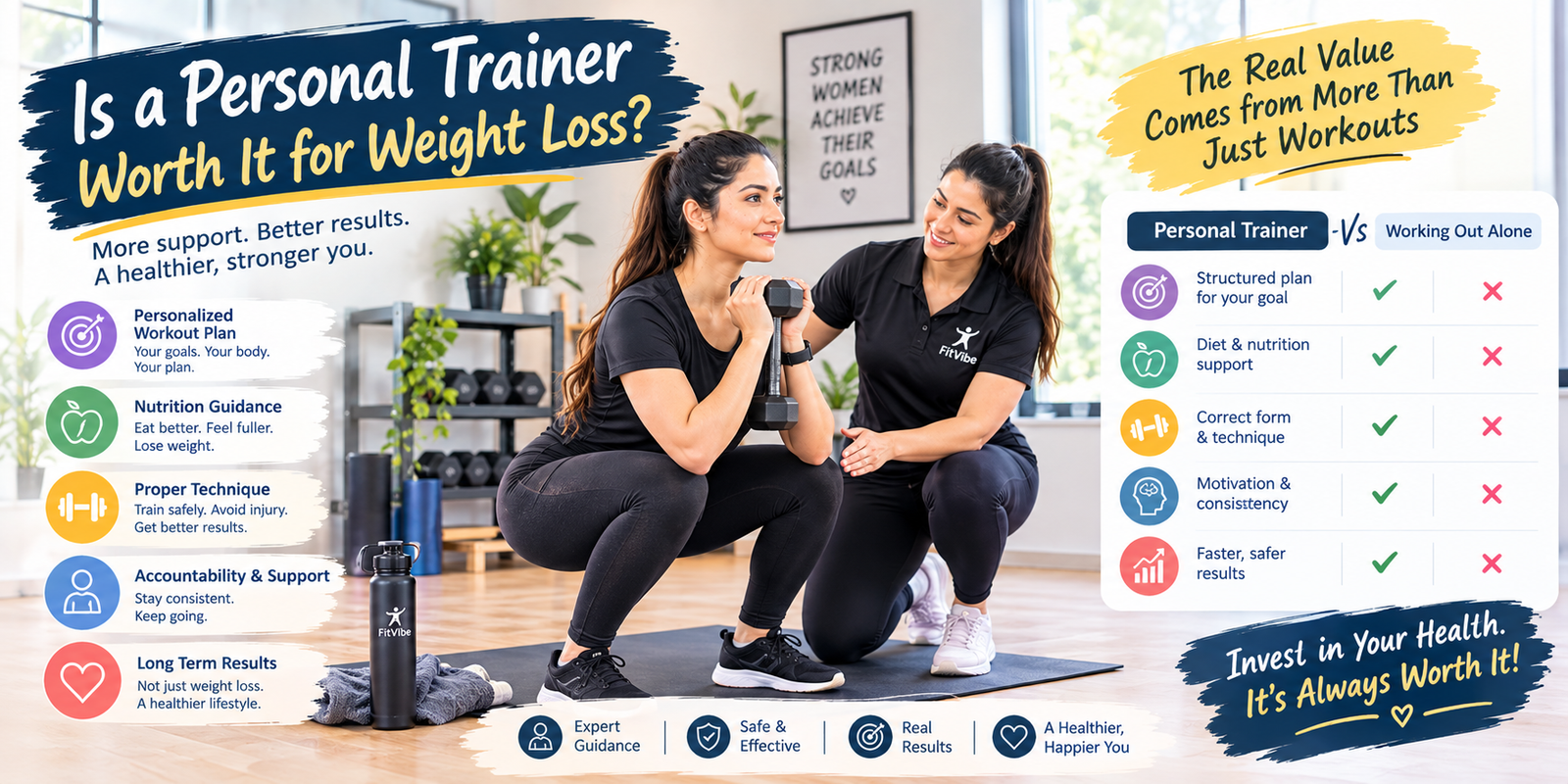
- A custom program built around your specific goal, body, and schedule
- Real time form correction that prevents injury and speeds up progress
- Nutrition guidance that complements the workout plan rather than existing separately
- Accountability through regular check ins that keep motivation steady
- Flexibility to train at home, online, or in a private setting rather than a public gym floor
This level of personalization is difficult to replicate on your own, especially in the first several months of a new fitness routine when habits and form are still being built.
What a Regular Gym Actually Offers
Gyms provide something a personal trainer cannot fully replace on their own, which is access to a wide range of equipment and a dedicated space built for training.
The main advantages of gym membership typically include the following.
- Access to heavy machines, free weights, and cardio equipment in one place
- Lower monthly cost compared to ongoing one on one coaching
- A structured environment that signals it is time to train
- Group classes for women who enjoy training alongside others
For women who already understand proper form and programming, a gym membership alone can be enough to maintain progress without additional coaching.
Comparing Cost and Value Over Time
Cost is usually the first factor women consider, but the real comparison should include value rather than just the monthly price tag.
A gym membership is typically cheaper upfront, but the value depends entirely on how consistently and correctly it gets used. A personal trainer costs more per session, yet often delivers faster results because time is not wasted on trial and error or improper form.
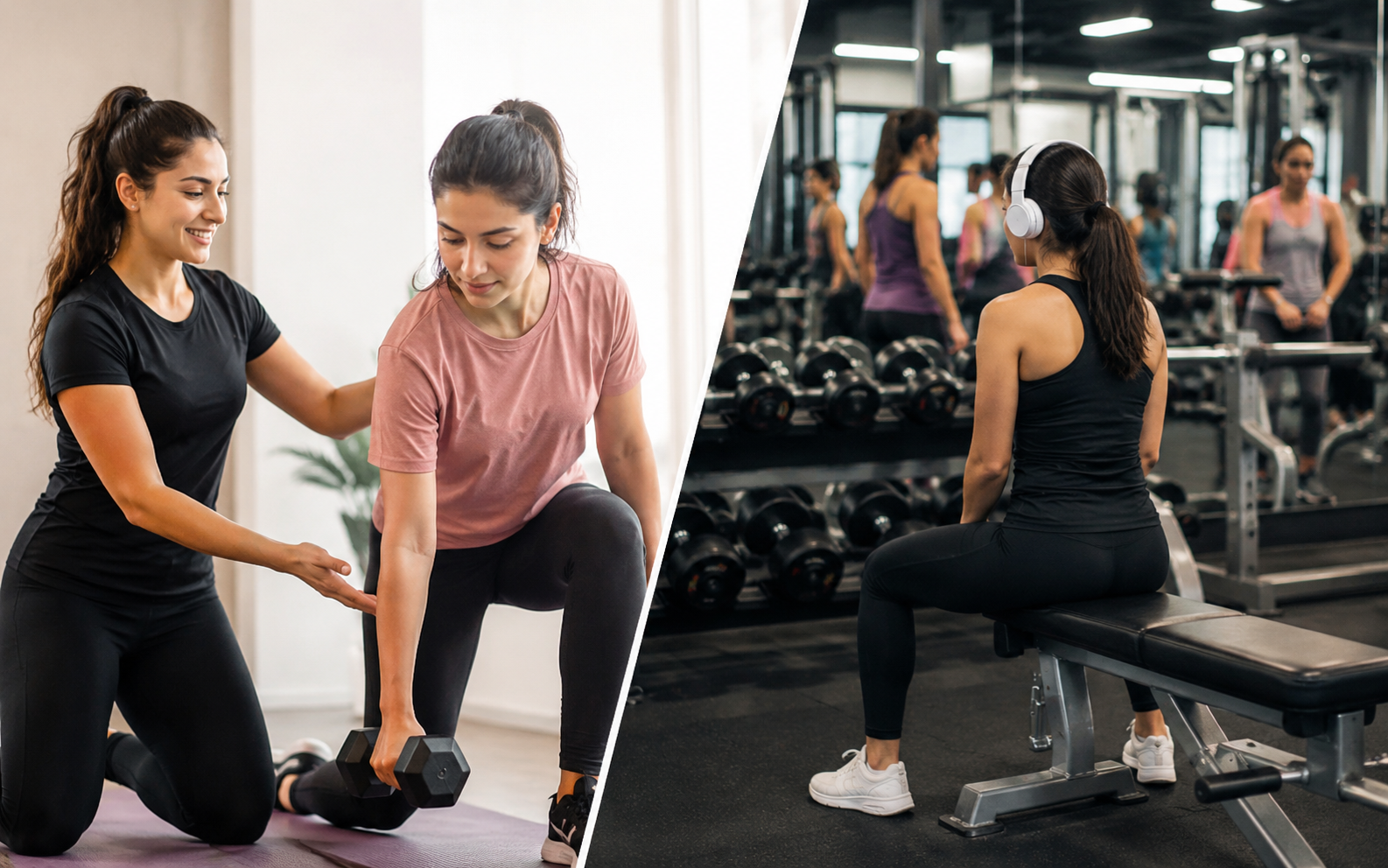
FactorGym MembershipPersonal Trainer Monthly CostLowerHigher PersonalizationNone built inFully customized Form CorrectionRarely availableProvided every session AccountabilitySelf drivenBuilt into the process Best ForConfident, experienced exercisersBeginners or specific goalsMany women find that a short period with a trainer, followed by independent gym training once form and confidence are solid, offers the best value overall.
Privacy and Comfort Considerations
Privacy is one of the most underestimated factors in whether a woman actually sticks with her fitness routine long term.
A female personal trainer, especially one offering home or online sessions, removes the discomfort many women feel training in a mixed gender gym space. This comfort factor alone often determines whether someone shows up consistently or quietly stops going after a few weeks. Women managing specific concerns like postpartum recovery or PCOS often find this privacy especially valuable, since sensitive conversations about the body become much easier in a one on one setting.
Results and Accountability Differences
Results ultimately come down to consistency, and consistency is where the biggest gap between these two options usually shows up.
A gym membership alone relies entirely on self motivation, which tends to fade after the first few weeks without external accountability. A personal trainer builds accountability directly into the process through scheduled sessions and regular check ins, which is one reason clients working with a trainer often see faster, more consistent results. This structured approach is central to how home personal training for women is designed, keeping clients on track even during busy or low motivation weeks.
Common Mistakes Women Make When Choosing
Certain assumptions lead women toward the wrong choice for their specific situation, which can waste both time and money.
- Choosing a gym membership without a plan, then never using it consistently
- Assuming a trainer is only for beginners rather than anyone wanting faster progress
- Picking based on price alone without checking trainer certification
- Ignoring specific health needs like PCOS or postpartum recovery when choosing
- Expecting a gym membership alone to provide the same accountability as coaching
Avoiding these mistakes usually means being honest about your own habits and motivation level before committing to either option.
Nutrition Support Across Both Options
Workouts alone rarely produce meaningful results without matching nutrition guidance, and this is one area where the two options differ significantly.
Most gym memberships do not include any nutrition support, leaving members to figure out food on their own. A personal trainer typically builds nutrition guidance directly into the program, adjusted around your actual eating habits rather than a generic diet. For a closer look at how this works in a Lahore household setting, the best diet plan for weight loss in Lahore breaks down practical food choices using everyday meals.
When a Hybrid Approach Makes the Most Sense
Many women do not need to choose one option exclusively, since combining both often produces the most balanced and sustainable results.
- Start with a trainer to build correct form and a structured program
- Transition to independent gym sessions once confidence and habits are solid
- Return to occasional trainer check ins when goals shift or motivation dips
- Use trainer support specifically during transitional phases like postpartum recovery
This hybrid model gives women the cost efficiency of gym access alongside the expertise and accountability a trainer provides when it matters most.
How to Decide What Fits Your Situation
The right choice ultimately depends on a few honest questions about your current habits, goals, and comfort level.
- Do you already know how to structure a workout and use gym equipment safely
- Do you have a specific goal like weight loss, strength, or postpartum recovery
- Would privacy meaningfully change how consistently you train
- Is self motivation enough, or do you need built in accountability to stay consistent
Answering these honestly usually makes the decision much clearer than comparing price alone.
Getting Started With the Right Option
Whichever direction feels right, starting with a clear plan rather than guessing at a routine tends to produce far better results.
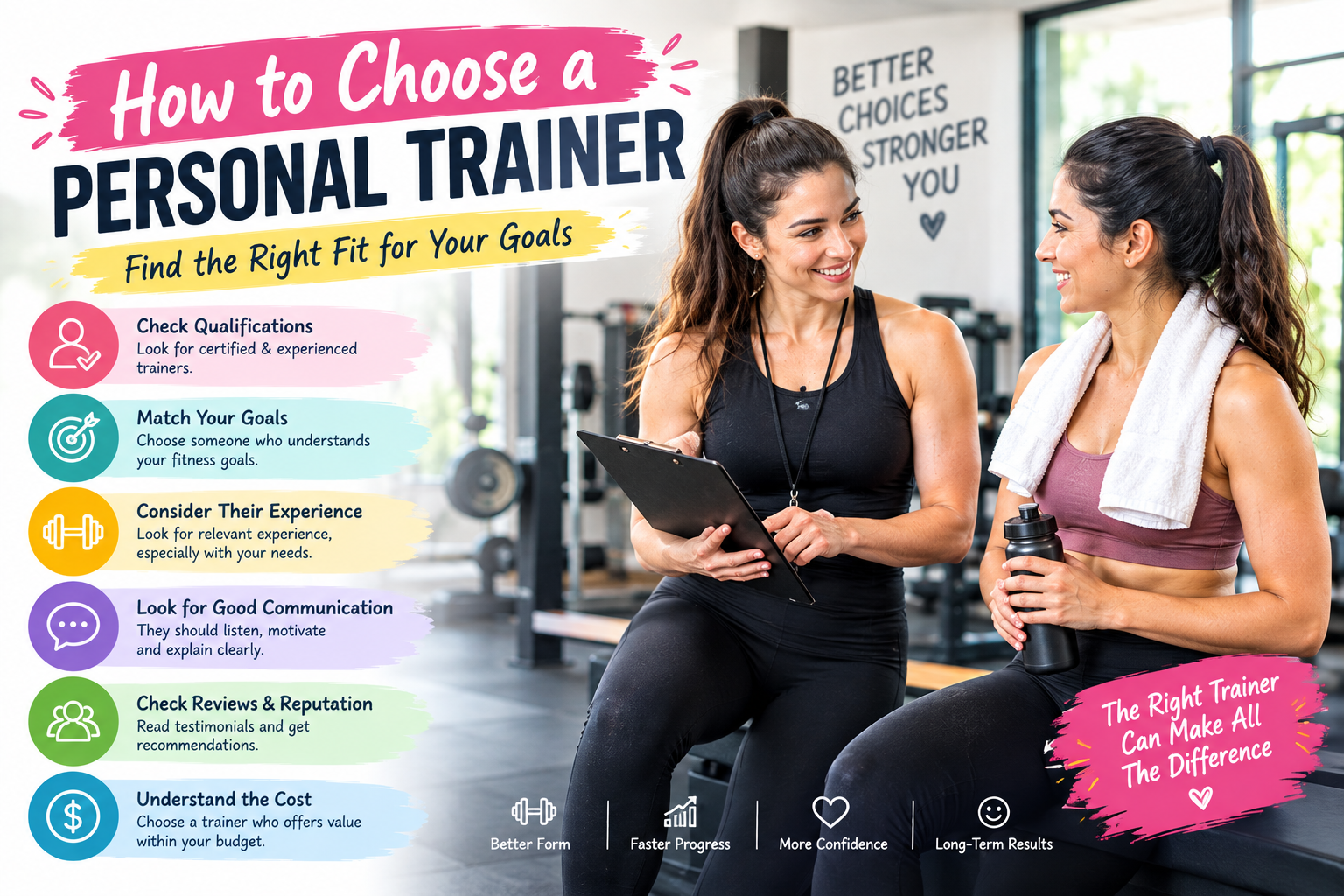
A short conversation with a trainer can help clarify whether guided coaching, independent gym training, or a hybrid approach fits your goals best. You can book a free discovery call to discuss your specific situation before committing to either path.
Frequently Asked Questions
Is a personal trainer worth it compared to a gym membership
Yes, especially for beginners or women with specific goals like weight loss, strength building, or postpartum recovery, since a trainer provides personalized programming and accountability that a gym membership alone does not include.
Can I switch between a trainer and gym membership over time
Yes. Many women start with a trainer to build proper form and habits, then transition to independent gym training, returning to coaching later if goals change or motivation dips.
Is online or home training as effective as going to a gym
Yes, when structured properly with consistent programming and check ins. Many clients achieve the same results at home or online as they would in a physical gym setting.
Do I need gym equipment if I train with a personal trainer at home
No. A good trainer designs sessions around whatever equipment is available, whether that means a full home gym, resistance bands, or bodyweight only training.
Which option is better for women with PCOS or postpartum recovery
A personal trainer is generally better suited for these situations, since a trainer can adjust intensity, exercise selection, and nutrition guidance around specific hormonal or recovery needs that a standard gym membership does not address.
Final Thoughts
Choosing between a female personal trainer and a regular gym comes down to your specific goals, comfort level, and how much accountability you personally need to stay consistent. Neither option is universally better, and many women find the most sustainable results by combining both at different stages of their fitness journey. Starting with a clear conversation about your goals is the simplest way to figure out which path, or combination of paths, will actually work for you.
Ready to put this into action?
Train 1-on-1 or in a group with Amna — your first discovery call is completely free. Female-only, fully online, results you can see.
Book My Free Call on WhatsApp →