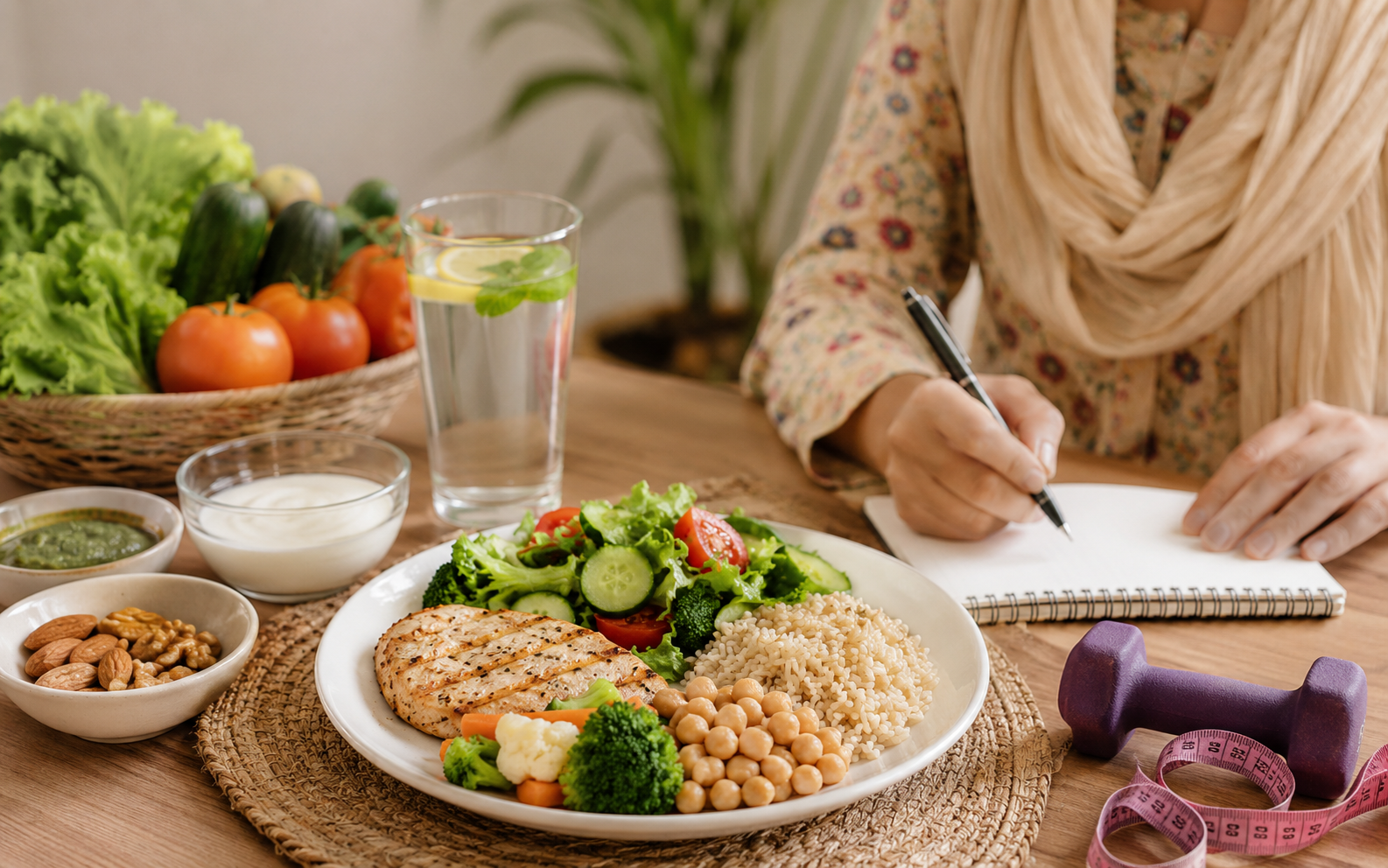
If you want the short answer first, here it is. A calorie deficit simply means consistently eating a little less energy than your body uses each day, and for most Pakistani women this can be achieved through smaller portions of familiar meals like roti, daal, and sabzi combined with more protein and vegetables, rather than cutting out entire food groups or following an extreme diet. Fit Vibe Trainer helps women across Lahore apply this concept practically, building calorie awareness around real household meals instead of unfamiliar diet food.
The term calorie deficit gets thrown around constantly in fitness content, but very few explanations actually show how it applies to a typical Pakistani kitchen. Most generic diet advice assumes access to foods and portion sizes that do not reflect how families here actually eat. This guide breaks down what a calorie deficit really means, how to apply it without giving up the meals you grew up with, and how to avoid the common mistakes that make this approach harder than it needs to be.
What a Calorie Deficit Actually Means
Before applying any diet strategy, it helps to understand the basic principle behind it, since this concept applies no matter what specific meal plan you eventually follow.
A calorie deficit exists when your body burns more energy through daily activity and basic functioning than you consume through food and drink. Your body then draws on stored fat for the remaining energy it needs, which is what produces gradual weight loss over time. This is the underlying mechanism behind essentially every successful weight loss approach, regardless of whether it is labeled keto, intermittent fasting, or a traditional balanced diet.
Why This Concept Gets Confusing for Many Women
Many women feel overwhelmed by calorie deficit advice because most content online is built around Western foods and eating patterns that do not translate easily to daily life in Pakistan.
A few specific challenges come up repeatedly.
- Generic calorie counting apps often lack accurate entries for local dishes
- Family meals are typically shared, making individual portion control harder to manage
- Cooking oil and ghee are used generously in many traditional recipes, adding hidden calories
- Social pressure around food during gatherings can make consistency feel difficult
Recognizing these specific challenges is the first step toward building an approach that actually works within a Pakistani household rather than fighting against it.
Applying a Calorie Deficit to Everyday Pakistani Meals
A sustainable calorie deficit does not require abandoning roti, rice, or daal. It requires smarter portioning and preparation choices within those same meals.
A few practical adjustments make a meaningful difference without feeling restrictive.
- Reduce the amount of oil or ghee used during cooking, without eliminating flavor entirely
- Choose grilled or roasted chicken and fish over deep fried preparations
- Fill a larger portion of the plate with vegetables before adding rice or roti
- Measure roti and rice portions rather than estimating, especially in the first few weeks
- Add a side of raita or salad to increase fullness without significantly raising calories
For a deeper breakdown of exactly how this looks with real meals across a full day, the best diet plan for weight loss in Lahore walks through specific food swaps and portioning strategies in more detail.
Understanding a Safe and Sustainable Deficit Size
Not every calorie deficit is equally safe or sustainable, and understanding the general range that health professionals typically recommend helps avoid the extremes that often backfire.
A moderate deficit generally supports steady, sustainable fat loss without the fatigue or muscle loss associated with extreme restriction. Very large deficits often lead to intense hunger, low energy, and a higher likelihood of bingeing or abandoning the plan altogether. A registered dietitian or qualified trainer can help calculate a deficit size appropriate for your specific activity level, body size, and goals, since a one size fits all number rarely applies well across different women.
The Role of Protein in Making a Deficit Easier to Follow
Protein plays an outsized role in how manageable a calorie deficit feels day to day, which is why it deserves specific attention beyond just tracking total calories.
Protein supports fullness more effectively than carbohydrates or fat, which helps reduce the constant hunger that often derails weight loss attempts. It also protects muscle mass during a calorie deficit, which keeps metabolism higher and produces a leaner, more toned result rather than just a lower number on the scale. Adding a source of protein like chicken, fish, eggs, or lentils to every meal is one of the simplest ways to make a deficit sustainable.
Common Mistakes That Undermine a Calorie Deficit
Even with the right intentions, certain habits quietly work against a calorie deficit without most women realizing it.
- Underestimating portion sizes, especially for rice, cooking oil, and sauces
- Drinking calorie dense beverages like sweetened tea or sugary drinks without accounting for them
- Cutting calories too aggressively, which often leads to bingeing later in the day
- Skipping meals entirely, which frequently backfires through overeating afterward
- Focusing only on dinner while ignoring snacking throughout the day
Addressing these specific habits often produces more meaningful results than switching to an entirely different diet approach.
Why Exercise Still Matters Alongside a Calorie Deficit
A calorie deficit through diet alone can produce weight loss, but combining it with regular strength training changes the quality of the results significantly.
Strength training helps preserve muscle mass during a deficit, which supports a leaner, more defined appearance rather than simply a smaller version of the same body composition. It also raises resting metabolism over time, making the deficit easier to maintain without needing to cut calories further. A closer look at how to build a beginner friendly strength routine is covered in this guide on strength training for women.
Adjusting for PCOS or Other Hormonal Factors
Not every woman responds to the same calorie deficit at the same rate, and hormonal conditions like PCOS often change how quickly results appear.
Women managing PCOS frequently experience slower fat loss due to insulin resistance, even with a well applied calorie deficit. This usually means prioritizing protein and fiber more heavily, choosing consistent movement over aggressive workouts, and being patient with a slower overall timeline rather than assuming the deficit itself is not working.
Managing Social Situations and Family Gatherings
Food centered gatherings are a regular part of life in Pakistan, and navigating them without abandoning progress is one of the most practical challenges women face.
A few simple strategies make these situations easier to manage.
- Eating a small protein rich snack before attending a gathering to reduce overeating
- Filling the plate with salad and grilled options first before richer dishes
- Allowing planned flexibility for special occasions rather than treating every gathering as a failure
- Returning to the normal structure immediately afterward rather than extending an off track period
Building this kind of flexibility into the plan from the start makes it far more sustainable than an overly rigid approach that cannot survive a single wedding or family dinner.
Building a Personalized Plan Around Your Life
A generic calorie deficit number found online rarely accounts for your specific activity level, body size, or the meals your household actually eats.
A trainer can calculate a realistic deficit for your specific situation and build practical meal guidance around your normal cooking rather than asking you to follow unfamiliar diet food. You can book a free discovery call to discuss your goals and build a calorie deficit plan that fits your real life rather than a generic template.
Frequently Asked Questions
What exactly is a calorie deficit
A calorie deficit means consistently consuming less energy through food than your body uses each day, which prompts the body to draw on stored fat for the remaining energy, resulting in gradual weight loss over time.
Can I still eat roti and rice in a calorie deficit
Yes. A calorie deficit is based on total daily energy balance rather than eliminating specific foods, so roti and rice can remain part of the diet with adjusted portion sizes and balanced meal composition.
How do I know how big my calorie deficit should be
A moderate deficit is generally considered safer and more sustainable than an extreme one, and a registered dietitian or qualified trainer can help calculate an appropriate size based on your specific activity level and goals.
Why does a calorie deficit feel harder during family gatherings
Shared meals and social pressure around food can make portion control more difficult during gatherings, which is why planning ahead with a protein rich snack or prioritizing lighter options first can help maintain progress.
Does exercise matter if I am already in a calorie deficit through diet alone
Yes. Strength training in particular helps preserve muscle mass during a deficit, supporting a leaner appearance and a higher resting metabolism, which makes long term maintenance easier.
Final Thoughts
A calorie deficit does not require abandoning the meals or culture you grew up with, and applying it realistically to a Pakistani household is far more sustainable than following a generic Western diet template. Understanding the concept clearly, prioritizing protein, and building in flexibility for social situations makes this approach one that can actually be maintained long term. Getting guided support around your specific meals and lifestyle makes the entire process considerably easier to follow with confidence.
Ready to put this into action?
Train 1-on-1 or in a group with Amna — your first discovery call is completely free. Female-only, fully online, results you can see.
Book My Free Call on WhatsApp →