A sustainable weight loss routine for women in Lahore looks different from the generic programmes that clinics and apps sell because it accounts for the real conditions under which women in this city actually live. It accounts for summer heat that makes outdoor exercise dangerous for months at a time. It accounts for cultural expectations around food at family gatherings and during Ramadan. It accounts for PCOS, thyroid conditions, and hormonal imbalances that are significantly more prevalent in Pakistani women than generic international weight loss content acknowledges. And it accounts for the scheduling reality that most women in Lahore are managing households, families, careers, and community obligations simultaneously.
This guide builds a complete, evidence-based weight loss routine for women in Lahore from the ground up, covering every component that makes the difference between a programme that lasts three weeks and one that produces results over three months and beyond. You can also read additional perspectives on this topic at Good and Bad People and in the community discussion published on WhatsOn Plus.
Why Most Weight Loss Programmes in Lahore Fail Women
Before building the routine, it is worth being honest about why most approaches to weight loss in Lahore do not produce lasting results for women specifically. Understanding the failure patterns prevents you from repeating them.
- Clinic-based programmes without exercise instruction. Many weight loss clinics in Lahore focus on dietary restriction, supplements, or medical interventions without addressing the exercise component that builds lean muscle, elevates resting metabolic rate, and makes fat loss sustainable long term. Women who lose weight through dietary restriction alone lose a significant proportion of lean muscle alongside fat, which reduces metabolic rate and makes weight regain almost inevitable when the programme ends.
- Generic calorie deficit approaches that ignore hormonal health. The majority of women in Lahore who struggle with weight loss are not struggling because of insufficient willpower or inadequate calorie restriction. A significant proportion are dealing with PCOS-related insulin resistance, hypothyroidism, cortisol-driven abdominal fat accumulation, or perimenopausal hormonal shifts that make standard calorie mathematics significantly less reliable. A programme that does not account for these factors will plateau regardless of how closely it is followed.
- Programmes designed for gym environments that women in Lahore cannot access. Many weight loss exercise programmes assume access to a gym, consistent electricity for treadmills, safe outdoor walking routes, and environments where women feel comfortable exercising. These assumptions do not hold for a large proportion of women in Lahore who prefer home-based training, require female-only environments, or cannot commit to fixed gym schedules around family and work responsibilities.
- Extreme approaches that collapse under real life. Any programme that requires dramatic simultaneous changes to diet, exercise, sleep, and lifestyle fails the moment a family event, illness, Eid, wedding season, or Ramadan arrives. Sustainable routines are built to flex around real life, not to crumble when it appears.
The Four Pillars of a Sustainable Weight Loss Routine for Women in Lahore
A weight loss routine that works for women in Lahore is built on four pillars that work together rather than operating in isolation. Adjusting any one of them produces results. Aligning all four produces results that last.
Pillar One: Strength Training Two to Three Times Per Week
Strength training is the non-negotiable foundation of sustainable fat loss for women. It builds lean muscle that elevates your resting metabolic rate, meaning you burn more calories around the clock rather than only during exercise sessions. It protects lean muscle during a calorie deficit so your body burns fat rather than breaking down tissue it needs. It improves insulin sensitivity, which is directly relevant to PCOS and metabolic syndrome. And it produces body composition changes, specifically the shift from fat mass to lean mass, that dietary restriction alone can never replicate.
For women in Lahore specifically, the most practical strength training structure is two to three sessions per week of thirty to forty-five minutes each, using exercises that require minimal or no equipment. This makes sessions executable in a bedroom, lounge, or outdoor courtyard without requiring a gym membership, transport, or fixed facility access.
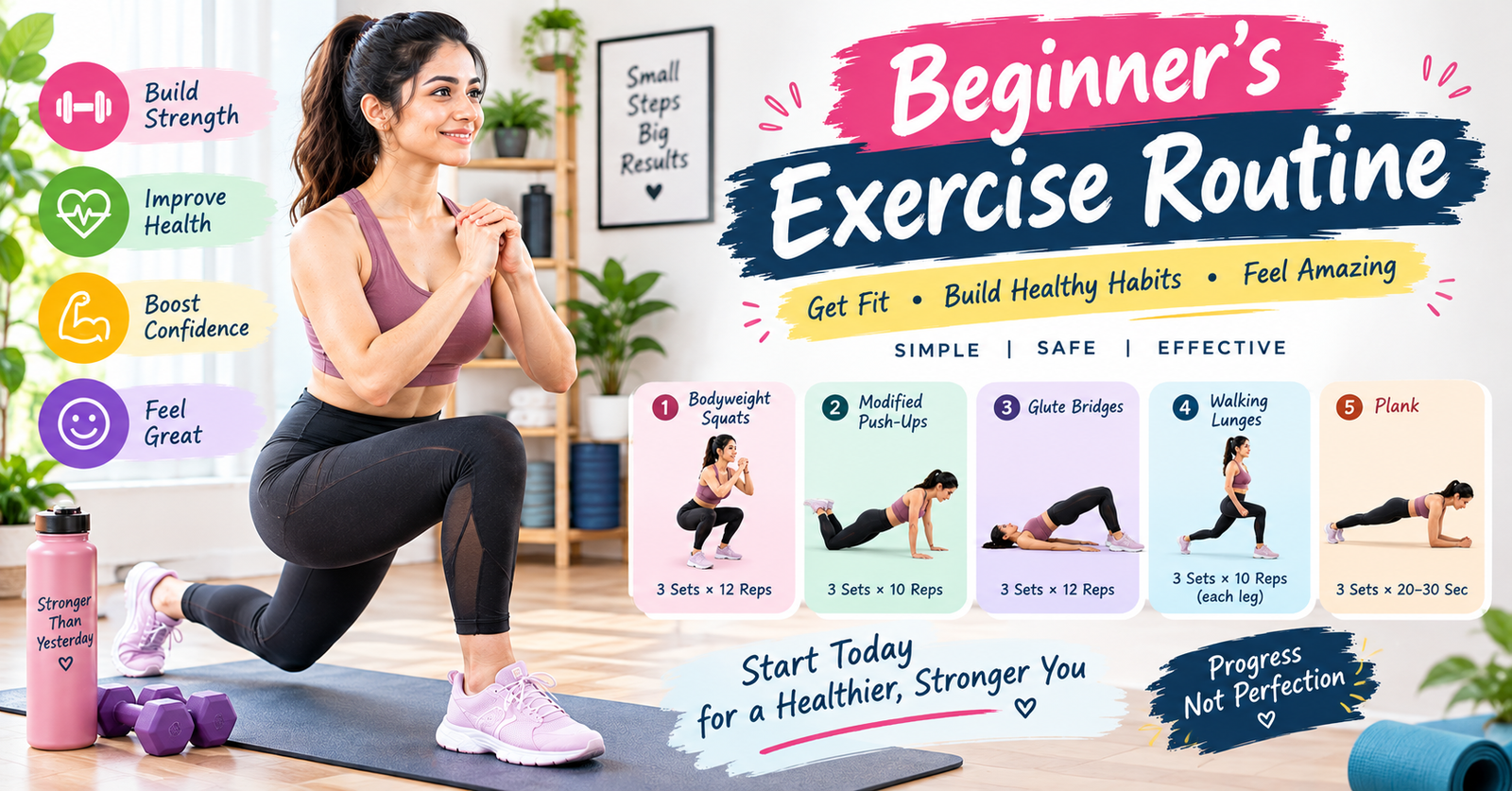
A beginner strength routine for women in Lahore that requires no equipment and minimal space covers the following foundational movements: bodyweight squats and variations, glute bridges and single-leg progressions, push-up variations from wall to floor, resistance band rows for upper back and posture, plank and dead bug variations for deep core activation, and Romanian deadlifts with light dumbbells or water bottles as resistance once the bodyweight hip hinge pattern is established. These six movement patterns cover every major muscle group, address the postural imbalances common in women who spend significant time seated or carrying children, and provide sufficient stimulus for meaningful fat loss and muscle building when performed with progressive overload over time.
Progressive overload means making each session slightly more demanding than the last, either by adding resistance, adding a set, reducing rest time, or progressing to a harder variation of the same movement. Without progressive overload, the body adapts to the routine within four to eight weeks and stops producing results. With it, the same basic movement patterns continue producing adaptation and fat loss for months.
Pillar Two: Daily Movement That Is Not Formal Exercise
Non-exercise activity thermogenesis, the calories burned through all physical activity that is not structured exercise, is one of the most reliable predictors of weight management outcomes in research and one of the most underestimated components of weight loss routines in practice. For women in Lahore, this is particularly relevant because daily household activity, which includes cooking, cleaning, child care, and home management, contributes meaningfully to total daily energy expenditure in ways that a desk-based lifestyle in an air-conditioned office does not.
The practical target for total daily movement is eight thousand to ten thousand steps per day. This does not require a dedicated walking session, though adding one is beneficial. It means measuring and being intentional about movement throughout the day: taking stairs, walking within the house rather than sitting when tasks permit, breaking up prolonged sitting with brief movement every hour, and choosing to walk for local errands where heat and safety permit.
For women in Lahore who prefer or require indoor movement due to heat, cultural preference, or safety considerations, indoor walking circuits, stair climbing within the home, and movement breaks during household activity all count toward this target. The principle is total daily movement, not a specific format for it.
Adding a dedicated thirty-minute brisk walk at Zone 2 intensity, where your heart rate is elevated enough to make conversation slightly effortful but not impossible, is a meaningful addition for women who can fit it into their schedule. Morning walks before the heat builds in summer, or evening walks after it reduces, are more effective in Lahore's climate than midday outdoor exercise which adds heat stress to the cortisol load rather than reducing it.
Pillar Three: A Nutrition Approach That Works in a Pakistani Kitchen
The nutritional component of a weight loss routine for women in Lahore must be realistic within the actual food culture, cooking practices, and family meal structures of Pakistani life. A diet plan that requires foods unavailable in Lahore markets, demands separate meal preparation from family cooking, or eliminates core staples of the Pakistani diet is not a sustainable plan. It is a temporary exception that ends the moment any social, family, or seasonal pressure overrides it.
The nutritional principles that produce sustainable fat loss for women in Lahore within a Pakistani food context are the following.
- Protein at every meal, built around foods already present in Pakistani cooking. Chicken, beef, mutton, eggs, daal, chickpeas, paneer, and fish are all high-protein foods that are central to Pakistani cuisine. Building meals around a protein source rather than treating protein as a side element is the single most impactful nutritional change most women in Lahore can make. Protein supports lean muscle retention during a calorie deficit, produces greater satiety per calorie than carbohydrates or fats, and improves the body composition outcomes of strength training. A practical target is 1.6 to 2.0 grams of protein per kilogram of bodyweight per day.
- Portion calibration rather than food elimination. Rice, roti, paratha, and bread are not the enemy of fat loss. Portion sizes that far exceed daily energy needs are. A sustainable nutritional approach for women in Lahore works with traditional foods rather than against them, calibrating portion sizes and frequency of higher-calorie preparations rather than eliminating entire categories that will be reintroduced the moment the programme formally ends.
- Oil and ghee awareness without obsession. Pakistani cooking uses cooking fats at quantities that contribute substantially to daily calorie intake. Measuring and reducing cooking oil use from typical household quantities to one to two tablespoons per meal preparation, and choosing olive oil or avocado oil where possible, produces a meaningful calorie reduction without any visible change to the foods being eaten.
- Blood sugar stability as a priority. For women with PCOS or insulin resistance, and for any woman who experiences significant hunger between meals or energy crashes in the mid-afternoon, eating in a way that stabilises blood sugar is more important than hitting a specific calorie target. This means pairing carbohydrates with protein and fat at every meal rather than eating carbohydrates alone, avoiding long gaps between meals, and minimising refined sugar and processed flour products in favour of whole grain options where available.
- Hydration adjusted for Lahore's climate. Summer in Lahore produces heat-related dehydration that impairs fat metabolism, elevates cortisol, reduces exercise performance, and is frequently mistaken for hunger. Women in Lahore need significantly more daily water intake than international guidelines designed for temperate climates recommend. A target of two to three litres per day, increasing in summer months and on exercise days, supports metabolic function and reduces appetite-related overeating.
Pillar Four: Sleep and Stress Management as Non-Negotiable Training Variables
Sleep and stress are not lifestyle preferences to be optimised when convenient. They are physiological variables that determine whether the training and nutrition components of your routine produce the results they should or whether the hormonal environment they create actively prevents those results.
Sleep deprivation elevates cortisol, suppresses growth hormone secretion that supports muscle repair and fat metabolism, increases ghrelin which drives appetite, decreases leptin which signals satiety, and impairs insulin sensitivity. A woman sleeping fewer than seven hours consistently is operating in a hormonal environment that promotes fat storage and muscle loss simultaneously, meaning her training and dietary effort is producing a fraction of the results it would produce with adequate sleep. For women in Lahore managing young children, extended family schedules, or late household responsibilities, protecting seven to eight hours of sleep is one of the highest-value changes that can be made to a weight loss routine.
Chronic stress produces a specific fat accumulation pattern in women: elevated cortisol promotes abdominal fat storage, suppresses the hormonal signals needed for fat mobilisation, increases appetite for high-calorie foods, and drives the emotional eating patterns that override dietary intentions consistently. For women in Lahore managing significant household, family, and cultural obligations, the stress load is often high and chronic rather than acute and temporary.
The interventions that most effectively reduce cortisol for women in Lahore without adding to the overall schedule burden include daily Zone 2 walking which activates the parasympathetic nervous system and directly reduces cortisol, moderate-intensity strength training at two to three sessions per week rather than high-intensity daily exercise which elevates cortisol further, deliberate rest periods during the day however brief, and consistent sleep timing which regulates the cortisol diurnal rhythm that determines how the hormone behaves throughout the day.
How to Structure Your Week: A Practical Template for Women in Lahore
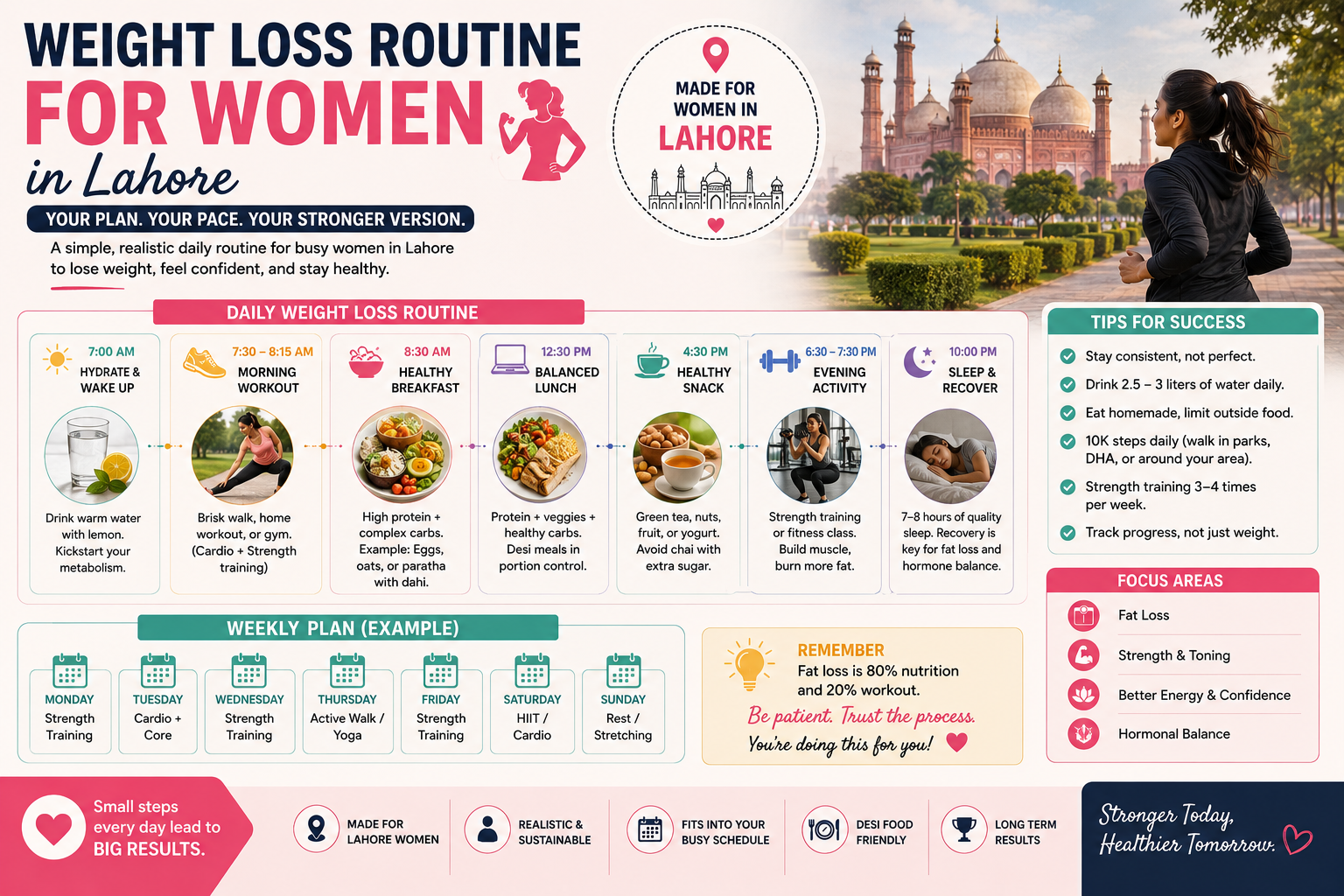
The following weekly structure is a practical starting point that can be adjusted for different schedules, fitness levels, and household demands. It is not a rigid prescription. It is a framework that covers the four pillars without requiring more than three to four dedicated exercise sessions per week.
- Saturday: Strength training session, thirty to forty-five minutes. Focus on lower body and core. Squats, glute bridges, Romanian deadlifts, and plank variations. Evening or morning depending on heat and schedule.
- Sunday: Active rest. Daily movement target of eight thousand steps through household activity and a short walk. No formal exercise session.
- Monday: Strength training session, thirty to forty-five minutes. Focus on upper body and core. Push-up variations, resistance band rows, overhead press, and dead bug variations.
- Tuesday: Thirty-minute Zone 2 walk. Morning or evening. Indoor or outdoor depending on season and preference. Daily movement target maintained.
- Wednesday: Strength training session, thirty to forty-five minutes. Full body compound focus. Squats, push-ups, rows, glute bridges, and core. This is the highest-priority session of the week if scheduling forces a choice.
- Thursday: Active rest or optional Zone 2 walk if schedule permits. Priority is recovery and sleep.
- Friday: Rest day or light movement only. Recovery is part of the programme. The adaptations from strength training sessions occur during recovery, not during the sessions themselves.
This template produces three strength training sessions and one to two walking sessions per week with full recovery between sessions. It is sustainable for most women managing Pakistani household schedules. It can be compressed into two strength sessions plus daily walking during particularly busy weeks without losing the core stimulus. The principle is minimum effective dose of structured exercise combined with maximum sustainable daily movement, not maximum exercise volume at any cost.
Building the Routine Around Ramadan
Ramadan represents a significant annual disruption to weight loss routines for women in Lahore, and most international fitness content ignores it entirely. A sustainable routine for women in this context must account for it explicitly.
Strength training during Ramadan is most effective when scheduled in one of two windows: immediately before Sehri while glycogen stores are available from the previous Iftar meal, or one to two hours after Iftar when energy and hydration have been partially restored. High-intensity exercise in the hours before Iftar, when blood glucose is lowest and dehydration is most advanced, elevates cortisol significantly and produces muscle breakdown rather than fat loss.
During Ramadan, reducing strength training to two sessions per week rather than three maintains lean muscle and prevents the metabolic rate decline that would occur with complete cessation of training. Nutrition at Iftar and Sehri should prioritise protein to support muscle retention, and the temptation to overcompensate at Iftar with large quantities of highly processed foods should be managed with a protein-first eating structure that reduces overall calorie compensation while maintaining satiety.
The goal during Ramadan is maintenance of lean muscle and prevention of metabolic regression, not aggressive fat loss. Women who maintain training and protein intake through Ramadan emerge from it with their results intact and ready to resume full programming immediately after Eid.
Managing Weight Loss Routine Around PCOS in Lahore
PCOS is significantly prevalent among women in Pakistan, and the insulin resistance that characterises the majority of PCOS cases makes standard weight loss approaches less effective without specific modifications to both training and nutrition.
For women with PCOS in Lahore, the training component of the routine should prioritise strength training over cardio because building lean muscle is the most direct intervention for improving insulin sensitivity through increased glucose uptake capacity. Two to three strength sessions per week are more effective for PCOS-related weight loss than five cardio sessions of comparable duration.
The nutritional component should emphasise blood sugar stability through protein-first eating, pairing carbohydrates with protein and fat at every meal, minimising refined sugar and processed flour which spike insulin rapidly, and spacing meals to prevent the prolonged fasting periods that can elevate cortisol and worsen insulin resistance in PCOS. A qualified female trainer who understands PCOS should be involved in designing the programme from the start, because the specific exercise and nutritional parameters that produce results in PCOS differ meaningfully from those for women without the condition.
The Role of a Female Personal Trainer in Building Your Lahore Routine
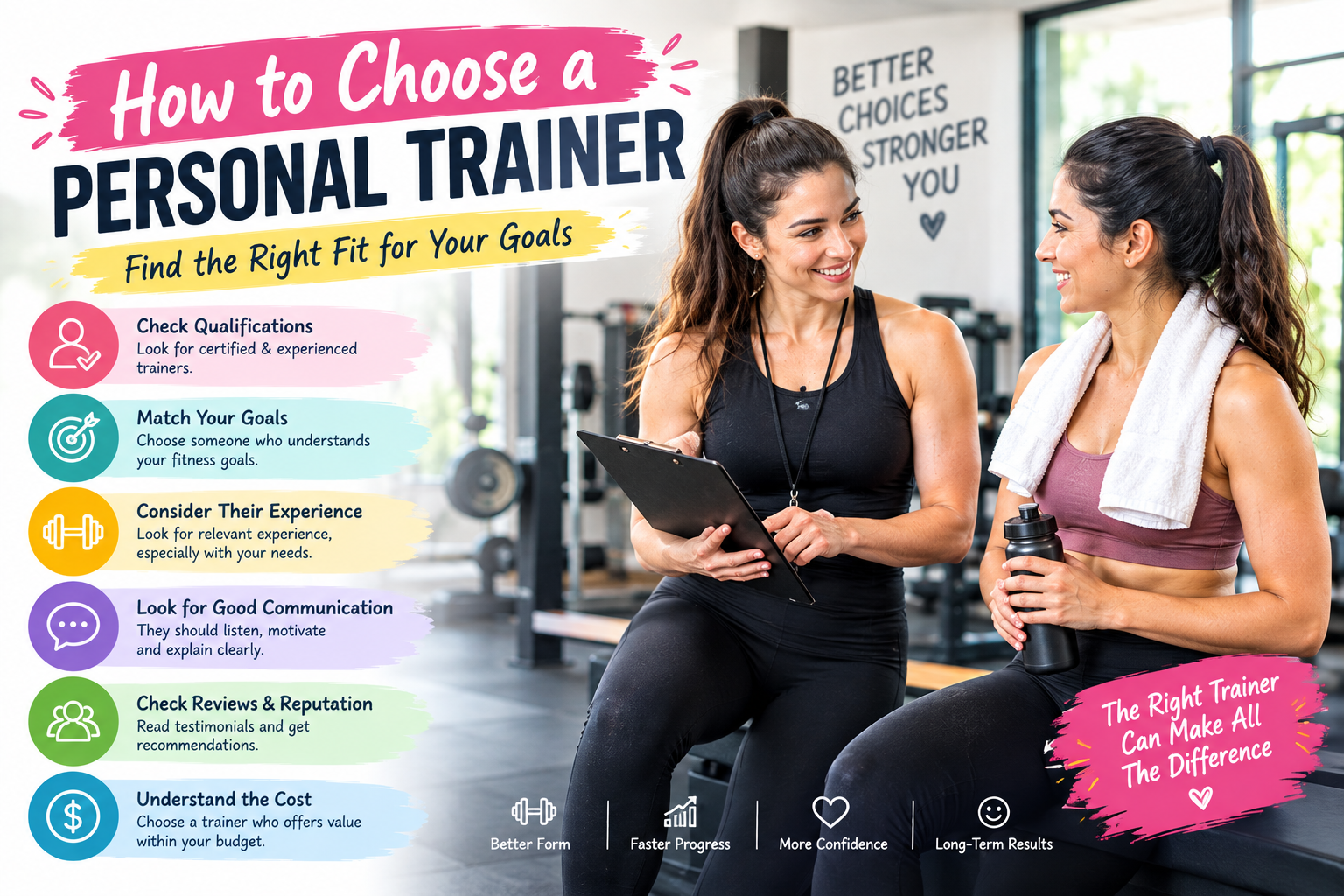
A sustainable weight loss routine can be built independently using the principles in this guide. It will be built faster, more accurately, and with significantly fewer wasted weeks when built with the guidance of a qualified female trainer who understands female physiology, hormonal health, and the specific environmental and cultural factors that shape women's weight loss in Lahore.
The value a qualified trainer adds is not motivation or accountability alone, though both are meaningful. It is the ability to identify which specific combination of training, nutrition, and lifestyle factors will work for your specific body at your specific starting point, rather than applying a generic template that may or may not address your individual hormonal context, movement limitations, or scheduling constraints.
At Fit Vibe Trainer, we build sustainable weight loss routines for women in Lahore that account for every factor in this guide. Our ACE certified coach holds qualifications spanning GGS Women's Coaching, Pre and Postnatal Coaching, Nutrition and Diet Planning, Physical Fitness and Exercise Science, Functional Training and Conditioning, and Postpartum Fitness and Recovery. We offer in home sessions across Lahore, studio sessions at Dream Gardens, and live online coaching for women in Pakistan and internationally.
Every programme begins with a full assessment of your movement quality, health history, hormonal context, schedule, and goals. Every subsequent session is supervised, progressively structured, and adjusted based on how your body is responding. The result is a routine that fits your life rather than demanding that your life fits around it.
To understand why strength training specifically is the most important component of your weight loss routine, read: how strength training helps women lose weight.
If you have been exercising and hit a plateau, read: why women stop losing weight even when they exercise.
To understand whether walking as part of your routine is contributing meaningfully to your results, read: is walking enough for weight loss.
For the critical distinction between fat loss and weight loss that affects how you should be measuring your progress, read: fat loss vs weight loss: what is actually different.
For a full overview of our services for women in Lahore, visit: female personal trainer in Lahore.
Book a free consultation today and get a clear, honest assessment of what your body needs to start losing weight sustainably in a way that fits your life in Lahore.
Find us on Google and read genuine reviews from women in Lahore who built lasting results with a structured approach.
Frequently Asked Questions
What is the best weight loss routine for women in Lahore?
The most effective weight loss routine for women in Lahore combines two to three strength training sessions per week with daily movement targeting eight thousand to ten thousand total steps, a protein-rich nutrition approach built around Pakistani foods, and adequate sleep of seven to eight hours per night. This combination builds lean muscle that elevates resting metabolic rate, creates a sustainable calorie deficit, and addresses the hormonal factors including PCOS and cortisol that make weight loss more complex for women specifically. It works within the actual food culture and scheduling realities of Lahore rather than demanding conditions that do not exist in most women's daily lives.
How do I start losing weight in Lahore as a woman?
Begin with two strength training sessions per week using bodyweight exercises that require no gym access or equipment. Add daily walking of at least thirty minutes at a brisk pace where your schedule and climate allow. Restructure your main meals to lead with a protein source before adding carbohydrates. Prioritise seven to eight hours of sleep. These four changes, implemented simultaneously at moderate intensity, produce the strongest combined result without requiring the dramatic lifestyle restructure that makes programmes unsustainable. If you are managing PCOS, hypothyroidism, or other hormonal conditions, consult a qualified female trainer who can adjust the programme to account for those specific factors from the start.
Can women in Lahore lose weight without going to a gym?
Yes. Bodyweight strength training, resistance band exercises, and basic dumbbell movements performed at home are fully sufficient for effective weight loss programmes, particularly in the beginner and intermediate phases. Many women in Lahore see significant and lasting fat loss results training entirely at home under the guidance of a qualified female trainer who visits or coaches via live video session. The gym is one option among several, not a requirement for effective training.
How do I manage weight loss during Ramadan in Lahore?
Maintain two strength training sessions per week during Ramadan, scheduled either before Sehri or one to two hours after Iftar. Prioritise protein at both Sehri and Iftar to support lean muscle retention. Avoid high-intensity exercise in the hours immediately before Iftar when blood glucose and hydration are lowest. The goal during Ramadan is maintenance of lean muscle and metabolic rate, not aggressive fat loss. Women who train through Ramadan with appropriate modifications emerge with their results intact and resume full programming immediately after Eid.
How does PCOS affect weight loss routines for women in Lahore?
PCOS causes insulin resistance in the majority of cases, which suppresses fat loss and promotes abdominal fat storage regardless of calorie intake and exercise volume without specific programme modifications. For women with PCOS in Lahore, the training programme should prioritise strength training over cardio because building lean muscle directly improves insulin sensitivity. The nutrition programme should emphasise protein-first eating, consistent blood sugar stability, and minimal refined sugar and processed flour. A qualified trainer with specialist knowledge of PCOS designs a programme that accounts for these factors from the start rather than applying a generic template that produces poor results in this population.
How long does it take to lose weight with a sustainable routine in Lahore?
Most women notice improved energy, better sleep, and reduced daily stiffness within two to three weeks of starting a structured routine. Measurable reductions in body measurements typically appear between weeks four and eight with consistent training two to three times per week and appropriate nutrition. Visible body composition changes become clearly apparent between weeks eight and twelve. A sustainable routine produces gradual, consistent progress over months rather than rapid dramatic results that reverse when the programme cannot be maintained. Women managing PCOS, hypothyroidism, or perimenopause may see a slower rate of initial progress that accelerates once the hormonal factors are properly addressed in the programme.
What should I eat for weight loss as a woman in Lahore?
Build every main meal around a protein source first: chicken, beef, mutton, eggs, daal, chickpeas, paneer, or fish, all of which are central to Pakistani cuisine and provide the protein needed for muscle retention and satiety. Add vegetables and whole grain carbohydrates in portions appropriate to your calorie needs. Reduce cooking oil to one to two tablespoons per meal preparation and use measuring rather than pouring. Drink two to three litres of water per day, increasing in summer. Minimise refined sugar, processed flour, and fried foods without eliminating them entirely, as complete elimination produces compliance failures at the first family event or social occasion.
Do I need a female personal trainer to lose weight in Lahore?
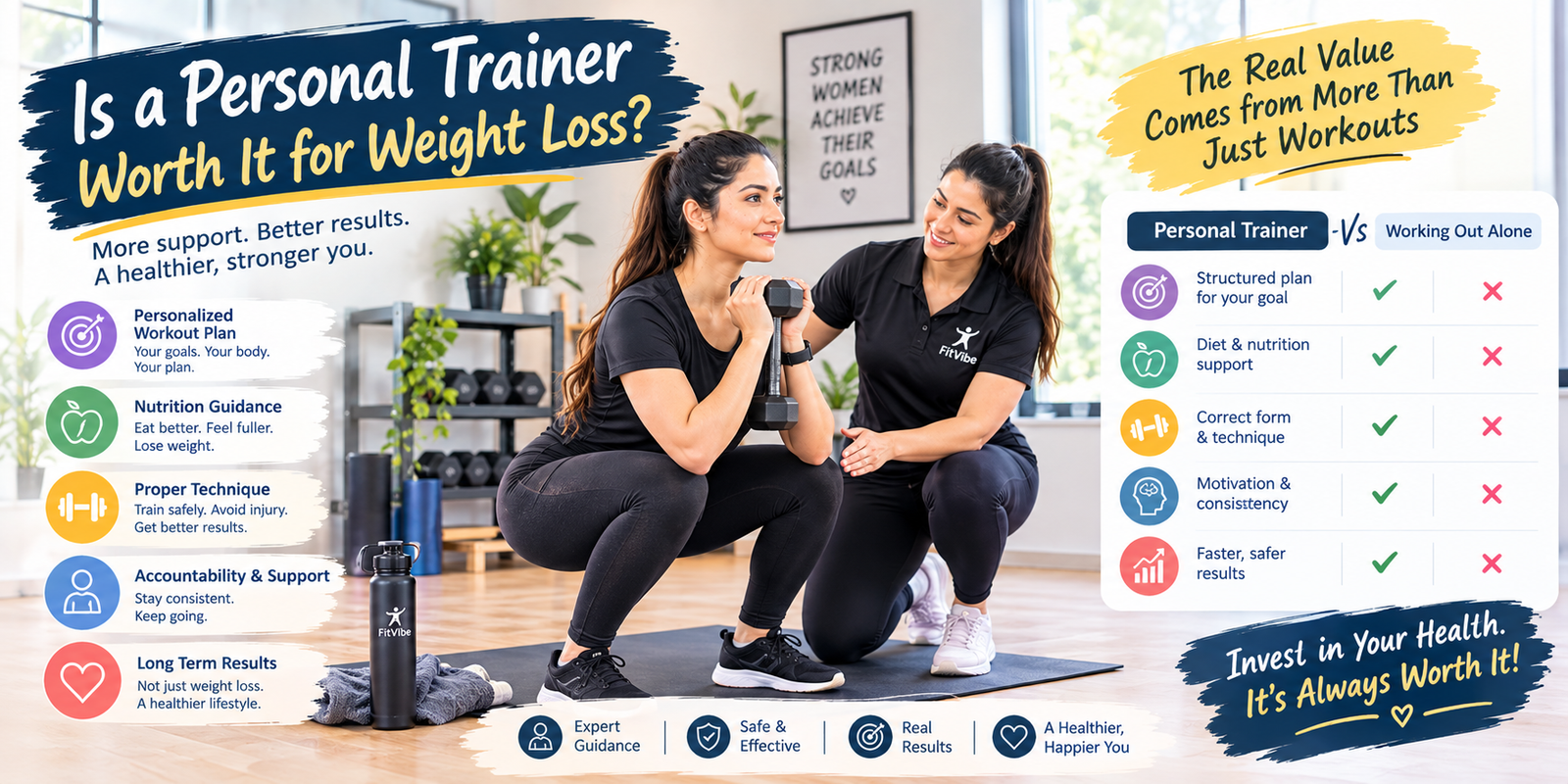
You do not require a female trainer to lose weight, but working with one produces results faster, more accurately, and with significantly fewer wasted weeks than self-directed approaches. A qualified female trainer identifies which specific combination of training, nutrition, and lifestyle factors will work for your body and hormonal context specifically, rather than applying a generic template. She also provides the progressive overload and real-time form correction that determines whether strength training produces the metabolic benefits it should or merely burns a few calories without building the muscle that drives lasting fat loss. For women managing PCOS, hypothyroidism, postnatal recovery, or perimenopausal changes, professional guidance is particularly important because these conditions require programme modifications that generic advice does not address.
Ready to put this into action?
Train 1-on-1 or in a group with Amna — your first discovery call is completely free. Female-only, fully online, results you can see.
Book My Free Call on WhatsApp →