Strength training helps women lose weight through a set of physiological mechanisms that cardio alone cannot replicate. It builds lean muscle that raises your resting metabolic rate. It protects that muscle during a calorie deficit so your body burns fat rather than breaking down tissue it needs. It improves insulin sensitivity, which directly affects how your body stores and releases fat. And it produces an afterburn effect that keeps your metabolism elevated for hours after the session ends. Understanding how each of these mechanisms works in a woman's body specifically is the difference between a weight loss approach that produces temporary results and one that produces lasting change.
This guide explains the complete science behind strength training for weight loss in women, why the process is different from men, what role hormones play, and how to structure your training to get results from wherever you are, whether that is a gym, your living room in Lahore, or a studio with a qualified female trainer.
Why Weight Loss Is Harder for Women Than Men: The Physiological Reality
Before explaining how strength training solves the problem, it is worth being honest about why the problem exists. Women face a genuinely more complex physiological environment for weight loss than men, and most generic fitness advice ignores this entirely.
- Women naturally carry more body fat. Oestrogen promotes fat storage, particularly in the hips, thighs, and lower abdomen, as a biological reserve for pregnancy and hormonal function. Women require a minimum body fat percentage of approximately twelve percent to maintain healthy hormonal function. Men can be as low as four percent. This means women are working within a tighter biological margin before their hormonal system begins to push back against further fat loss.
- Women have lower muscle mass than men on average. Because muscle tissue is metabolically active, burning calories simply to maintain itself, women's lower baseline muscle mass translates to a lower resting metabolic rate. Women therefore burn fewer calories at rest per kilogram of bodyweight than men of comparable size, which means the same calorie deficit produces results more slowly.
- Women's hormones fluctuate significantly across the monthly cycle. Oestrogen and progesterone levels shift throughout the menstrual cycle, affecting appetite, water retention, energy levels, and fat mobilisation. The week before menstruation, for example, progesterone elevation increases appetite and can cause bloating that registers on the scale as weight gain even when fat is being lost. Scale-only tracking during this period produces completely misleading information about whether a programme is working.
- Cortisol affects women differently. Women show greater cortisol reactivity under stress than men in many studies. Since cortisol promotes abdominal fat storage, inhibits fat mobilisation, and disrupts the hormonal environment needed for effective weight loss, women under chronic stress, which describes the majority of women managing households, work, and family in cities like Lahore, face a specific hormonal headwind that most weight loss programmes do not account for.
- Women are more vulnerable to muscle loss during calorie restriction. Research consistently shows that women in a calorie deficit without resistance training lose a higher proportion of lean muscle mass than men in the same deficit. Since lean muscle mass determines resting metabolic rate, this accelerated muscle loss compounds the already lower baseline metabolic rate, making sustained weight loss progressively harder with each subsequent attempt.
Strength training addresses every single one of these factors directly. It is not a general fitness tool that happens to produce some weight loss. It is the most mechanistically targeted intervention available for the specific physiological challenges women face when trying to lose weight and keep it off.
Mechanism One: Strength Training Builds Muscle That Burns Fat at Rest
This is the foundational mechanism and the most important one to understand. Every kilogram of lean muscle your body carries burns approximately thirteen calories per day simply to maintain itself, even when you are completely at rest. Fat tissue burns roughly four calories per kilogram per day at rest. The difference seems small, but across a body composition that includes several kilograms of additional muscle, the cumulative effect on your daily calorie expenditure is significant and permanent.
When you do strength training consistently, your body adapts by building new muscle fibres and increasing the cross-sectional area of existing ones. As your lean muscle mass increases, your resting metabolic rate rises with it. This means you burn more calories every hour of every day, not just during training sessions. Over weeks and months, this elevated baseline calorie expenditure produces fat loss that continues to accumulate even on rest days, even during sleep, even while you are sitting at a desk or cooking a meal.
This is categorically different from what cardio produces. A thirty minute run burns calories during those thirty minutes. When it ends, the metabolic elevation drops back to baseline within an hour or two for most intensities. The run has not changed your baseline metabolism. Strength training, by building muscle, changes your baseline metabolism permanently for as long as you maintain that muscle mass through continued training.
For women who have spent years cycling through calorie restriction and cardio-based weight loss programmes, this mechanism explains why the results never lasted. They were burning calories without building the metabolic tissue that would make the calorie burning self-sustaining.
Mechanism Two: The Afterburn Effect Extends Your Calorie Burn for Hours
Strength training produces a post-exercise metabolic elevation called excess post-exercise oxygen consumption, commonly abbreviated to EPOC. After an intense resistance training session, your body continues consuming oxygen and burning calories at an elevated rate as it repairs micro-damaged muscle fibres, restores oxygen stores, removes metabolic waste products, and synthesises new proteins for muscle growth. This elevated metabolic state can persist for fourteen to thirty-eight hours after a well-designed strength session, depending on the intensity and volume of the workout.
In practical terms, this means that a strength training session on Monday morning continues burning additional calories through Tuesday and into Wednesday. Steady-state cardio at moderate intensity produces a much smaller and shorter EPOC effect, typically returning to baseline within one to two hours after the session ends.
For women who train two to three times per week, this means the afterburn effect from each session overlaps with the session that follows. You are producing elevated metabolic activity for the majority of the week from just two to three training days. This is one of the reasons women who add strength training to their weekly routine often begin losing fat even when their diet has not changed significantly.
Mechanism Three: Strength Training Protects Muscle During a Calorie Deficit
This is the mechanism that most directly explains why women who try to lose weight through calorie restriction and cardio alone often end up lighter but softer, with less muscle definition and a slower metabolism than before they started.
When your body is in a calorie deficit, it needs to find energy from somewhere other than food. Ideally, it draws that energy from stored fat. But without a training stimulus signalling to your body that muscle tissue is needed and being used, your body treats muscle as a dispensable energy source alongside fat. This is called muscle catabolism, and it is accelerated in women during calorie restriction due to hormonal differences in how women's bodies regulate protein synthesis.
Strength training sends an unambiguous physiological signal that muscle is essential. The mechanical stress of resistance exercise activates protein synthesis pathways and triggers hormonal responses, including growth hormone and IGF-1 release, that tell your body to preserve and build muscle even when calorie intake is reduced. The result is that your body draws its deficit energy primarily from fat stores rather than from lean tissue.
Preserving muscle during weight loss has three compounding benefits for women. It maintains your resting metabolic rate so weight loss does not slow down as rapidly. It produces a visibly different body composition outcome, with more definition and less of the loose, soft appearance that accompanies muscle loss. And it prevents the metabolic damage that makes regaining weight after a diet almost inevitable for women who have lost significant muscle mass through previous restriction-only approaches.
Mechanism Four: Strength Training Improves Insulin Sensitivity and Targets Hormonal Fat
Insulin sensitivity is the degree to which your cells respond to the hormone insulin and absorb glucose from the bloodstream. When insulin sensitivity is poor, your body produces more insulin to move the same amount of glucose, and excess glucose is stored as fat, particularly in the abdominal region. Poor insulin sensitivity, also called insulin resistance, is one of the primary reasons some women struggle to lose weight despite eating reasonably and exercising.
Skeletal muscle is the primary tissue responsible for glucose uptake from the bloodstream. The more lean muscle mass you carry, the more sites your body has for insulin-mediated glucose absorption, and the less insulin is needed to clear glucose from the blood. Strength training builds lean muscle and therefore directly improves insulin sensitivity, which reduces fat storage and makes the body more efficient at using stored fat for energy.
This mechanism is particularly important for women in Lahore and across Pakistan, where PCOS prevalence is high. PCOS is associated with insulin resistance in the majority of cases, and this insulin resistance is one of the primary drivers of the weight accumulation and difficulty losing weight that women with PCOS experience. Strength training is one of the most evidence-based interventions for managing PCOS-related insulin resistance, producing measurable improvements in insulin sensitivity that directly support fat loss in a population that often finds conventional calorie restriction approaches ineffective.
Strength training also reduces cortisol over time in women who train consistently at moderate intensity. Since elevated cortisol promotes abdominal fat storage and suppresses fat mobilisation, this cortisol reduction contributes to specifically reducing the belly fat that many women find most resistant to change.
Mechanism Five: Strength Training Changes Your Body Composition, Not Just the Scale
One of the most important distinctions in strength training for weight loss in women is the difference between what the scale shows and what is actually happening to your body. This distinction causes many women to abandon programmes that are working because the scale is not moving as fast as they expected.
When you strength train, you build lean muscle while simultaneously losing fat. Lean muscle is denser than fat, meaning it takes up less space per kilogram. A woman who loses two kilograms of fat and gains two kilograms of lean muscle will weigh exactly the same but will be noticeably smaller in circumference, more defined in appearance, and significantly stronger and more metabolically efficient. This outcome is objectively superior to losing two kilograms on the scale through muscle and water loss, which leaves a woman lighter but at a higher body fat percentage and with a slower metabolism.
This is why body measurements, how clothing fits, strength progression, and energy levels are more meaningful progress indicators during a strength-based weight loss programme than daily scale weight. A qualified female trainer tracks all of these markers alongside weight so her clients have an accurate picture of what their body is actually doing rather than a misleading single number.
How to Structure Strength Training for Weight Loss as a Woman
The structure of a strength programme for weight loss in women follows several core principles that produce results more reliably than random exercise selection or copying a generic programme designed for men.
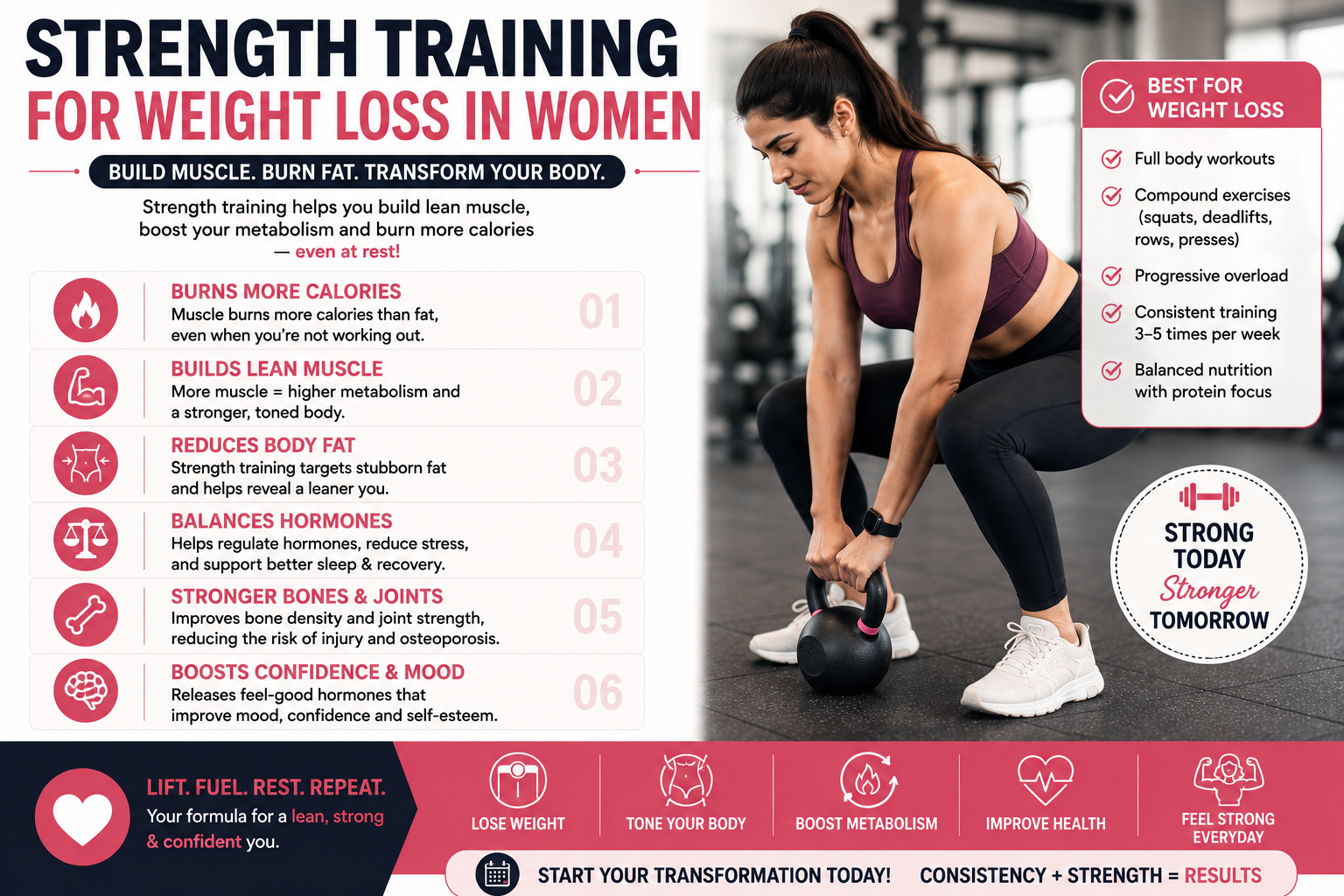
- Prioritise compound movements. Exercises that involve multiple joints and muscle groups simultaneously, including squats, hip hinges such as deadlifts and Romanian deadlifts, pushing movements such as push ups and overhead press, and pulling movements such as rows and lat pulldowns, produce the greatest metabolic and hormonal responses per session. They challenge more muscle mass in each movement, which creates more training stimulus, a greater EPOC effect, and a stronger signal for muscle preservation and growth. Isolation exercises have their place but should supplement rather than replace compound movements in a weight loss programme.
- Use a rep range that challenges the muscle. For most women training for fat loss and body composition, sets of eight to fifteen repetitions with a load that makes the final two to three repetitions genuinely challenging produces the optimal combination of metabolic demand and muscle-building stimulus. This is often called the hypertrophy range, and contrary to its name, it does not produce bulky muscle in women. It produces lean, defined muscle that increases metabolic rate and improves body composition.
- Apply progressive overload consistently. Your body adapts to the demands placed on it. Once a given weight and rep range feels manageable, increasing the load, adding a set, or reducing rest periods provides a new stimulus that drives continued adaptation. Progressive overload is what separates a programme that produces ongoing results from one that produces initial results and then plateaus.
- Train two to three times per week. This frequency provides sufficient training stimulus for muscle adaptation and the EPOC-based afterburn effect while allowing adequate recovery between sessions. Recovery is not passive. It is when your muscles repair, grow stronger, and the hormonal adaptations of strength training consolidate. Overtraining, particularly in women under high lifestyle stress, elevates cortisol and actively works against fat loss.
- Include adequate protein in your diet. Protein provides the amino acids needed for muscle repair and synthesis following strength training sessions. Women in a calorie deficit who do not consume adequate protein lose muscle alongside fat, which defeats the primary mechanism by which strength training produces superior weight loss outcomes. A general target of 1.6 to 2.0 grams of protein per kilogram of bodyweight per day supports muscle preservation during a deficit for most women.
Strength Training for Weight Loss Without a Gym: The Lahore Home Training Advantage
One of the most significant barriers women in Lahore cite when considering strength training is not having access to a gym, not feeling comfortable in mixed-gender gym environments, or not having time to travel to a facility. None of these barriers prevent effective strength training for weight loss.
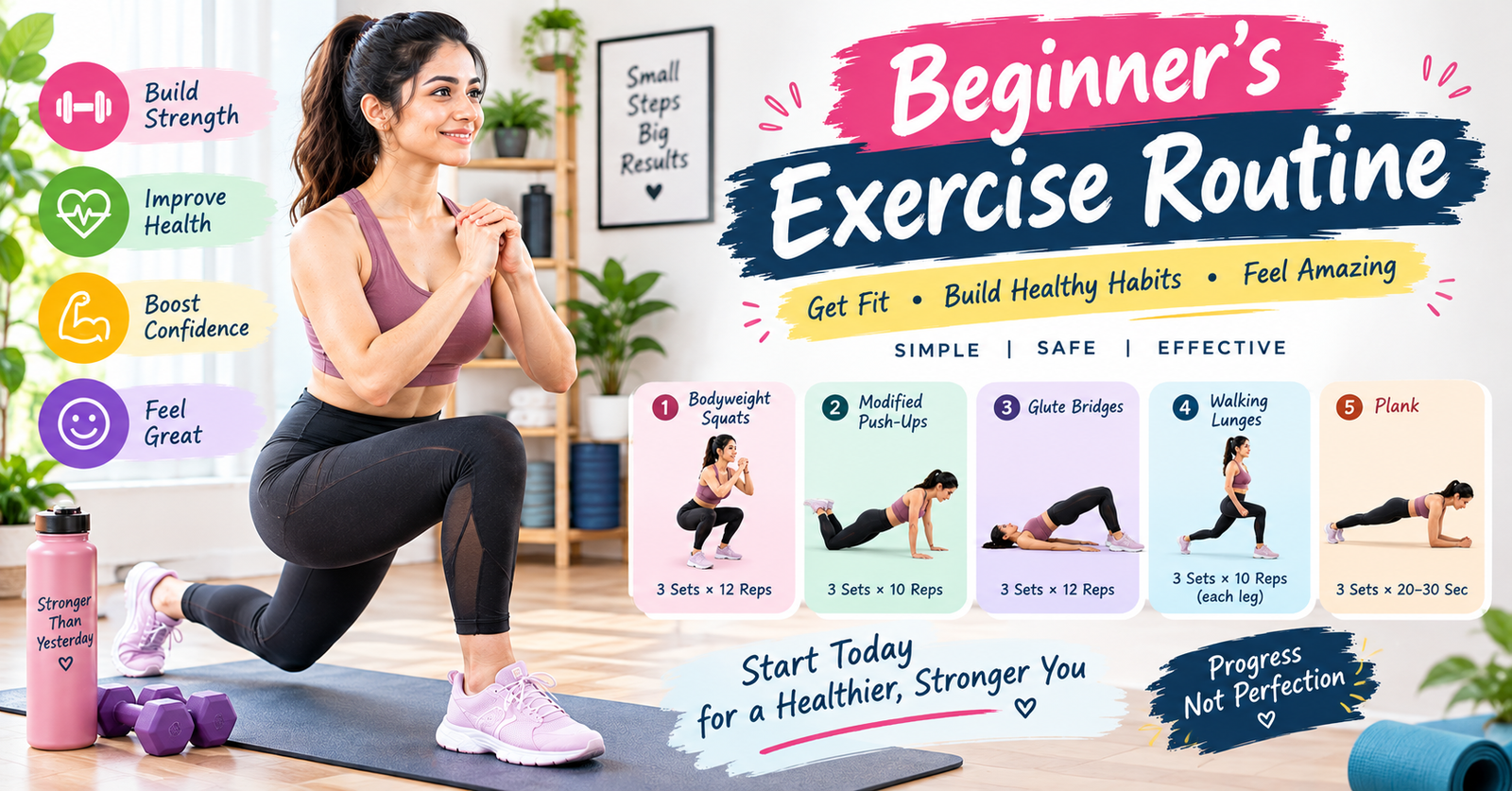
Bodyweight exercises including squats, lunges, glute bridges, push ups, and plank variations provide substantial resistance for the beginner and early intermediate phases of training. Resistance bands add progressive load to these movements at minimal cost and with no space requirements. A single set of adjustable dumbbells opens up a full range of compound exercises that can be done in a space the size of a yoga mat.
In home personal training, which is the primary model at Fit Vibe Trainer in Lahore, removes every logistical barrier to consistent strength training for weight loss. Your trainer comes to you, brings whatever equipment is needed, designs a programme appropriate for your available space, and provides the supervised, corrected, progressive training sessions that produce results that self-directed home workouts rarely achieve with the same consistency.
Live online strength training sessions are equally effective for women who prefer to train at home or who are based internationally. Video coaching allows your trainer to observe your form in real time, provide immediate correction, and progress your programme based on what she sees in each session.
How Long Before Strength Training Produces Weight Loss Results for Women
This is the question most women ask before committing to a programme, and the honest answer has two parts.
In the first two to four weeks, most women notice improved energy, better sleep quality, reduced daily stiffness, and stronger performance in their sessions. These are not incidental side effects. They are direct markers of the physiological adaptations that are also producing fat loss. The scale may not reflect these changes immediately because early strength training can cause temporary water retention as muscles adapt and store additional glycogen and water for energy and repair.
By weeks four to eight, most women training consistently two to three times per week with appropriate nutrition see measurable reductions in body measurements, noticeably better clothing fit, and beginning changes in body composition that become visible in photographs. Actual scale weight typically begins a downward trend in this period as fat loss outpaces the initial water and glycogen changes.
Between weeks eight and twelve, the compounding benefits of improved insulin sensitivity, elevated resting metabolic rate, and consistent progressive overload become clearly visible in body composition. Women who have been consistent through this period typically report feeling fundamentally different in their bodies, with the energy, strength, and physical confidence that comes from a programme that is working at the level of physiology rather than just calorie mathematics.
How Fit Vibe Trainer Structures Strength Training for Weight Loss in Lahore
At Fit Vibe Trainer, strength training for weight loss is built on the complete set of mechanisms described in this article, not on generic templates or cardio-first approaches that produce temporary results.
Our ACE certified coach holds qualifications in GGS Women's Coaching, Pre and Postnatal Coaching, Nutrition and Diet Planning, Physical Fitness and Exercise Science, Functional Training and Conditioning, and Postpartum Fitness and Recovery. Every weight loss programme begins with a full assessment of your movement quality, health history, hormonal context, and lifestyle, and is designed around your specific body rather than applied from a generic model.
We offer in home strength training sessions across Lahore, studio sessions at Dream Gardens, and live online coaching for women in Pakistan and internationally. If you want to understand more about the broader benefits of strength training for women beyond weight loss, read our detailed guide on why strength training is important for women.
To understand the distinction between fat loss and weight loss that makes a meaningful difference to how you structure your programme, read: fat loss vs weight loss: what is actually different.
If you are ready to start and want to know what your first session will look like, read: what to expect from your first personal training session.
For a full overview of our services for women in Lahore, visit: female personal trainer in Lahore.
Book a free consultation today and get a clear picture of exactly how a structured strength programme will produce weight loss results for your body specifically.
Find us on Google and read genuine reviews from clients who have achieved lasting results.
Frequently Asked Questions
How does strength training help women lose weight?
Strength training helps women lose weight through five primary mechanisms: it builds lean muscle that raises your resting metabolic rate so you burn more calories around the clock; it produces an afterburn effect that keeps metabolism elevated for up to 38 hours after a session; it protects muscle during a calorie deficit so your body burns fat rather than lean tissue; it improves insulin sensitivity which directly reduces fat storage; and it changes body composition by replacing fat with denser muscle, producing visible changes that scale weight alone does not reflect.
Is strength training or cardio better for women's weight loss?
Strength training is superior for sustainable weight loss in women. Cardio burns calories during the session but does not significantly raise your resting metabolic rate. Strength training builds muscle that elevates your resting metabolic rate permanently, produces a significantly longer afterburn effect, protects lean mass during a calorie deficit, and improves insulin sensitivity. Combining both produces excellent results, but if you can only prioritise one, strength training delivers more lasting physiological changes for weight loss in women.
How many times per week should women strength train for weight loss?
Two to three strength training sessions per week is the most effective frequency for most women pursuing weight loss. This provides sufficient stimulus for muscle adaptation and the afterburn effect while allowing adequate recovery between sessions. Recovery is when your muscles repair and your metabolism elevates, so rest days are not lost days. They are part of the process.
Why am I not losing weight with strength training?
Several factors can slow visible progress despite consistent training. The most common are insufficient protein intake, which causes muscle loss alongside fat; a calorie intake that is not in a genuine deficit; early-stage water retention as muscles adapt; daily scale fluctuations from hormonal cycles, salt intake, and digestive content that mask fat loss progress; and insufficient progressive overload in sessions, which allows the body to stop adapting. Tracking body measurements alongside scale weight reveals fat loss that the scale misses during these adjustment phases.
Can women with PCOS lose weight through strength training?
Yes. Strength training is one of the most evidence-backed interventions for weight loss in women with PCOS specifically. The primary driver of weight resistance in PCOS is insulin resistance, and strength training directly improves insulin sensitivity by building lean muscle mass that increases glucose uptake capacity. It also reduces cortisol over time, which reduces abdominal fat storage. A programme designed by a trainer with specific knowledge of PCOS produces significantly better results than a generic weight loss programme that does not account for the hormonal environment.
Will strength training make women look bulky instead of lean?
No. Women do not produce sufficient testosterone to build large, bulky muscle mass through conventional strength training. The physique most women describe as toned or lean is exactly what results from strength training combined with a moderate calorie deficit: reduced body fat percentage with visible muscle definition beneath it. Women who strength train for weight loss consistently describe looking smaller in their clothing while feeling significantly stronger, because the lean muscle replacing fat takes up less space per kilogram.
Do I need a gym to strength train for weight loss as a woman?
No. Bodyweight exercises, resistance bands, and a basic set of dumbbells are sufficient for highly effective strength training programmes, particularly in the beginner and intermediate phases. Many women achieve significant and lasting fat loss training entirely at home under the supervision of a qualified female trainer. At Fit Vibe Trainer, we offer in home sessions across Lahore that bring the full benefit of structured strength programming to your home environment without requiring a gym membership or commute.
How soon will I see weight loss results from strength training?
Most women notice improved energy and sleep within two to three weeks. Measurable reductions in body measurements typically appear between weeks four and eight with consistent training and appropriate nutrition. Visible body composition changes, including reduced waist measurements and increased muscle definition, become clearly apparent between weeks eight and twelve for most women training two to three times per week with appropriate progressive overload.
Ready to put this into action?
Train 1-on-1 or in a group with Amna — your first discovery call is completely free. Female-only, fully online, results you can see.
Book My Free Call on WhatsApp →