If you spend your day hunched over a laptop, scrolling on your phone, or lifting kids and grocery bags without thinking twice about your form, chances are your posture has quietly been paying the price. Most women don't notice it happening — it shows up gradually as neck stiffness, a nagging lower backache, or shoulders that seem to curl forward no matter how many times you tell yourself to "sit up straight." That's where posture correction and rehabilitation exercises come in, and it's one of the most requested — and most misunderstood — services at Fit Vibe Trainer.
This article breaks down exactly who benefits from posture correction and rehab coaching, how the process actually works, and why it's different from a regular workout plan.
What Is Posture Correction and Rehab Coaching?
Posture correction and rehab coaching is a structured, movement-based program designed to identify why your body is out of alignment and retrain it to move correctly again. It's not about a single stretch or a viral "fix your posture in 5 minutes" video. It's a slower, more deliberate process that looks at:
- How your spine, shoulders, and hips are currently positioned
- Which muscles are overactive (tight) and which are underactive (weak)
- Daily habits — desk setup, phone use, sleeping position, carrying patterns — that are reinforcing the problem
- Any past injuries, C-sections, pregnancies, or surgeries that changed how your body moves
From there, a coach builds a corrective exercise plan that strengthens the weak links, releases the tight ones, and gradually restores natural alignment. Done consistently, it doesn't just improve how you look standing in front of a mirror — it reduces pain, improves breathing, and makes every other type of training (strength, cardio, even walking) feel easier on the joints.
Who Is This For?
Posture correction and rehab coaching isn't only for people recovering from an injury. In practice, it helps a much wider range of women, including:
- Desk workers and students who sit for 6+ hours a day and deal with neck, shoulder, or lower back tightness
- New and postpartum mothers whose core and pelvic alignment shifted during pregnancy and delivery
- Women managing PCOS who want a gentler, sustainable entry point into structured movement before progressing to strength training
- Anyone returning after an injury — a slipped disc, frozen shoulder, knee strain, or old sports injury that was never properly rehabbed
- Women who "sit weird" or stand unevenly without realizing it, and are starting to feel it in their hips or lower back
- Clients preparing for strength training who want to build a solid movement foundation first, so lifting doesn't aggravate existing imbalances
If any of that sounds familiar, this isn't a "someday" fix — it's usually the missing first step before any other fitness goal can be reached comfortably.
How the Process Actually Works
A good rehab coaching program follows a clear sequence rather than throwing random exercises at the problem. Here's what that typically looks like with a qualified coach:
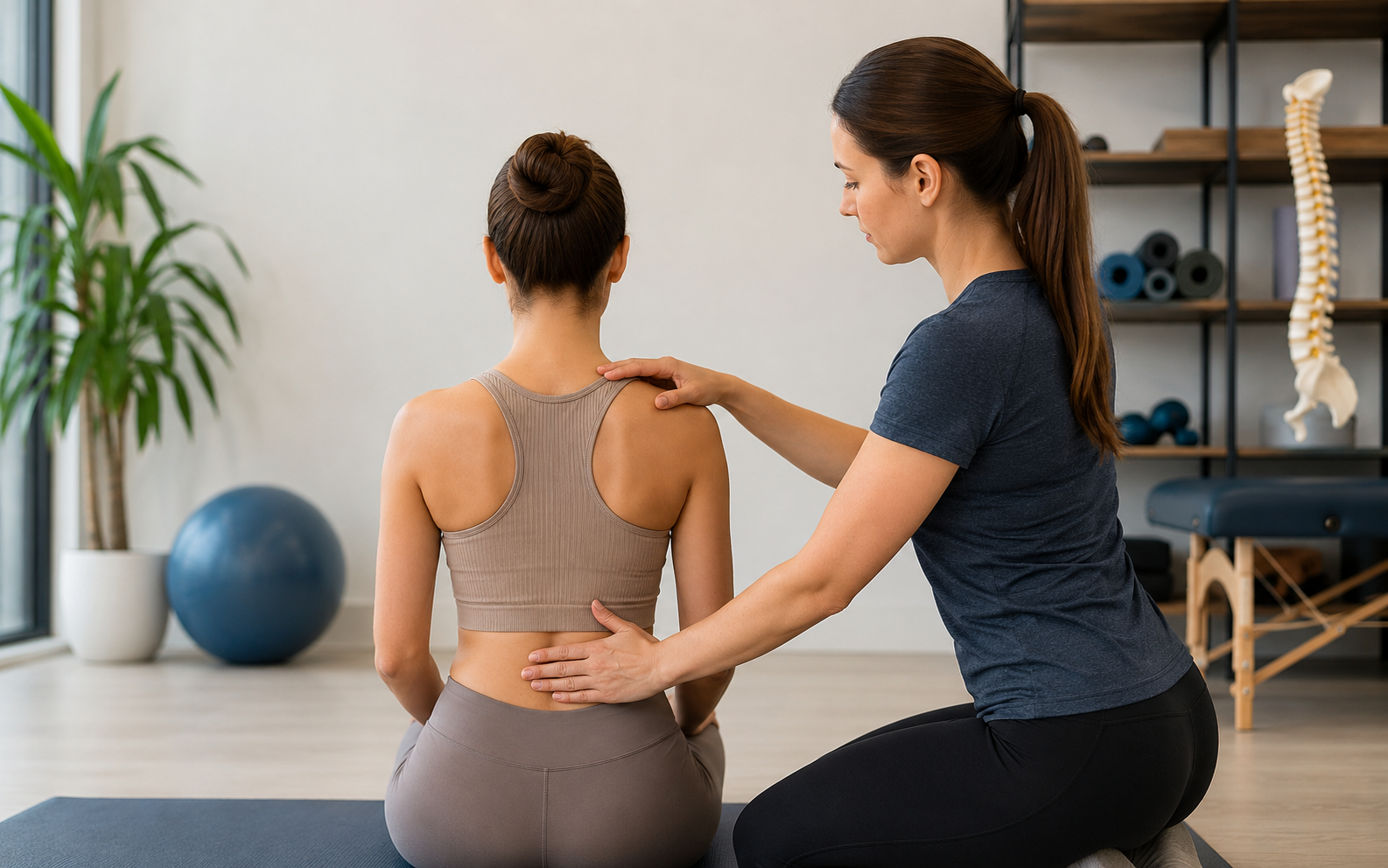
- Postural and movement assessment. Before anything else, your coach observes how you stand, walk, sit, and move through basic patterns like a squat or an overhead reach. This identifies the specific imbalances at play — not a generic "everyone should do this" routine.
- Root-cause mapping. Pain in one area often comes from weakness or tightness somewhere else entirely. Lower back pain, for example, is frequently linked to weak glutes or a tight hip flexor, not the back itself.
- Corrective exercise programming. A custom plan is built around mobility work, activation exercises, and gradual strengthening — sequenced so the body isn't rushed into positions it isn't ready for.
- Progressive reintroduction of strength work. As alignment improves, functional strength training is layered back in, so the corrective work translates into real-life strength and stability, not just symptom relief.
- Ongoing form coaching. Posture habits took years to form, so they're retrained gradually, with regular check-ins on daily habits (screen height, sleep posture, sitting patterns) alongside the exercise plan.
This is a big part of why rehab and posture coaching gets real, lasting results compared to generic advice you'd find scrolling online — it's built around your body, not a template.
Why Work With a Specialist Instead of Guessing on Your Own
It's tempting to search "posture correction exercises" and just start doing whatever comes up. The problem is that without an assessment, you can easily strengthen the wrong muscles or aggravate an existing issue. A few reasons working with a dedicated coach makes a real difference:
- Personalization. Two people with "bad posture" can have completely different root causes — one might need thoracic mobility, the other glute activation.
- Safety around injuries. If there's a history of pain, PCOS-related fatigue, or a postpartum recovery timeline, exercises need to be sequenced carefully rather than following a generic online program.
- Accountability. Posture habits are easy to slip back into. Regular coaching keeps the corrective work consistent instead of a one-off attempt that fades after a week.
- A comfortable, women-focused space. For many clients, having a female coach who understands PCOS, postpartum recovery, and cultural comfort preferences makes it far easier to stay consistent long-term.
This is exactly the space Fit Vibe Trainer works in. As a female personal trainer, Amna Saleem built her coaching approach specifically around women's fitness — strength training, fat loss, body toning, posture correction, PCOS support, and postpartum recovery — so clients get a program built around how women's bodies actually move and recover, not a repurposed general fitness plan.
What to Expect in Your First Session
If you're considering starting, here's a realistic picture of what the first session looks like:
- A conversation about pain points, daily habits, injury history, and goals
- A hands-on or guided movement assessment
- An explanation of what's actually causing the discomfort or imbalance — in plain language, not jargon
- A starting plan with clear, manageable exercises you can begin immediately
Sessions are available both in-person across DHA, Johar Town, Gulberg, Bahria Town, and Model Town, and online, for clients who prefer coaching from home or are based outside these areas.
Real Progress Looks Like This
Clients who stick with a posture and rehab program typically notice the early wins within a few weeks — sitting for long stretches without the same ache, standing taller without consciously "trying," sleeping more comfortably, or simply moving through daily tasks with less tension. It's rarely dramatic overnight, but it compounds. Months in, many clients find they've not only fixed the original complaint but built enough strength and confidence to move into full strength training programs they wouldn't have attempted before.
That's the real goal of rehab coaching — not just correcting a slouch, but rebuilding trust in your own body.
Frequently Asked Questions
Is posture correction coaching only for people with an injury?
No. While it's especially useful for injury recovery, most clients start simply because of desk-related stiffness, postpartum changes, or general discomfort — no diagnosis required.
How long does it take to see results?
Most clients notice reduced tension and better awareness within 3-4 weeks of consistent sessions, with more visible postural changes over 2-3 months.
Can I do posture correction and strength training at the same time?
Yes, and in most cases it's recommended — corrective work and strength training are usually blended once the initial assessment shows it's safe to progress.
Is this suitable during or after pregnancy?
Yes. Postpartum posture and core rehab is one of the most common reasons women reach out, and programs are adjusted to each recovery timeline.
Do you offer online rehab coaching, or only in person?
Both. Fit Vibe Trainer offers in-person sessions across DHA, Johar Town, Gulberg, Bahria Town, and Model Town, as well as fully online coaching for clients anywhere.
Ready to move without the aches? Visit Fit Vibe Trainer to book a posture and movement assessment with Amna Saleem, or find Fit Vibe Trainer's local listing on ZK Local for reviews and location details.
Ready to put this into action?
Train 1-on-1 or in a group with Amna — your first discovery call is completely free. Female-only, fully online, results you can see.
Book My Free Call on WhatsApp →