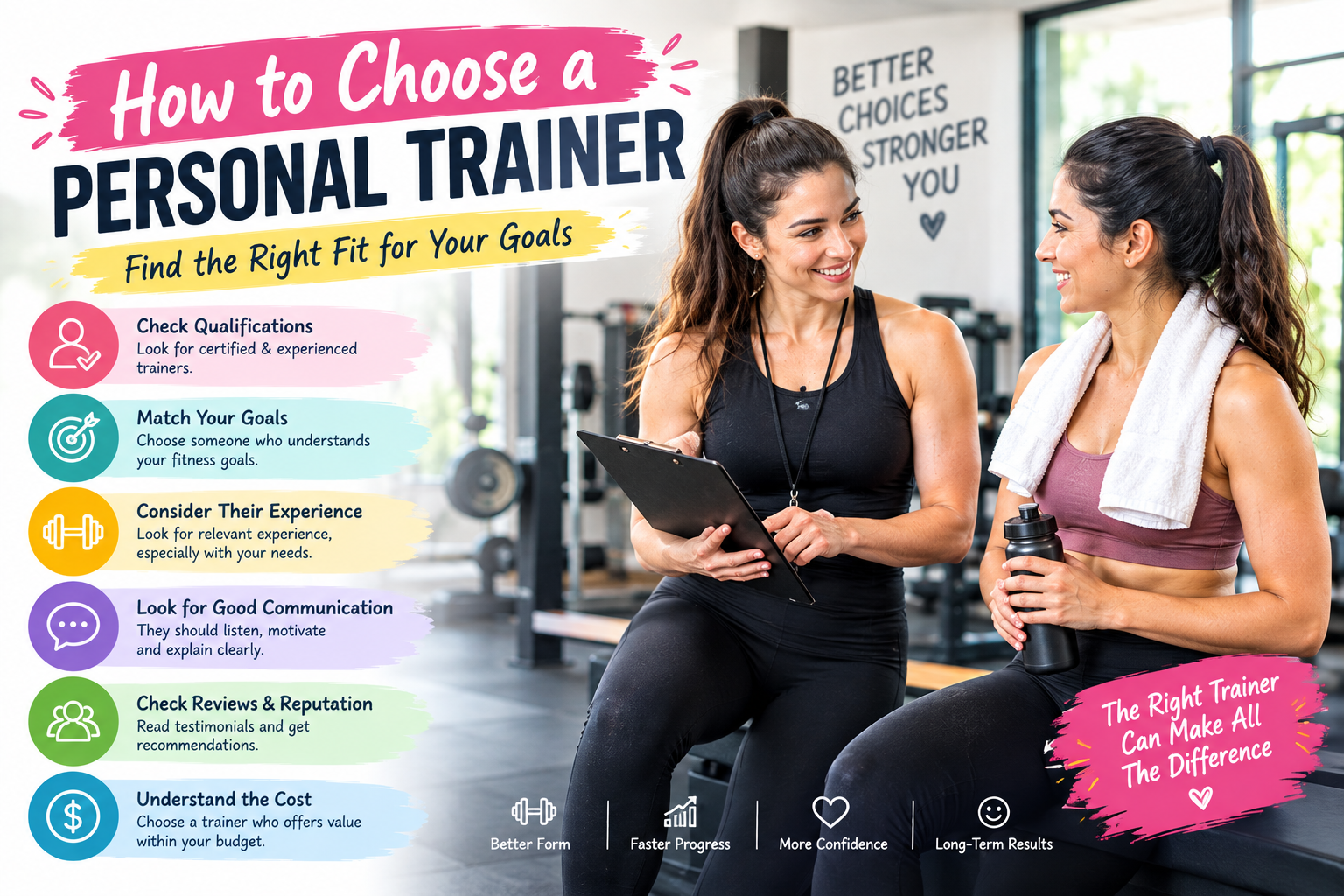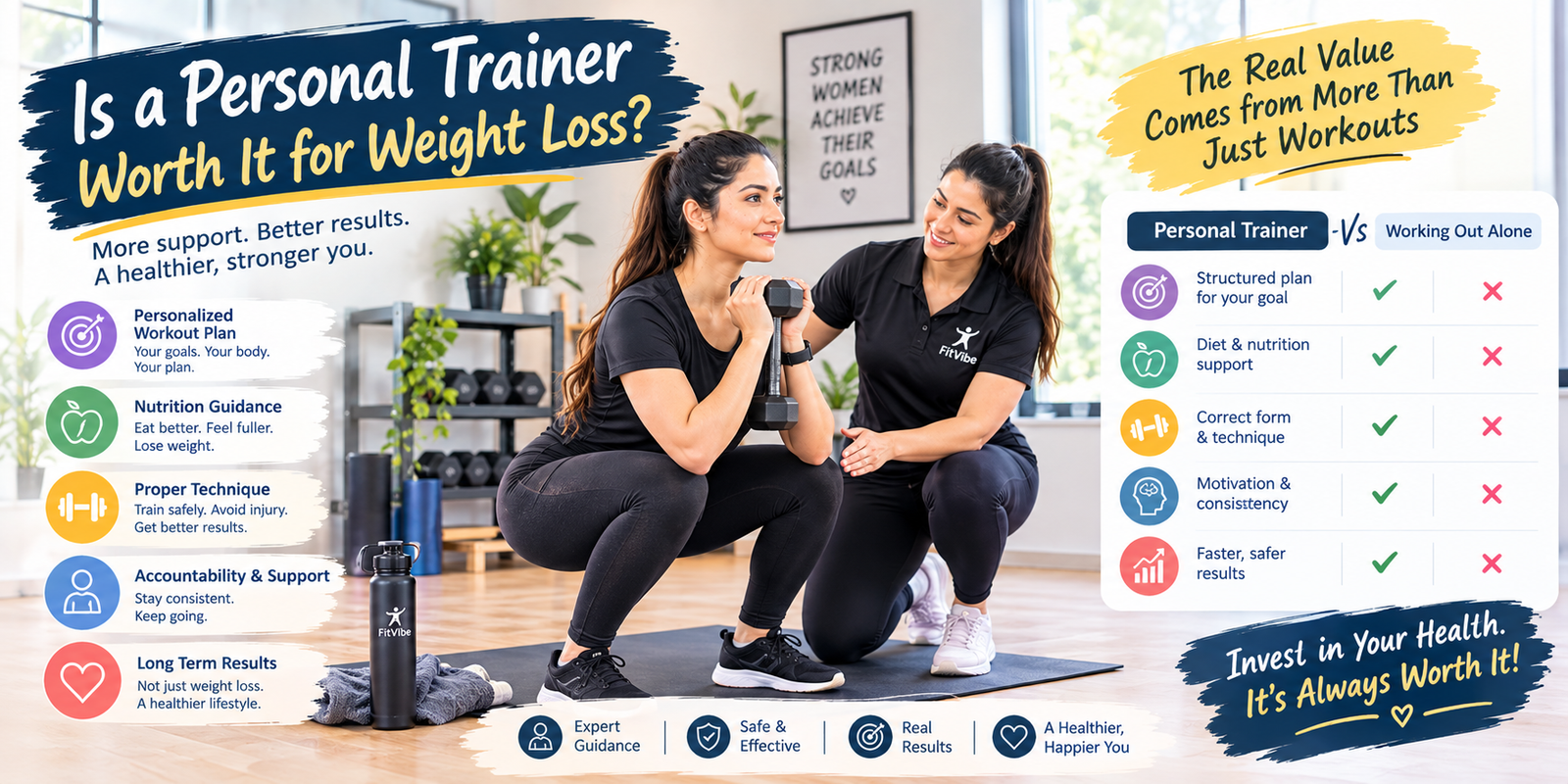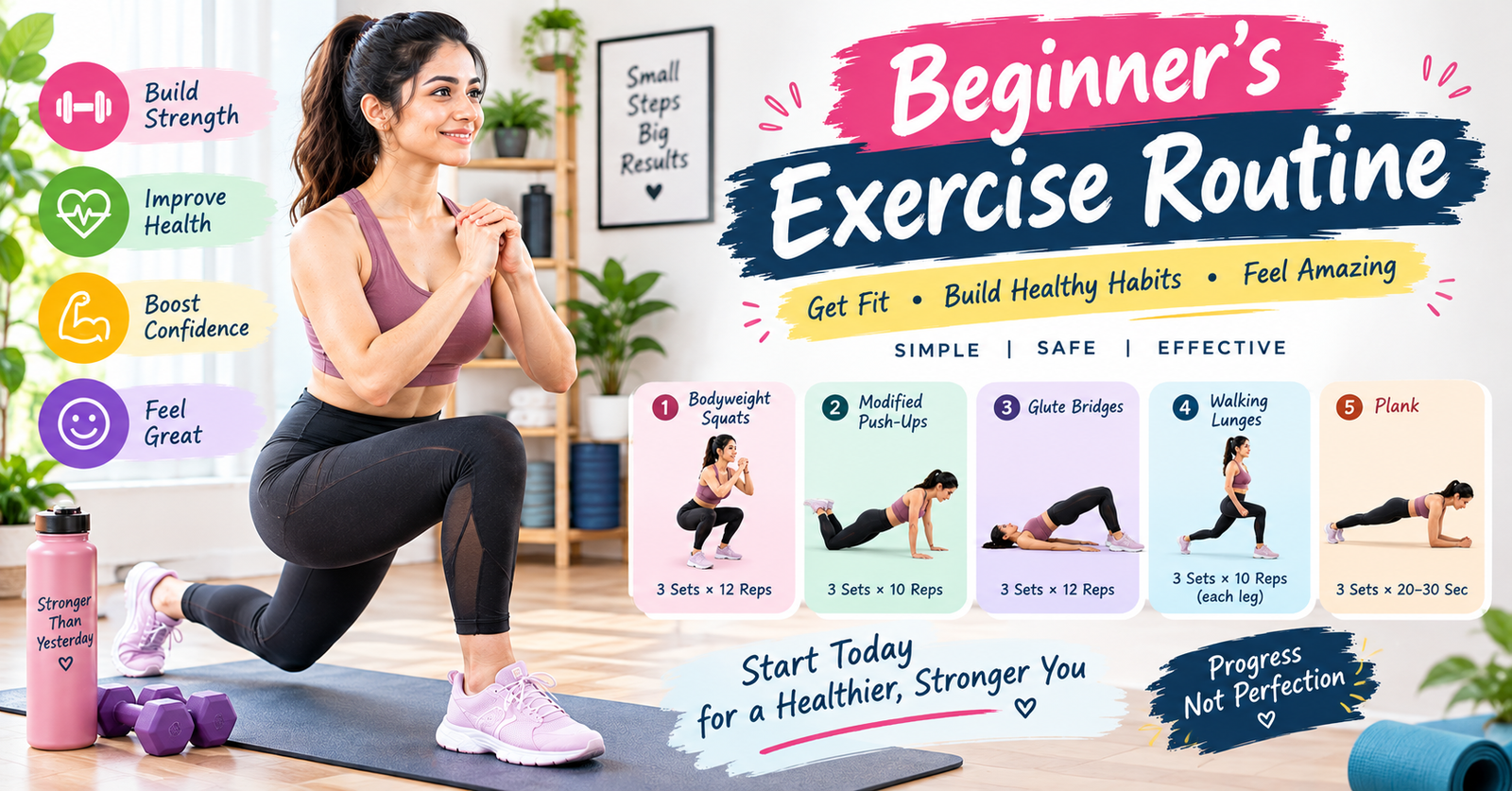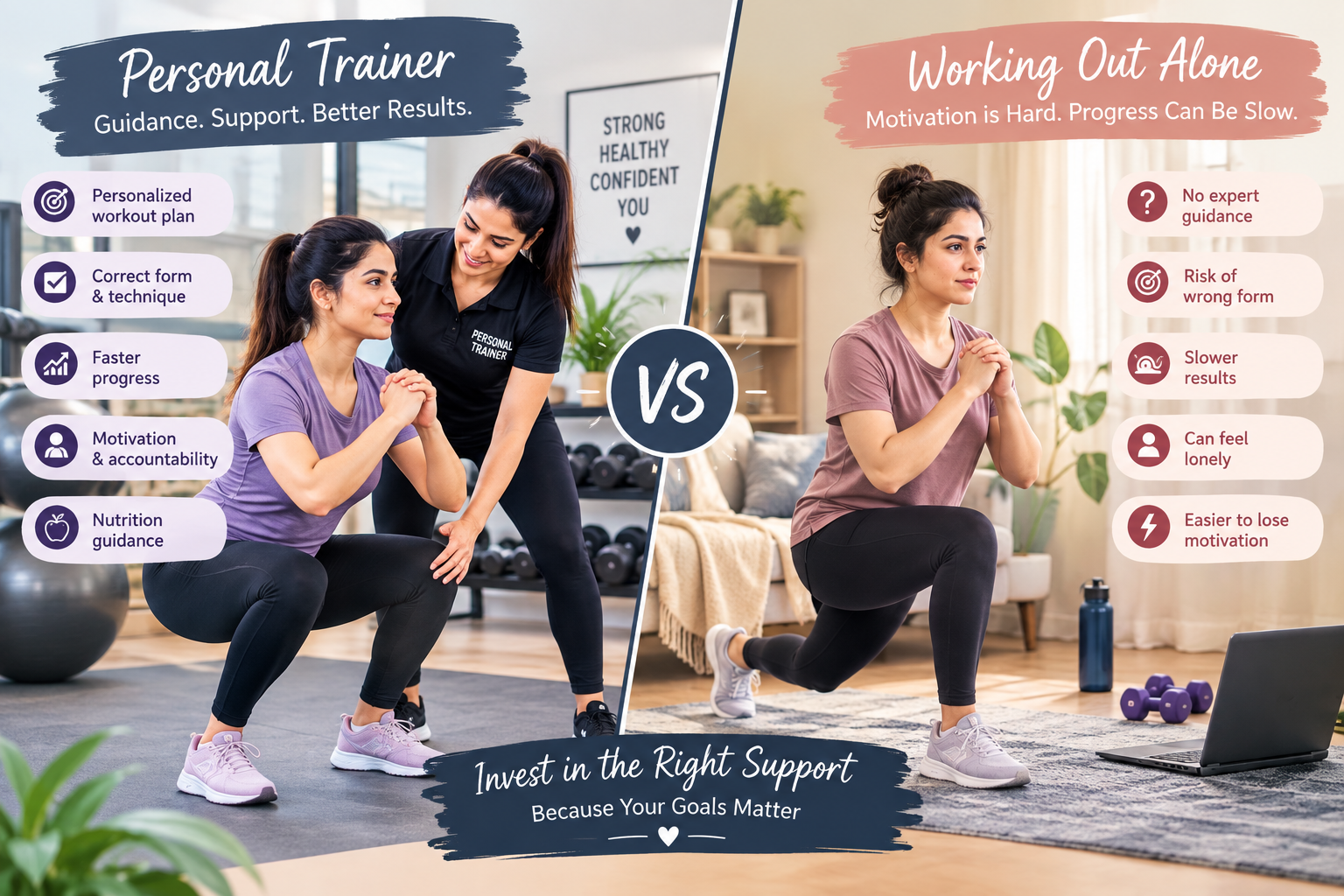
Anyone who has ever joined a gym has faced this decision: hire a personal trainer, or figure it out on your own with YouTube videos and a rough plan in your head. Both can work. But they don't work equally well, and they don't suit the same kind of person. Here's an honest, practical comparison — not the "everyone needs a trainer" sales pitch, and not the "trainers are a waste of money" take either — just what actually changes depending on which path you choose.
The Real Difference Isn't Motivation — It's Structure
Most people assume a trainer's main job is to "motivate" you to show up. That's a small part of it. The bigger difference is structure: a trainer builds a program that progresses week to week based on how your body is responding, corrects your form before a small mistake becomes an injury, and adjusts the plan when something isn't working. Working out alone means you're doing all of that yourself, usually while also trying to figure out what a good program even looks like in the first place.
Where a Personal Trainer Wins
Faster, Safer Progress
A trainer sees issues you can't see in yourself — a knee caving in on a squat, a rounded back on a deadlift, a shoulder compensating for a weak core. Left uncorrected, these small form errors either stall your progress or eventually cause an injury. Catching them early is one of the biggest reasons trainer-led clients often progress faster than people training alone.
A Program That Actually Progresses
Doing the same workout for months with the same weights is one of the most common reasons solo training plateaus. A trainer tracks your progressive overload — when to add weight, when to change the rep range, when to switch the whole program — so your body keeps being challenged instead of adapting and stalling.
Accountability You Can't Talk Yourself Out Of
It's easy to skip a workout you only owe to yourself. It's much harder to skip one where someone is expecting you, tracking your attendance, and checking in when you go quiet. This single factor is often the difference between someone who trains for three months and someone who trains for three years.
Guidance for Specific Goals or Conditions
Postpartum recovery, PCOS, old injuries, or posture issues all need programming that a generic plan doesn't account for. A trainer with the right experience adjusts your program around these factors instead of you guessing what's safe.
Where Working Out Alone Wins
Cost
This is the most obvious one — a gym membership or home setup costs far less than ongoing personal training. For people on a tight budget, working out alone (ideally after learning proper form somewhere first) is the more realistic option.
Flexibility and Independence
You train on your own schedule, at your own pace, without coordinating around anyone else's calendar. For people with unpredictable schedules, this flexibility matters.
It Works — If You Already Have the Knowledge
Someone with a solid training background, who understands programming, form, and recovery, can absolutely get excellent results training alone. The risk is highest for beginners, who don't yet have the experience to know what "good form" or "a well-structured program" actually looks like.
So Which One Is Right for You?
- Choose a personal trainer if: you're new to structured training, recovering from an injury, managing a condition like PCOS or postpartum recovery, or you've tried working out alone before and struggled to stay consistent.
- Choose working out alone if: you already understand programming and form, you're on a tight budget, and you're confident in holding yourself accountable long-term.
- Consider a hybrid: many people start with a trainer to build a solid foundation — correct form, a real program, and a clear understanding of progression — then transition to training independently, sometimes checking back in periodically for a program refresh.
Online Coaching: The Middle Ground
You don't have to choose between the full cost of in-person sessions and training completely alone. Online coaching gives you the structure, progression, and accountability of a trainer — a program built around your goals, regular check-ins, and adjustments as you progress — without needing to be in the same room. At Fit Vibe Trainer, this is exactly how many clients train: online coaching for women managing busy schedules, alongside in-person sessions across DHA, Johar Town, Gulberg, Bahria Town, and Model Town in Lahore for those who want hands-on form correction, including programming for fat loss, toning, posture correction, PCOS, and postpartum recovery.
For more perspectives on this exact question, including real experiences from people who've tried both, see our earlier piece on personal trainer vs working out alone and this related read on choosing between guided and independent training.
The Bottom Line
A personal trainer isn't automatically "better" than working out alone, and working out alone isn't automatically cheaper in the long run if bad form or a stalled program cost you months of progress. The right choice depends on your experience level, your goals, and how honestly you can hold yourself accountable without outside support. If you're unsure, starting with a trainer — even for a short period — is the lowest-risk way to build the foundation you'll need either way.
Frequently Asked Questions
Is a personal trainer worth it compared to working out alone?
For most people, yes, at least for a period. A trainer speeds up results by correcting form, structuring progression, and providing accountability — the three areas people working out alone struggle with most.
Can you get good results working out alone?
Yes, if you already know how to structure a program, track progressive overload, and stay consistent without external accountability. It typically takes longer, and the risk of plateauing or forming bad habits is higher.
How much faster are results with a personal trainer?
There's no fixed number, but a trainer typically prevents the two biggest time-wasters in solo training: inconsistent programming and stalled progression, which can significantly shorten the time it takes to see visible change.
Is online personal training as effective as in-person?
For most goals, yes. Online coaching still provides programming, progression, and accountability. In-person training adds real-time form correction, which matters more for complex lifts or rehabilitation.
Not sure which path fits you? Get in touch with Fit Vibe Trainer for in-person training across Lahore or online coaching wherever you are.
Ready to put this into action?
Train 1-on-1 or in a group with Amna — your first discovery call is completely free. Female-only, fully online, results you can see.
Book My Free Call on WhatsApp →