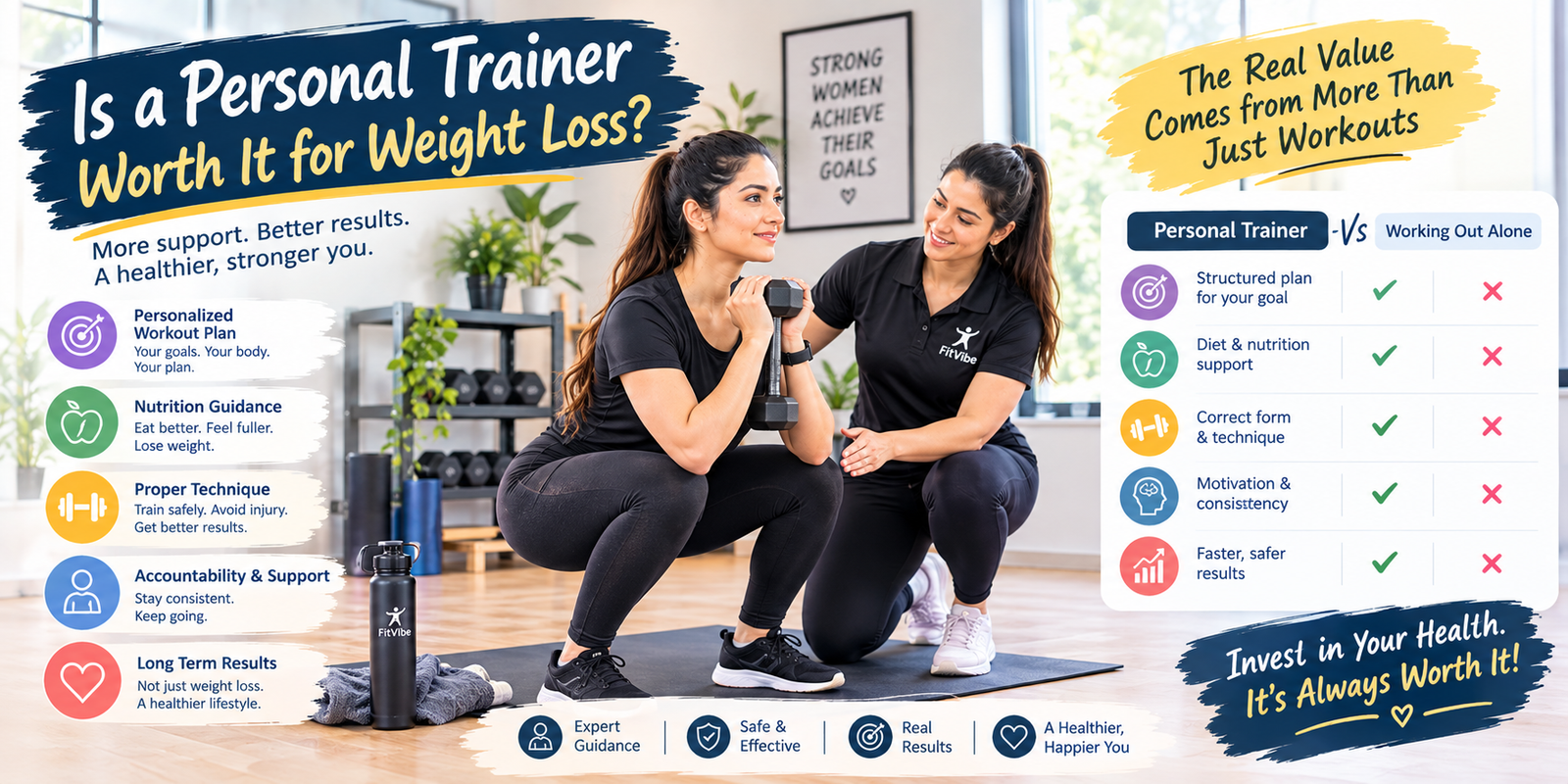
Choosing the right female personal trainer in Lahore is one of the most important fitness decisions you will make. The right coach accelerates everything. The wrong one wastes months of your time, plateaus your progress, and in some cases causes physical harm through poor programming or unsafe exercise instruction. The difference between a great fit and a poor one is rarely about price or proximity. It is about knowing what to look for before you commit.
This guide covers every factor that actually matters when choosing a female personal trainer in Lahore, whether you are a complete beginner, returning after a long break, managing a health condition, or working toward a specific goal like fat loss, postnatal recovery, or managing PCOS.
Why Choosing a Female Personal Trainer Specifically Matters in Lahore
For many women in Lahore, the gender of their trainer is not a preference. It is a requirement. Whether for religious reasons, cultural comfort, family expectations, or simply the fact that women communicate and train differently from men, working with a female trainer creates conditions where honest conversations happen, limitations are shared openly, and sessions feel safe rather than performative.
Beyond comfort, there is a practical physiological argument. Female trainers who specialise in women's health understand how hormonal cycles, PCOS, thyroid conditions, postnatal recovery, and perimenopausal changes affect training capacity, recovery, and fat metabolism. These are not minor variables. They directly determine what kind of training program will work for your body and what will not. A trainer who does not account for them is not building a program for you. She is building a generic template and fitting you into it.
Lahore also presents a specific environment that the right trainer will understand. Home visit training, ladies-only studio settings, scheduling around family and household responsibilities, Ramadan adaptations, and the reality that many women in Pakistan have never stepped into a gym all require a coach who has worked in this context, not one applying a Western gym model without modification.
Step One: Verify Certifications Before Anything Else
In Pakistan, the personal training industry is largely unregulated. Anyone can call herself a trainer and begin charging clients. This makes certification verification the single most important first step in your selection process.
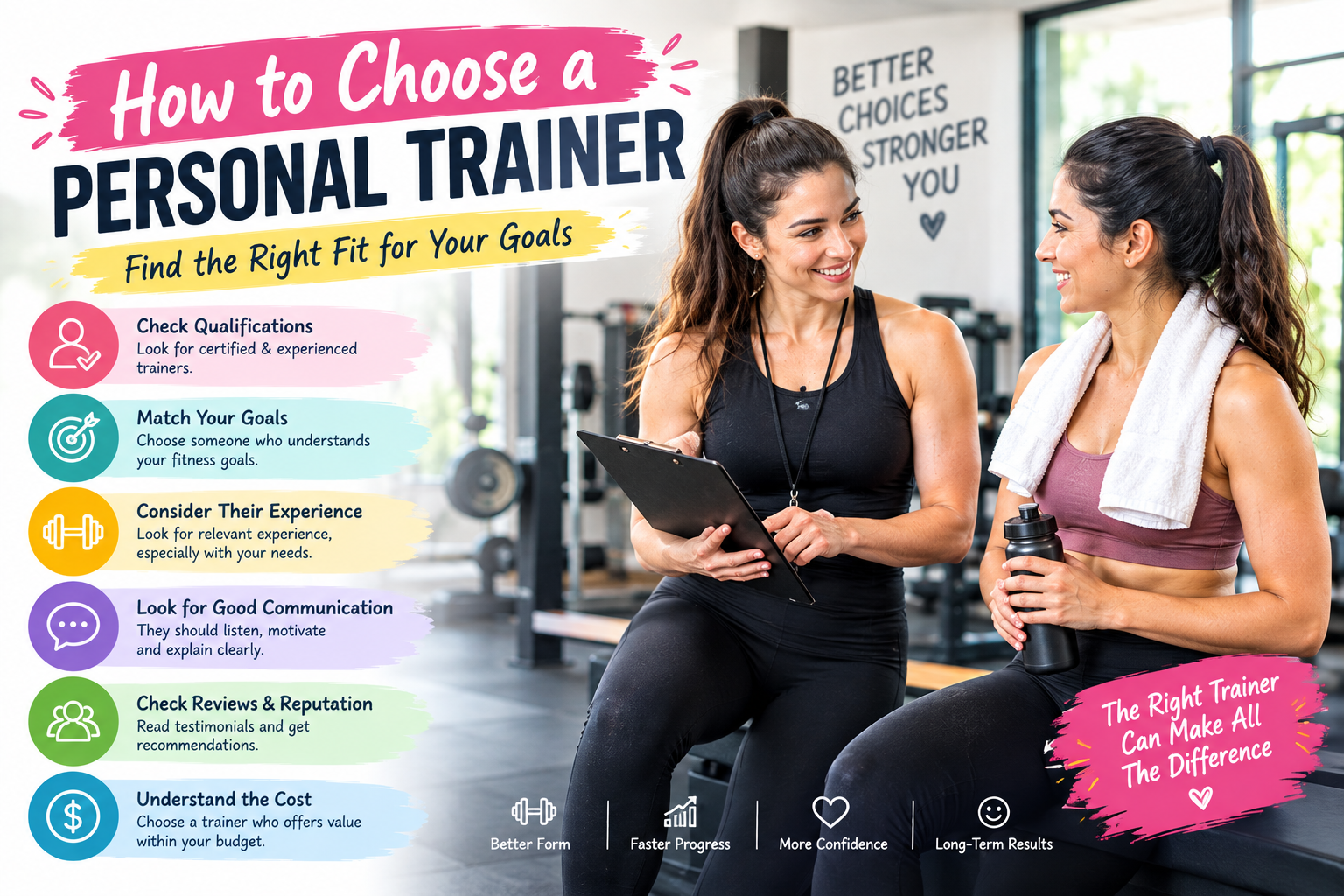
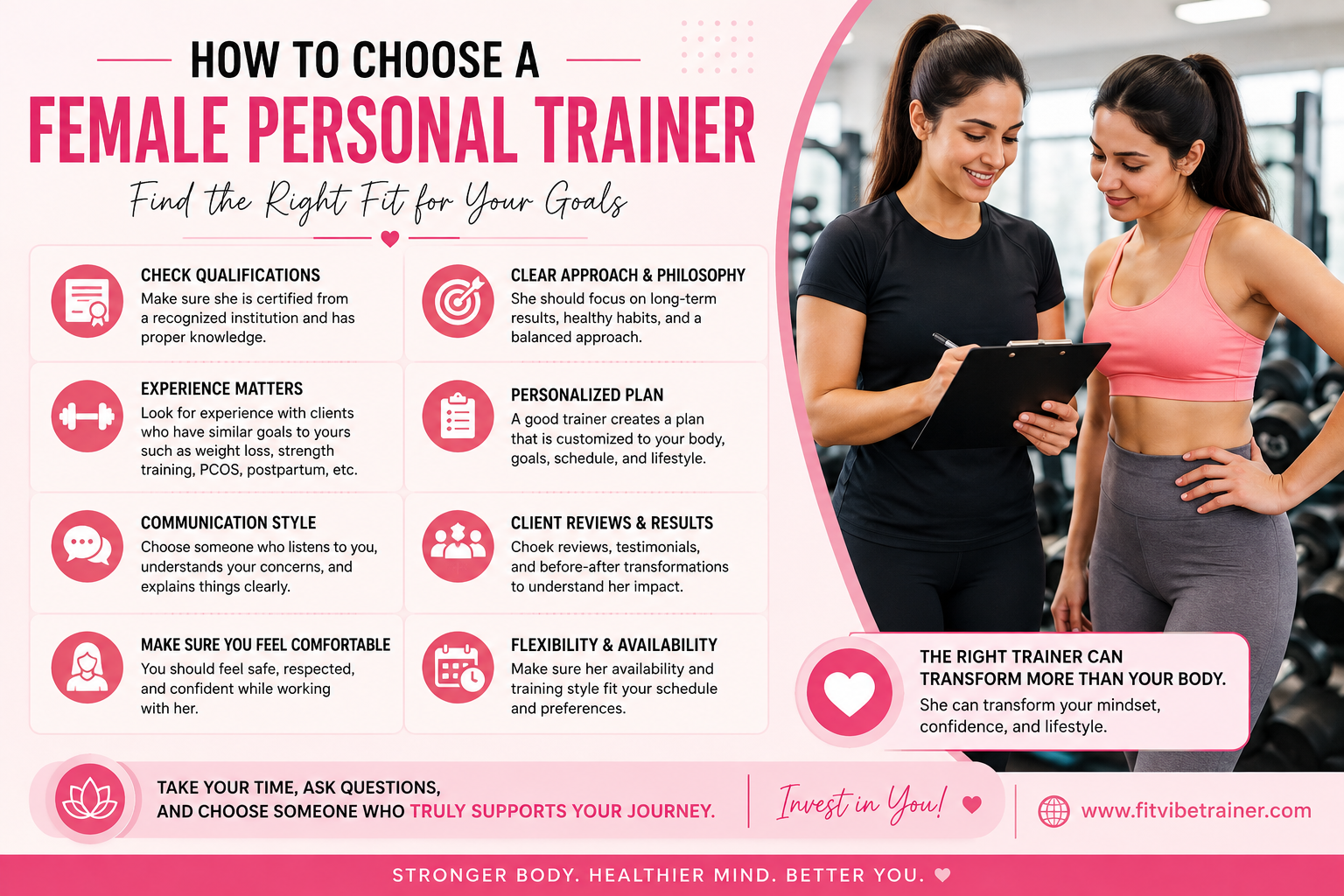
A qualified female personal trainer in Lahore should hold at minimum one internationally recognised certification from a credible organisation. The credentials that carry the most weight globally are listed below.
- ACE Certified Personal Trainer (CPT) from the American Council on Exercise. One of the most widely recognised and respected entry-level certifications globally, with strong emphasis on safe programming, injury prevention, and evidence-based practice. This is the gold standard for general personal training.
- NASM Certified Personal Trainer (CPT) from the National Academy of Sports Medicine. Particularly strong on corrective exercise and movement screening, making it valuable for trainers working with clients who have posture issues, joint pain, or previous injuries.
- Girls Gone Strong (GGS) Women's Coaching Specialist. A specialist certification focused entirely on female physiology, hormonal health, body composition, and the psychological dimensions of women's fitness. A trainer holding this credential has deliberately invested in understanding women's specific needs beyond what general CPT programmes cover.
- Pre and Postnatal Coaching Certification. Essential if you are pregnant, recently postpartum, or managing diastasis recti or pelvic floor weakness. Without this qualification, a trainer is guessing rather than applying evidence-based postnatal programming.
- Diploma in Nutrition and Diet Planning. Relevant because fat loss, hormonal health, and PCOS management are all heavily influenced by nutrition, and a trainer who can integrate dietary guidance with your training program delivers far more comprehensive results.
Always ask to see certification documents. A legitimate trainer will not hesitate. If the answer is vague or the credentials cannot be verified through the issuing organisation's website, treat that as an immediate disqualifier.
Step Two: Match the Trainer's Specialisation to Your Specific Goal
Personal training is not one-size-fits-all, and trainers are not interchangeable. A trainer who is excellent at programming for fat loss in healthy adult women may have no business working with a client managing PCOS and insulin resistance. A trainer who specialises in athletic performance may be completely unsuited to guiding a postpartum client through pelvic floor rehabilitation.
Before you commit to any trainer, be specific about what you actually need, and then verify that the trainer has demonstrated competency in exactly that area.
- Fat loss and body composition. Look for a trainer with nutrition qualifications alongside fitness certifications, a track record with similar clients, and an approach that combines resistance training with nutritional guidance rather than relying primarily on cardio.
- Postnatal recovery and diastasis recti. This requires a Pre and Postnatal Coaching Certification at minimum, and ideally additional knowledge of pelvic floor function. Training a postpartum client without this specialisation is a serious risk to her physical health.
- PCOS and hormonal imbalance. Requires understanding of insulin resistance, cortisol management, anti-inflammatory nutrition, and how hormonal fluctuations affect training tolerance and recovery. Ask directly what the trainer knows about PCOS before considering them for this goal.
- Beginners and women returning after long breaks. Requires patience, strong communication skills, the ability to teach foundational movement patterns clearly, and a programme that builds confidence as well as physical capacity.
- Strength training and functional fitness. Look for certifications in functional training or conditioning alongside a clear methodology for progressive overload and periodisation rather than random session-to-session exercise selection.
- Older women and mobility-focused training. Requires understanding of bone density, joint protection, balance, and how ageing affects muscle recovery, particularly for women over 45.
Step Three: Ask These Specific Questions Before You Commit
A consultation with a trainer is not a formality. It is your primary quality filter. The questions you ask and the quality of the answers you receive will tell you more about a trainer's competence and fit than any marketing material or social media presence ever will.
These are the questions worth asking every trainer you consider.
- What does your typical client's first month look like? A qualified trainer will describe a clear progression: initial assessment, movement screening, baseline measurements, foundational programming, and a week-by-week build. A vague answer or an immediate pivot to selling packages is a red flag.
- How do you approach training for women with PCOS or hormonal imbalances? Even if you do not have these conditions personally, the answer reveals whether the trainer has genuine knowledge of female physiology or is applying a generic template.
- How do you track client progress? Strong trainers track body measurements, strength performance, energy levels, and lifestyle markers alongside scale weight. Trainers who track only weight are measuring the least informative indicator.
- What happens in a session if I am in pain or something does not feel right? The answer should be immediate modification, not pushing through. A trainer who normalises pain or dismisses discomfort is dangerous to train with.
- Do you offer home visit sessions or only studio training? In Lahore specifically, the ability to train at your home is a meaningful differentiator for women who cannot or prefer not to travel to a studio.
- How do you adapt sessions during Ramadan or around family commitments? A trainer who has worked consistently with women in Lahore will have a clear answer. One who has not will have a vague one.
- Can you share before and after results or testimonials from clients with similar goals? Results from real clients with similar bodies, conditions, and goals are the most credible evidence of a trainer's effectiveness.
Step Four: Evaluate the Training Environment
Where you train affects how consistently you train. In Lahore, the training environment options include home visits, private studio sessions, ladies-only gym sessions, and live online coaching. Each has genuine advantages depending on your circumstances.
- Home visit training eliminates the time cost and psychological barrier of travelling to a gym. It is particularly valuable for women managing young children, tight schedules, or those who feel self-conscious training in shared spaces. Your trainer comes to you, uses your available space, and adapts the programme to your home environment.
- Private studio sessions provide dedicated equipment, a distraction-free environment, and a professional training atmosphere. A female-only studio adds the additional benefit of gender-exclusive privacy. Look for studios that are clean, well-maintained, and staffed by qualified coaches rather than general gym staff.
- Live online coaching is highly effective for women with international schedules, overseas Pakistani clients, or those whose daily routine makes fixed in-person appointment times impractical. Video sessions allow a qualified trainer to observe your form in real time, correct your technique, and run a fully supervised session regardless of your location.
The best training environment is the one you will actually use consistently. Convenience is not a luxury consideration. It is a major driver of long-term adherence, which is the single most important factor in achieving results.
Step Five: Recognise the Red Flags That Cost Women Months of Wasted Time
Pakistan's personal training market has a significant number of unqualified practitioners. Knowing what to watch for protects your investment, your time, and your physical safety.
- No verifiable certifications. Training experience without recognised qualifications means the trainer has not been formally assessed on safety, programming principles, or anatomy. Being fit personally is not a qualification to coach others.
- Every session is the same. A qualified trainer designs progressive programmes that build systematically. If your workouts are random or identical week after week, you are not receiving professional coaching. You are paying for supervised exercise with no structured outcome.
- Dismissing pain or discomfort. Any trainer who tells you to push through pain rather than modifying or investigating the cause is actively risking your physical safety. This is non-negotiable.
- Making promises about specific timelines without assessing you first. Guarantees like losing a specific amount of weight in a fixed number of weeks, made before any assessment, are a sign of a trainer prioritising sales over honest coaching.
- No intake process or initial assessment. A trainer who jumps straight into exercise without first understanding your health history, injuries, goals, and current fitness level is not building a programme for you. She is performing exercises at you.
- Recommending supplements aggressively at the start of the relationship. Supplement recommendations before thoroughly understanding your diet and health history are a sales behaviour, not a coaching behaviour.
- Inability to explain why you are doing a specific exercise. Every exercise in a quality programme has a clear rationale. If a trainer cannot articulate why a movement is included and what it is building toward, that trainer is not programming. She is guessing.
The Difference Between a Qualified Trainer and a Knowledgeable Coach
Certification is the entry requirement. It is not the complete picture. The most impactful training relationships combine technical qualifications with coaching skills that are harder to verify on paper but immediately apparent in practice.
A genuinely strong female personal trainer in Lahore does the following things consistently, and they are worth looking for in your initial trial session.
- She listens more than she talks in your first meeting. She is gathering information about you specifically, not delivering a rehearsed pitch.
- She corrects your form immediately when it needs correction, explains what you are doing incorrectly, and tells you why the correction matters. Form coaching in real time is one of the clearest signals of genuine expertise.
- She calibrates your session to your actual energy and physical state on the day, not to a fixed plan that ignores how you arrive. A trainer who ignores that you slept poorly, are managing a health issue, or are unusually fatigued is not adapting to you.
- She gives you context for what you are working toward, not just instructions for what to do right now. You should always know why your programme is structured the way it is and what the next phase of progression looks like.
- She checks in on your lifestyle outside sessions, because training results are built in the gym and outside it. Sleep, nutrition, stress, and daily movement all determine what your body can produce from your training sessions.
What Your First Session Should Look Like
Your first session with a qualified female personal trainer in Lahore should follow a clear and logical structure. If it does not, that is useful information.
- Health and lifestyle intake. A thorough conversation covering your medical history, current health conditions, any medications that affect exercise tolerance, your sleep, your stress levels, your diet patterns, and your daily activity.
- Goal clarification. Not a vague agreement that you want to lose weight or get fit, but a specific, collaborative definition of what success looks like for you, framed in a realistic timeframe based on your starting point.
- Movement screening. An assessment of how you move. How you squat, hinge, push, pull, and stabilise tells a qualified trainer what your body needs to work on before heavier loading or complex programming begins.
- Baseline measurements. Depending on your goals, this may include weight, body measurements, resting heart rate, or a fitness capacity test. These numbers are your starting point for tracking real progress.
- A brief introductory movement session. Light, technique-focused, designed to introduce you to foundational exercises and begin the process of building your movement vocabulary. Not a test of how hard you can work.
A first session that is rushed, skips the intake conversation, or goes straight to maximal effort without any assessment is a sign of a trainer who is not approaching your coaching relationship with the care it deserves.
Internal Links for Reference
If you want to understand more about specific areas before choosing your trainer, these pages cover the detail:
- Female personal trainer in Lahore — our full service overview for women across Lahore
- Weight loss coaching for women — how our fat loss programmes work
- PCOS fitness coaching — training and nutrition for hormonal health
- Postnatal fitness and recovery — diastasis recti management and pelvic floor rehabilitation
- Online female trainer — live video coaching for women in Pakistan and internationally
- Fat loss vs weight loss — understanding what you are actually training for
- What your first month with a female trainer looks like — a week by week guide for beginners
Why Fit Vibe Trainer Meets Every Standard in This Guide
At Fit Vibe Trainer, we hold our coaches to the criteria described in this guide rather than asking you to take our word for it.
Our lead trainer is ACE Certified with specialist qualifications in Pre and Postnatal Coaching, GGS Women's Coaching, Nutrition and Diet Planning, Physical Fitness and Exercise Science, Functional Training and Conditioning, and Postpartum Fitness and Recovery including diastasis recti management and pelvic floor strengthening. These credentials are verified, not self-declared.
We offer in home training across Lahore, studio sessions in Dream Gardens, and live online coaching for women in Pakistan and internationally. Every client begins with a full intake assessment. Every programme is built around the individual. Progress is tracked through body measurements, strength markers, and energy levels, not scale weight alone.
Our clients include beginners, postnatal women, women managing PCOS and hormonal conditions, and women who have tried other trainers and not seen results. We work exclusively with women because that is where our expertise and commitment is focused.
Book your free consultation today and find out whether we are the right fit for your goals specifically.
You can also find us on Google and read genuine reviews from our verified clients.
Frequently Asked Questions
How do I choose a female personal trainer in Lahore?
Start by verifying certifications from internationally recognised bodies such as ACE or NASM. Then confirm that the trainer has direct experience with your specific goal, whether that is fat loss, postnatal recovery, PCOS management, or beginner training. Ask what your first month will look like, how progress is tracked, and whether home visit or online options are available. Red flags include unverifiable credentials, no initial assessment, promises of rapid specific results, and dismissing pain during training.
What certifications should a female personal trainer in Lahore have?
At minimum, look for an ACE CPT or NASM CPT from internationally accredited organisations. Specialist certifications that add significant value for women include GGS Women's Coaching Specialist, Pre and Postnatal Coaching Certification, and a Diploma in Nutrition and Diet Planning. Always ask to verify the documents through the issuing organisation's website.
Is a female personal trainer better than a male trainer for women in Lahore?
For most women in Lahore, yes. The reasons are cultural comfort, the ability to communicate openly about physical conditions and limitations, the trainer's lived understanding of female physiology, and the practical reality that many women in Pakistan prefer or require a same-gender training environment. Beyond comfort, a female trainer who specialises in women's health brings relevant knowledge about hormonal health, postnatal recovery, and PCOS that a generalist trainer of either gender may not have.
How many sessions per week do I need with a female personal trainer?
Two to three sessions per week is the most effective frequency for most goals. This provides sufficient training stimulus for progress while allowing adequate recovery between sessions. One session per week combined with a trainer-designed home routine is also effective for women with budget or schedule constraints. More is not always better, particularly for beginners whose bodies need recovery time to adapt and improve.
Do female personal trainers in Lahore offer home visits?
Yes, many do. Home visit training is a common and effective model in Lahore, particularly for women who prefer privacy, have young children, or cannot travel to a studio. At Fit Vibe Trainer, we offer home training sessions across Lahore alongside studio sessions and live online coaching for clients training from home or internationally.
What is the difference between a female personal trainer and a female fitness coach?
In common use, the terms are often interchangeable. Technically, a personal trainer holds a recognised certification in exercise programming and typically delivers in-person or online training sessions. A fitness coach may refer to someone taking a broader lifestyle approach including mindset, habit building, and accountability alongside physical training. The most important factor regardless of title is verified qualifications, demonstrated experience with your specific goals, and a structured, assessment-based approach.
Can I work with a female personal trainer in Lahore online if I live abroad?
Yes. Live online coaching with a qualified female personal trainer is fully effective regardless of your location. Video sessions allow your trainer to observe your form in real time, correct your technique, monitor your effort, and adjust your programme based on your progress. Fit Vibe Trainer coaches women in 18 or more countries online and offers the same structured, assessment-based approach as in-person sessions.
Ready to put this into action?
Train 1-on-1 or in a group with Amna — your first discovery call is completely free. Female-only, fully online, results you can see.
Book My Free Call on WhatsApp →