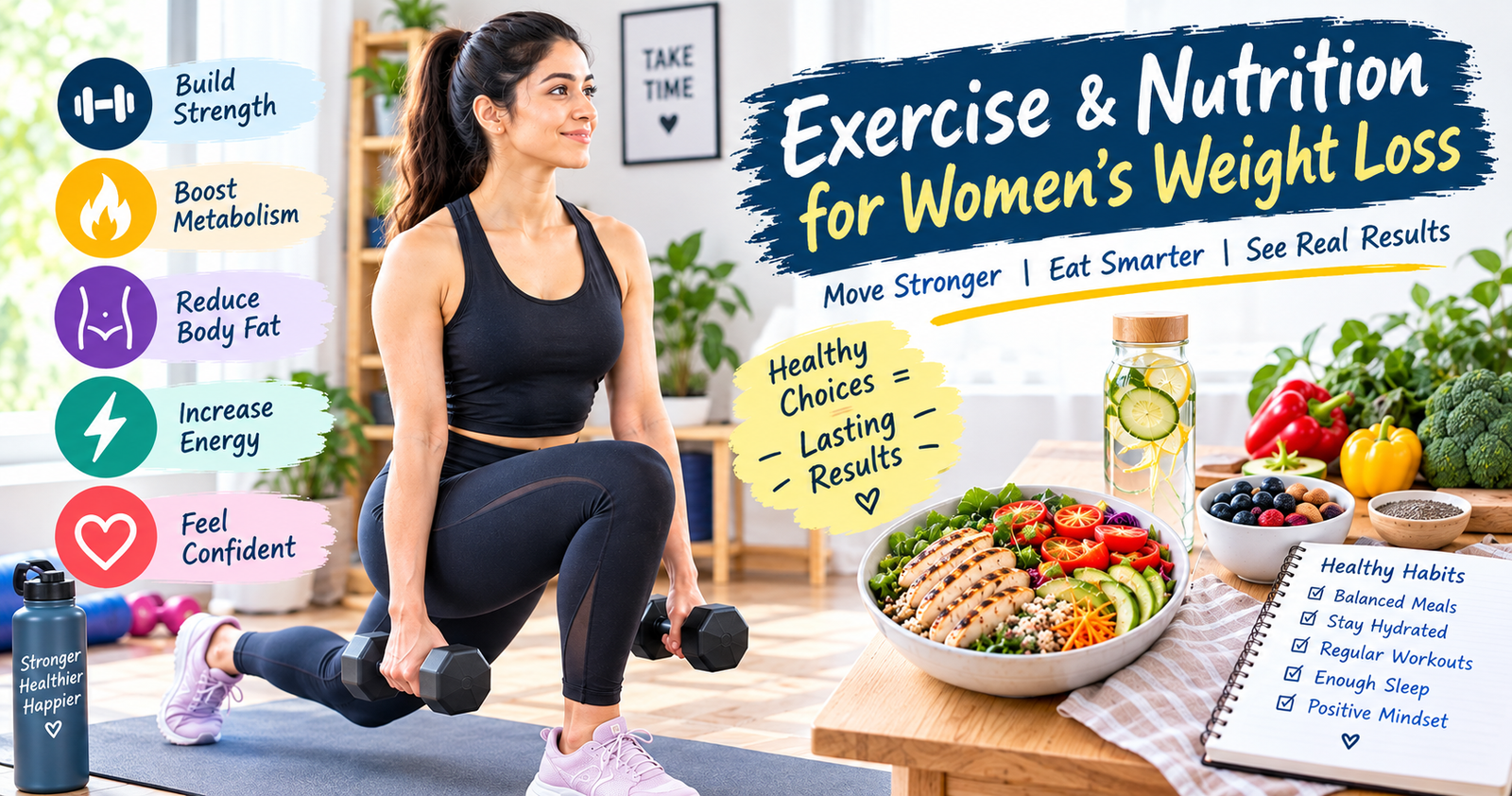
Search "weight loss for women" and you'll find a thousand conflicting plans — extreme diets, workout challenges promising results in days, and rules that are impossible to follow for more than a few weeks. Sustainable weight loss doesn't come from any of that. It comes from a straightforward combination of consistent exercise and realistic nutrition, applied over months, not days. Here's what that actually looks like.
Why Crash Diets and Extreme Workouts Don't Work Long-Term
Severe calorie restriction and punishing daily workout routines can produce fast initial results, but they're rarely sustainable. Extreme deficits often lead to muscle loss alongside fat loss, slow the metabolism, and are difficult to maintain for more than a few weeks — which is exactly why so many women lose weight quickly, then regain it just as fast once the restrictive plan becomes unbearable. Sustainable weight loss is slower, but it's the version that actually stays off.
The Nutrition Side: What Actually Matters
A Moderate Calorie Deficit
Weight loss ultimately requires consuming fewer calories than your body uses. A moderate deficit — generally around 300-500 calories below maintenance — is far more sustainable than an extreme one, and it reduces the muscle loss and energy crashes that come with very low-calorie diets.
Prioritize Protein
Protein helps preserve muscle mass during a calorie deficit, keeps you fuller for longer, and has a higher calorie cost to digest compared to fats or carbs. Including a protein source at each meal — eggs, chicken, lentils, yogurt, paneer — makes the deficit noticeably easier to stick to.
Don't Eliminate Entire Food Groups
Cutting out carbs or fats entirely tends to backfire, both nutritionally and psychologically. A balanced plate with protein, complex carbohydrates, healthy fats, and vegetables supports energy for workouts and daily life while still supporting the deficit.
Watch Portions More Than Perfection
You don't need to eliminate foods you enjoy. Portion awareness and consistency across most meals matters far more than being "perfect" at every single meal.
The Exercise Side: Why Strength Training Deserves the Spotlight
Cardio gets most of the attention in weight loss conversations, but strength training is often the missing piece. During a calorie deficit, the body can lose muscle along with fat unless it's given a reason to keep it — and strength training is that reason. Preserving muscle keeps your metabolism higher and is the difference between losing weight and simply looking smaller versus losing fat and looking toned.
A combination that works well for most women:
- Strength training: 3 sessions a week, focused on full-body compound movements like squats, rows, and presses.
- Cardio: 2-3 sessions a week, mixing brisk walking, cycling, or short higher-intensity sessions.
- Daily movement: walking, taking stairs, and general activity outside of structured workouts, which adds up more than people expect.
Why the Scale Isn't the Full Story
Body weight fluctuates daily from water retention, hormones, food volume, and sodium intake — none of which reflect actual fat loss. Tracking additional markers like how clothes fit, progress photos, strength gains in the gym, and energy levels gives a far more accurate picture of progress than the scale alone.
Special Considerations: PCOS and Hormonal Factors
Weight loss isn't equally straightforward for every woman. Conditions like PCOS can affect insulin sensitivity and make weight loss slower despite consistent effort, which is frustrating but not a sign that something is being done wrong. In these cases, a program adjusted for the specific hormonal factors involved — rather than a generic calorie-and-cardio plan — tends to produce far better results.
Putting It Together: A Realistic Weekly Approach
- Eat in a moderate calorie deficit with a protein source at every meal.
- Strength train 3 times a week, focused on full-body compound movements.
- Add 2-3 cardio sessions, mixing steady-state and shorter intense efforts.
- Track progress through strength, measurements, and how you feel, not just the scale.
- Expect the process to take months, not weeks, and treat that as a feature, not a flaw — it's what makes the results last.
Where Guided Coaching Makes the Difference
Knowing the principles is one thing; applying them correctly to your specific body, schedule, and any underlying conditions is another. At Fit Vibe Trainer, weight loss programs combine structured strength training with practical nutrition guidance tailored to each client, available in person across DHA, Johar Town, Gulberg, Bahria Town, and Model Town in Lahore, or through online coaching for women managing PCOS, postpartum recovery, or simply a busy schedule that needs a realistic, sustainable plan rather than another crash diet.
For more on building a sustainable approach to weight loss, see our related pieces on exercise and nutrition strategies for women and what women need for sustainable weight loss.
The Bottom Line
Sustainable weight loss for women comes down to a moderate calorie deficit, enough protein to protect muscle, consistent strength training to preserve and build that muscle, and cardio to support the deficit and heart health — applied consistently over months. There's no shortcut that beats this combination for results that actually last.
Frequently Asked Questions
Is exercise or nutrition more important for weight loss?
Nutrition typically has a bigger direct impact, since it's easy to eat back the calories burned in a workout. Exercise, especially strength training, is essential for preserving muscle and shaping your body as weight comes off.
How many calories should a woman eat to lose weight?
This varies by individual factors, but a moderate deficit of roughly 300-500 calories below maintenance is generally sustainable and effective.
Should women do cardio or strength training for weight loss?
Both matter, but strength training deserves more attention than it usually gets — it preserves and builds muscle during a deficit, while cardio supports the deficit and heart health.
Why is weight loss harder for some women than others?
Factors like PCOS, age-related metabolic changes, sleep, and stress can all affect how easily the body loses weight, which is why personalized adjustments often matter more than a generic plan.
Want a plan built around your body and schedule? Get in touch with Fit Vibe Trainer for in-person training across Lahore or online coaching wherever you are.
Ready to put this into action?
Train 1-on-1 or in a group with Amna — your first discovery call is completely free. Female-only, fully online, results you can see.
Book My Free Call on WhatsApp →